Pollen
Pollen is one of the largest particles in your air, 10 to 100 microns. True 99.97% H14 HEPA filtration captures particles down to 0.3 microns, reducing pollen in your air.

WHAT’S IN YOUR AIR?
Pollen is one of the largest particles in your air, 10 to 100 microns. True 99.97% H14 HEPA filtration captures particles down to 0.3 microns, reducing pollen in your air.
Pet dander measures 0.5 to 10 microns. True 99.97% H14 HEPA filtration captures particles down to 0.3 microns, reducing pet dander in your air.
Mold spores measure 2 to 10 microns. HEPA filtration captures them, and PECO (photo electrochemical oxidation) is proven to destroy mold rather than leaving it on a filter.
Bacteria measure 0.5 to 5 microns. HEPA filtration captures them, and PECO (photo electrochemical oxidation) is proven to destroy bacteria rather than leaving them on a filter.
Particulate matter measures 0.1 to 2.5 microns. True 99.97% H14 HEPA filtration captures particles down to 0.3 microns, reducing particulate matter in your air.

Viruses like influenza, COVID-19, and RSV travel on droplets and dust. Some are smaller than what filters can trap. HEPA filtration captures what carries viral matter, and PECO destroys it at the molecular level rather than leaving it on a filter.
Viruses like influenza, COVID-19, and RSV travel on droplets and dust. HEPA filtration captures what carries viral matter, and PECO destroys it at the molecular level.
Proven in the lab
10–50µm

 Testing done in 2026 per AHAM AC-1 in a 28.5m³ chamber by Intertek; an independent, third-party, nationally recognized testing laboratory.
In the lab
99%
reduced in 20 minutes
Dust is a mix of tiny particles including dust mite allergens, dander, skin cells, dirt, and fibers.
Runny nose; nasal congestion; sneezing or coughing; itchy, watery eyes; pressure or pain in the face; asthma triggers
0.01–1µm

Testing done in 2026 per AHAM AC-1 in a 28.5m³ chamber by Intertek; an independent, third-party, nationally recognized testing laboratory.
In the lab
99%
reduced in 22 minutes
Smoke is a toxic cocktail of gases, particulate matter, and materials burned by fire.
Respiratory irritation; eye irritation; headaches; reduced lung function; exacerbation of existing conditions; chest pain; fatigue; stroke
2.5–200µm (25µm on average)

Testing done in 2026 per AHAM AC-1 in a 28.5m³ chamber by Intertek; an independent, third-party, nationally recognized testing laboratory.
In the lab
98%
reduced in 10 minutes
Pollen is the fine particles released by plants that can trigger allergic reactions and inflammation.
Sneezing, watery eyes, nasal congestion, throat irritation, fatigue, and brain fog

Tested per GBT18801-2022 standard in a 30m³ chamber.
In the lab
86%
reduced in 60 minutes
Toluene is a solvent used in manufacturing. One of the most common sources of VOC off-gassing in homes.
Paints; adhesives; nail polish / nail polish remover; cleaners; gasoline; new furniture

Tested per GBT18801-2022 standard in a 30m³ chamber.
In the lab
85%
reduced in 60 minutes
Benzene is a byproduct of solvent used in manufacturing. One of the most common sources of VOC off-gassing in homes.
Outdoor air (car exhaust); smoking; cooking; cleaning; building materials

Tested per GBT18801-2022 standard in a 30m³ chamber.
In the lab
82%
reduced in 60 minutes
Acetylacetone is a solvent used in manufacturing that off-gases VOCs into the air at room temperature.
Off-gassing from paints, wood stains, adhesives, and electronics


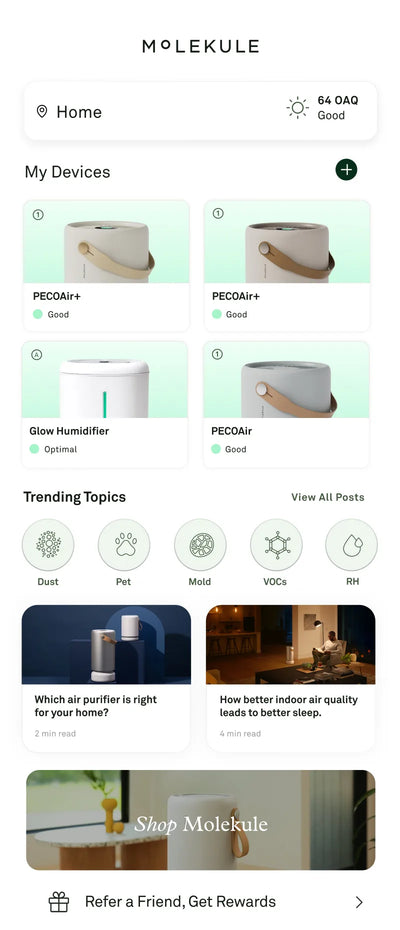
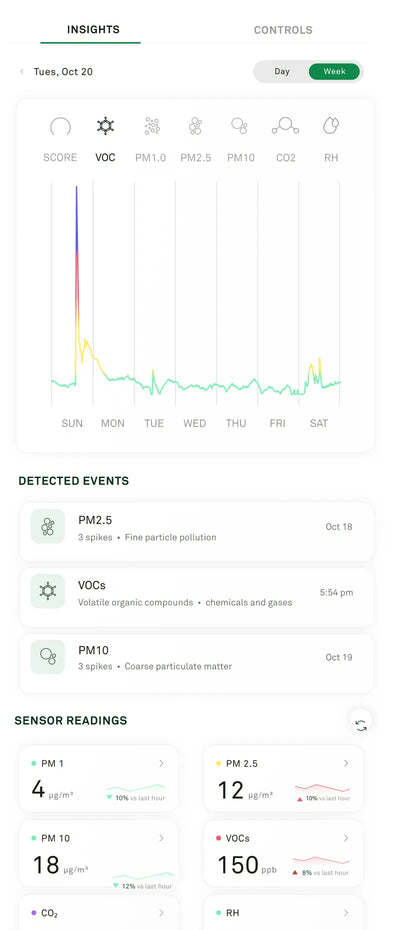
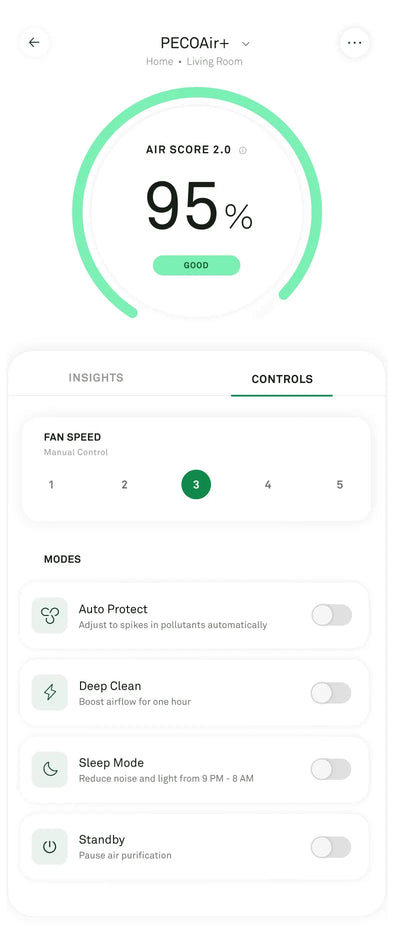

Group purifiers and humidifiers by floor, room or residence. Monitor and control each group with one tap.

Get to know your air habits like never before with data that helps you understand how air makes you feel throughout the day.

Auto Protect adjusts to pollutant readings, while new Sleep mode handles the quiet hours and Deep Clean handles the air quality events.

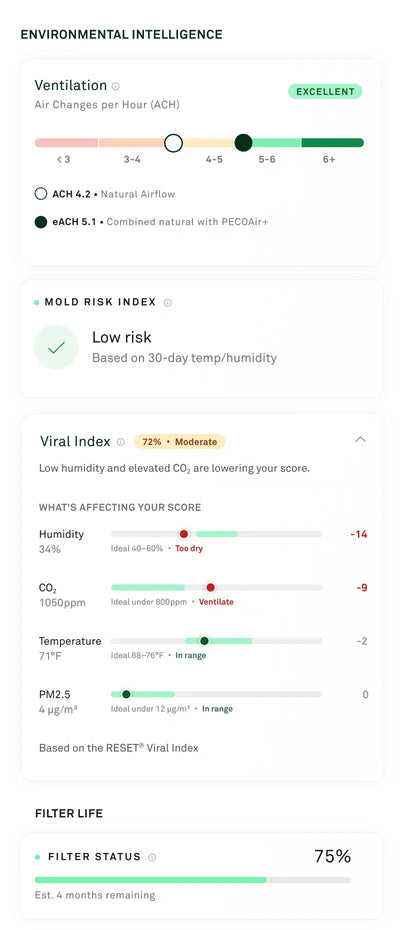
Two scores built from PECOAir+ sensor data show when a room's conditions favor mold growth or viral transmission.