


Key Takeaways
-
Dry indoor air can contribute to skin dryness, especially during colder months or in climate-controlled homes.
-
A humidifier can help support skin comfort by adding moisture back into overly dry indoor air.
-
Humidity levels that are too low or too high can both affect skin and overall comfort.
-
Using a humidifier works best when paired with other skin-supportive habits and a balanced indoor environment.
-
Bedroom humidity and air quality often matter most because skin repairs itself overnight.
If your skin feels tight, flaky, or irritated no matter how much lotion you use, the issue may not be your skincare routine. It may be the air in your home.
Indoor heating, air conditioning, and seasonal weather can lower humidity levels in your home and dry out your skin as a result.
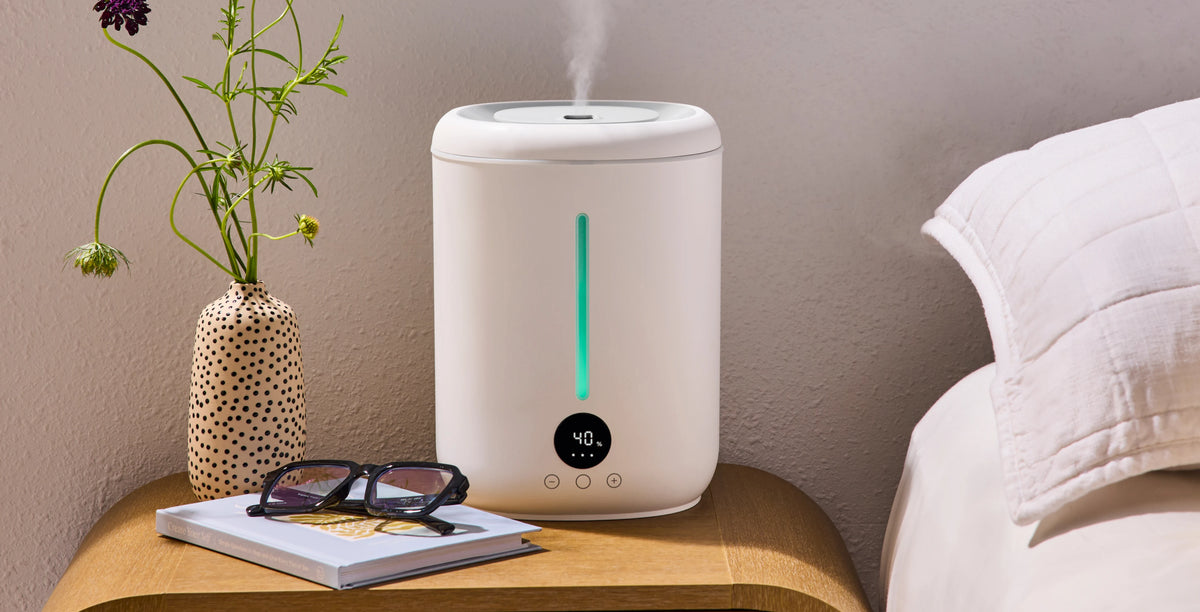
A simple fix to increase relative humidity in your home is a cool mist humidifier, which adds moisture back into dry indoor air. Shockingly, the average American spends 87% of their time indoors. If your indoor air is constantly dry, your skin is fighting an uphill hydration battle.
How Indoor Air Dries Out Your Skin
Skin repair and regeneration occur overnight, which makes your sleep environment especially important. Your skin acts as a barrier that helps retain moisture and protect you against environmental irritants. Dry air in hotel rooms or your own bedroom can pull moisture from your exposed skin, worsen any irritation while you sleep, and reduce how refreshed your skin feels in the morning.
The American Academy of Dermatology explains that dry air, especially in winter, is a common trigger for dry, irritated skin and recommends adding moisture back into indoor environments when needed.
Dry indoor air is often caused by:
-
central heating systems
-
cold outdoor temperatures
-
air conditioning
-
poor indoor moisture balance
That is why your skin dryness often worsens indoors even if your skincare routine stays the same.
How a Humidifier Can Help With Dry Skin
A humidifier works by adding moisture back into the air, raising relative humidity levels. When humidity is balanced, your skin loses moisture more slowly, which may reduce dryness and irritation.
Research on skin barrier function shows that low humidity increases transepidermal water loss, meaning moisture escapes from the skin faster in dry environments.
A humidifier can support:
-
reduced skin tightness
-
less flaking or itchiness
-
improved overnight skin comfort
-
better moisture retention when paired with skincare
It doesn’t hydrate skin directly, but it helps create conditions where your skin is less likely to dry out.
The Best Indoor Humidity Range for Healthy Skin
Humidity matters, but more is not always better. The Environmental Protection Agency recommends keeping indoor humidity between 30 and 50 percent to support your comfort and reduce the risk of mold.
Signs humidity may be too low
-
dry or itchy skin
-
chapped lips
-
scratchy throat
-
static electricity
Signs humidity may be too high
-
musty odors
-
condensation on windows
-
worsening allergies
-
increased dust mites or mold risk
Use a hygrometer to help ensure your humidifier supports your comfort without creating excess moisture. In the event your room’s humidity is actually too high, it may be a dehumidifier instead of a humidifier that offers the best solution.
When a Humidifier Helps the Most
A humidifier is not a replacement for good skincare products, but it can make skincare products more effective. Moisturizers help seal water into your skin, while humidity reduces how quickly water evaporates from your skin into the air. When your indoor air is extremely dry, even strong topical products may struggle to keep your skin hydrated.
A humidifier is especially helpful if:
-
you live in a cold or dry climate
-
your home relies heavily on heating
-
you wake up with dry skin or lips
-
your skin feels worse indoors than outdoors
What a Humidifier Can’t Do
Keep in mind that a humidifier is not a cure-all. A humidifier will not:
-
cure chronic skin conditions
-
replace medical care
-
work instantly without consistent use
If your dryness is severe or persistent, consult a dermatologist.
Frequently Asked Questions
Is sleeping with a humidifier good for your skin?
Sleeping with a humidifier can reduce moisture loss in dry indoor air, especially overnight when the skin barrier is more vulnerable.
Is it okay to sleep with a humidifier every night?
Yes, as long as humidity stays in a healthy range (about 30 to 50 percent) and the unit is cleaned regularly.
What are the disadvantages of a humidifier?
Humidifiers can contribute to mold or mineral dust if not maintained properly or if humidity becomes excessive.
Are humidifiers safe for babies?
Humidifiers are commonly used in nurseries and are generally safe when cleaned regularly and monitored for proper humidity levels.
How long should you run a humidifier in a bedroom?
Many people run it overnight during dry seasons, but the right duration depends on room size and humidity levels.
Can you use tap water in a humidifier?
Tap water may leave mineral residue or release particles, so many manufacturers recommend distilled or filtered water.


