

A humidifier can relieve cold symptoms such as congestion, sore throat, dry cough, but it won't shorten how long your cold lasts. That's the honest answer, and it's a distinction worth understanding before you plug one in tonight.
Humidifiers don't reliably reduce cold duration. But symptom comfort is clinically meaningful on its own, and the evidence behind that is solid. Here's what the research around warm and cool mist humidifiers and colds actually shows, and how to use a humidifier effectively when you're sick.
What a Humidifier Can and Cannot Do
Cold viruses damage the epithelial lining of the nasal passages, and dry air makes the irritation worse. The cilia, the tiny hair-like structures in the airway that sweep mucus and debris out of the respiratory tract, function much less effectively in dry air. This slows your body's ability to clear the infection site, which is part of the reason why colds take a few days to get over.
Humidified air at 30–50% relative humidity keeps the nasal lining moist, reduces the friction of breathing through inflamed tissue, and supports cilia function. Using a humidifier to establish a relative humidity of 30-50% within your home can ease symptoms such as nasal congestion, sore throat, dry persistent cough, and chapped lips.
What it cannot do is kill the virus. The benefit of using a humidifier during a cold is that you’ll feel more comfortable with reduced symptoms, but it cannot cure your cold.
The Bottom Line
NIH research has found that relative humidity above 40% is associated with reduced airborne influenza particle viability. Dry indoor air, which is most common during the winter season when heating runs constantly, creates optimal conditions for viral particles to remain suspended longer. By maintaining relative indoor humidity levels between 30-50% year-round, you may be able to reduce the risk of cold transmission.
Should you choose to use a humidifier to help alleviate your cold symptoms, there are a few things to know.
Cool Mist vs Warm Mist Humidifier for Colds
Cool mist humidifiers use filters, fans, or ultrasonic vibrations to release room-temperature mist.
Warm mist humidifiers boil water to release warm, bacteria-free steam.
There are pros and cons to each, but both effectively increase room humidity.
Both types add equivalent moisture to the air. The clinical effect on cold symptoms, congestion relief, throat comfort, is the same regardless of whether the water is vaporised cold or heated to steam.
The difference is safety. Cool mist humidifiers (ultrasonic, evaporative, impeller) produce no heat and carry no burn risk. The Mayo Clinic and Children's National Hospital both recommend buying cool mist humidifiers explicitly for use in rooms with children. The warm mist from a steam vaporizer is soothing for some adults, but the risk of scalding is real in any home with children or pets.
How to Use a Humidifier Overnight When You Have a Cold
Sleeping with a humidifier and sleeping with a humidifier in the correct position are two different things. Here’s where to place your humidifier for best results:
Target humidity: 40–50% relative humidity, best to use a hygrometer to verify. A room that seems comfortable might be at 35% or 65% depending on building insulation, outdoor temperature, and room size.
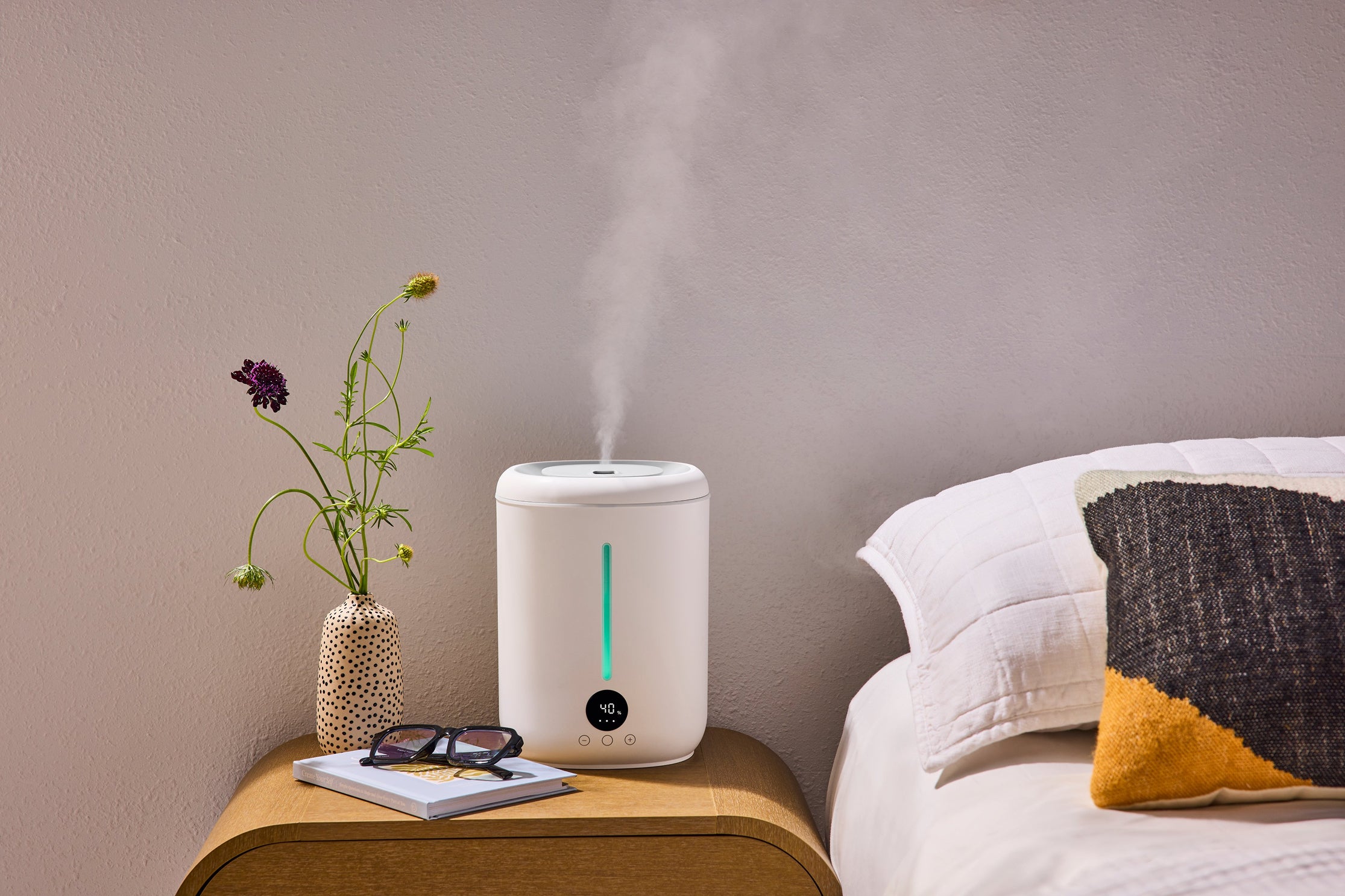
Placement: 3 feet from the bed on an elevated, stable surface. Pointing mist directly at your face or bedding creates concentrated moisture zones that can irritate already-inflamed tissue and dampen fabric.
Running time: Overnight use is safe if humidity stays within the 40–50% range. If you see condensation on your windows or the bedding feels damp, the humidity is too high — reduce output or ventilate briefly.
Water type: Use distilled or demineralized water, especially in ultrasonic models. Tap water contains minerals that aerosolize as fine white particles in ultrasonic humidifiers. These particles are inhaled, and when you already have an inflamed respiratory tract, that's the last thing you want to add.
When a Humidifier Can Make a Cold Worse
Running It Without Cleaning the Tank
An uncleaned water tank is a bacterial and mold growth environment. Water left sitting for more than 24–48 hours begins developing biofilm, and an uncleaned humidifier aerosolizes that contamination directly toward you while you sleep.
If you experience worsened congestion or cough after you start using the humidifier, a musty smell coming from the unit rather than the room generally, or recurring sinus irritation that started when you began use, turn the humidifier off. Clean the tank every 1–2 days during heavy use and allow it to dry completely between refills.
Pushing Humidity Above 60%
Mold growth accelerates, dust mite reproduction spikes, and the air can feel heavy and difficult to breathe as relative humidity creeps above 60%. All of these will extend the lifespan of your cold.
Using Tap Water in an Ultrasonic Model
Hard tap water contains calcium and magnesium that aerosolize as fine white dust in ultrasonic humidifiers. These particles land on surfaces and are inhaled. For someone already dealing with inflamed airways, inhaled mineral particles add irritation you don't need. Distilled water eliminates the problem.
Other Ways to Ease Cold Symptoms While You Sleep
A humidifier is one useful tool, not the whole toolkit.
Saline nasal spray has strong clinical backing for congestion relief. It works directly on nasal passages independent of ambient humidity, and it’s fast, simple, and safe for children.
Hydration thins mucus secretions and supports immune function. If you're breathing through your mouth overnight because of congestion, you're losing additional moisture. Drink water and electrolytes regularly to offset that.
Rest remains the most important single variable in recovery. No device substitutes for adequate sleep.
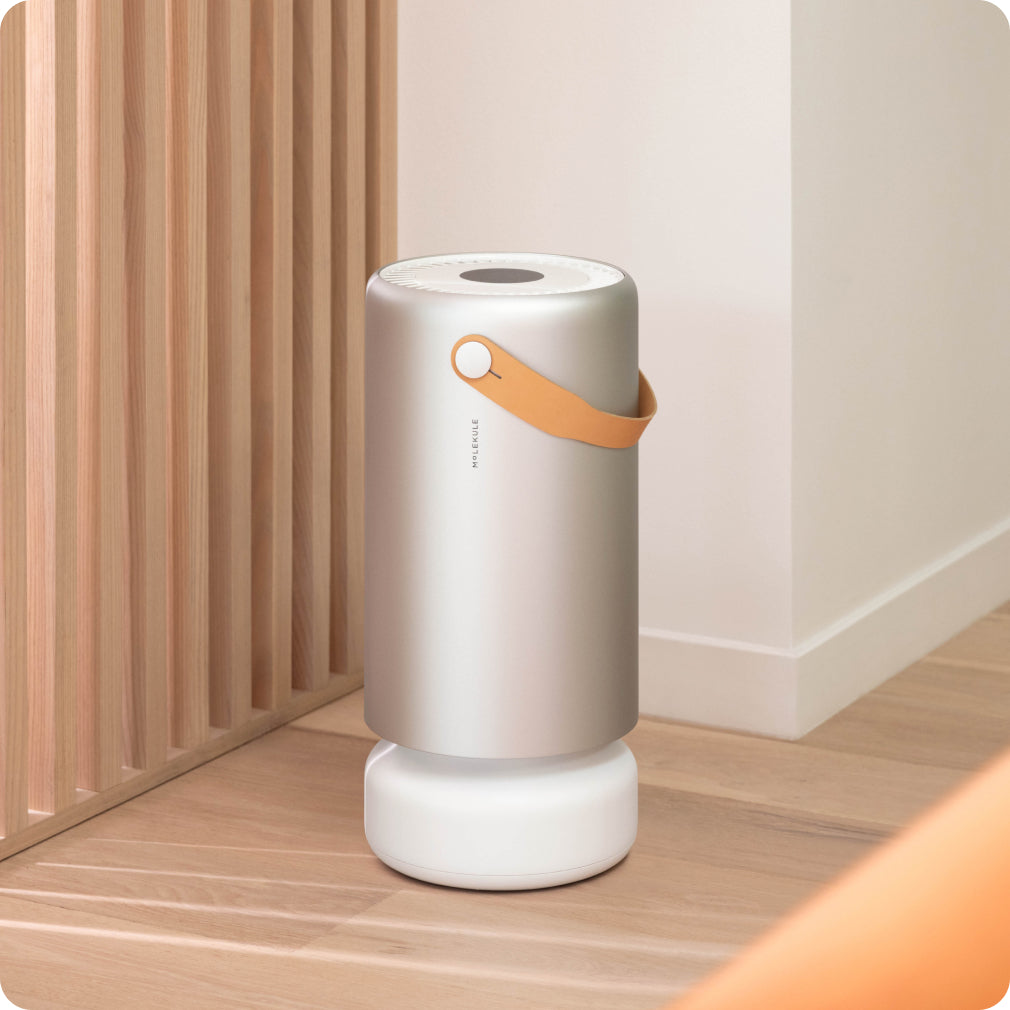
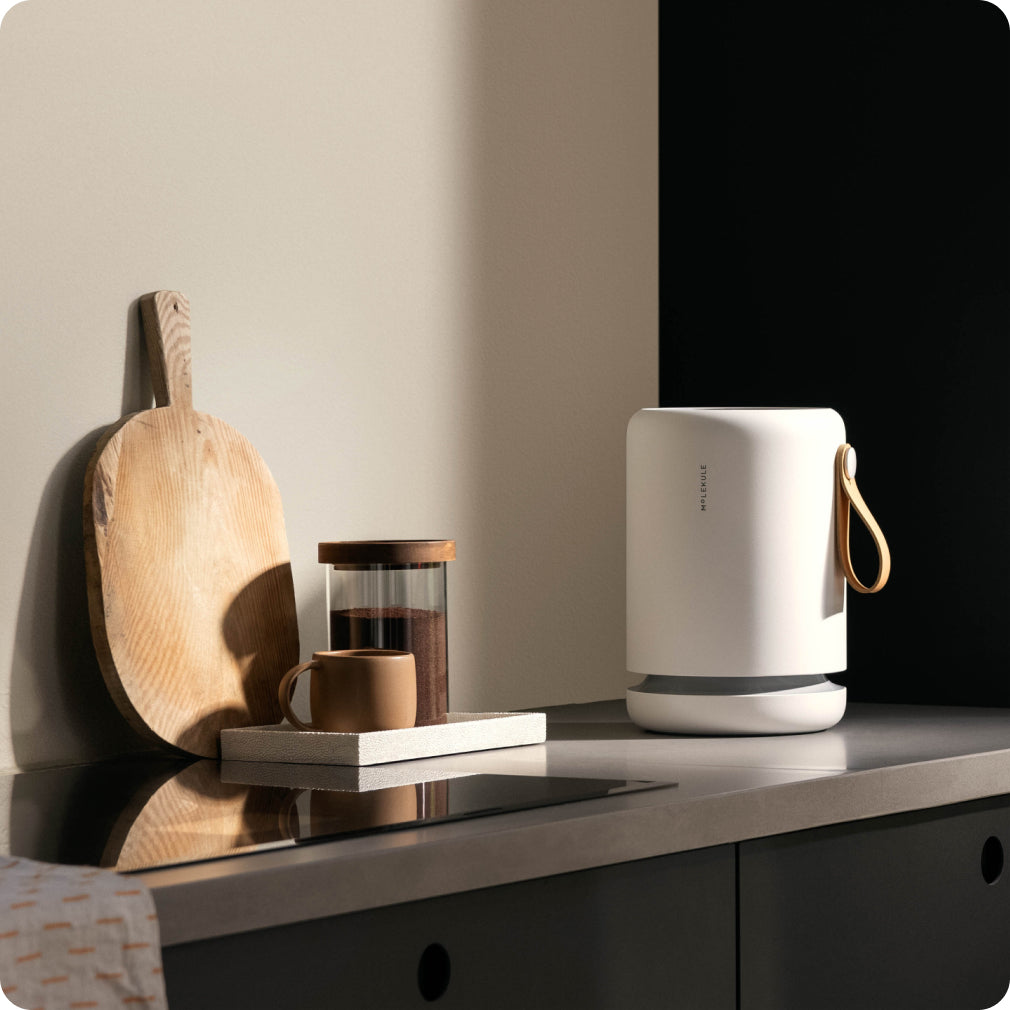
Clean air is a related but separate need. A humidifier adds moisture; it does nothing about airborne mold spores, bacteria, or particles already present in the bedroom. Pairing with an air purifier adds the layer of pathogen control the humidifier can't provide.
Frequently Asked Questions
Does sleeping with a humidifier help a cold?
Yes, it can relieve symptoms like congestion, sore throat, and dry cough by keeping nasal passages moist and supporting cilia function. It doesn't shorten cold duration, but symptom comfort during sleep matters for recovery.
Is it better to sleep with a cool mist or warm mist humidifier when sick?
Both add equivalent moisture and provide the same symptom relief. Cool mist is the clinical recommendation when children or pets are present due to the burn risk of warm mist vaporisers.
How long should I run a humidifier when I have a cold?
Overnight use is safe as long as indoor humidity stays at 40–50%. Use a hygrometer to verify. If you see condensation on windows or the bedding feels damp, reduce output.
Can a humidifier make a cold worse?
An uncleaned one can. A dirty water tank disperses bacteria, mold spores, and mineral deposits into your breathing air. Clean the tank every 1–2 days during active use, use distilled water, and keep humidity below 60% to avoid worsening symptoms.