


We love our pets just as much as you do. But let’s be honest, they shed tons of hair, not to mention dander, skin flakes, and debris they track in from outdoors. If your home has a pet, it has more dust than a pet-free home; that’s just the reality.
But dirty floors and unclean air doesn’t have to be a fact of life. We’ll show you how to reduce dust in your home if you have pets through grooming, filtration, and air quality management, so you can have a cleaner home and breathe easier.
Why Pet Homes Collect Dust Faster
Pets increase indoor dust by shedding hair, dander (microscopic dead skin flakes), and tracking outdoor debris inside. Homes with pets generate an estimated 30 - 50% more particulate matter than pet-free homes, depending on breed and number of animals.
Where Does Pet Dust Actually Come From?
Pet dander is much easier to trace than other kinds of dust that originate from other parts of your home. Pet dander consists of skin flakes between 5 and 10 microns in size, which are small enough to remain airborne for hours without detection and travel through your HVAC system. The EPA identifies pet dander as a primary indoor allergen, distinct from visible shed hair.
Primary indoor allergens trigger the immune system to release histamines, which causes inflammation, increased mucus production, and restricted airways.
Why Your Current Cleaning Routine Isn't Enough
Vacuuming removes surface debris but completely misses airborne dander, which is a significant majority of the dust in your home. Dander sticks to soft furnishings, baseboards, and air vents, which let’s be honest, are typically skipped during your daily or weekly clean.
When you have pets, the only way to reduce the amount of dust in your home is by grooming your pets regularly, regularly replacing your HVAC filter, using an air purifier to capture airborne dust, and of course, a regular surface cleaning routine.
Dust management becomes even more important in your home if you have a baby or young infant, as their health is especially fragile to dust.
Where Dust Accumulates Most in Pet Homes
Pet dander is electrostatically attracted to fabric fibers and porous surfaces, which is why certain zones collect far more particulate matter than others.
-
Couches, rugs, and bed linens trap dander fastest. Fabric fibers grip airborne allergens rather than letting them settle on hard surfaces where wiping removes them easily.
-
Curtains and upholstered furniture accumulate layers of particulate matter that standard cleaning misses entirely.
-
Under and behind furniture acts as a secondary reservoir, especially where pets rest regularly.
-
Baseboards and floor edges collect concentrated dust driven there by air circulation patterns and pet movement.
-
HVAC return vents and intake grilles pull in dander-laden air before it reaches the filter, clogging faster in active pet homes.
-
Air vents in bedrooms and living spaces show visible dust accumulation within 2 to 3 weeks in homes with multiple pets.
If you're evaluating a lower-shedding breed, hypoallergenic pets for allergy sufferers may reduce dust accumulation in your home, though no breed eliminates it entirely.
4 Steps to Reduce Dust in Your Pet-Friendly Home
1. Groom Your Pet More Frequently
Grooming is the only way to reduce dander at the source, before it enters the air and settles on surfaces. Every shed flake that comes off during brushing is one less particle contributing to your home's dust load.
How Often Should You Groom?
Brush your pet 3 - 5 times per week. For heavy shedders like German Shepherds or Huskies, you may have to brush them daily to reduce shedding. Try to get them professionally groomed every 4 - 8 weeks to remove accumulated undercoat that hand-brushing cannot reach. Most pet owners notice visibly less dust within one to two weeks of increasing grooming frequency.
It’s best to groom outdoors or in the garage; both require little to no cleanup and prevent dander from dispersing through the rest of the house. A sudden increase in shedding may also signal a skin or dietary issue worth discussing with your vet.
What about bathing?
Bathing removes dander already on the coat. Brushing removes loose hair and dander before it sheds into your home. Do both, but brush more than you bathe.
2. Vacuum With HEPA Filtration
Most standard vacuums make the dust problem worse. Bagless models release fine particulate back into the air when you empty the bin, and older vacuums with weak seals push unfiltered exhaust through the motor and out into the room. It feels productive, but the dander goes right back into circulation.
A vacuum without a sealed filtration system filters air in one place and leaks it in another. Pet dander particles range from 5 to 10 microns - small enough to stay airborne for hours after you vacuum.
Vacuum 2 to 3 times per week in pet homes, not once weekly. Quality sealed HEPA vacuums cost $300 to $800 and last 5 to 7 years, which makes the per-year cost reasonable relative to the reduction in airborne allergens and respiratory irritation.
What Makes a HEPA Vacuum Different?
True HEPA filters capture 99.97% of particles as small as 0.3 microns, including pet dander and dust mite debris. The EPA recommends HEPA vacuums as a primary allergen control method in homes with pets or allergy sufferers. The filter must sit within a sealed system so that all exhaust air passes through it before leaving the unit. "HEPA-type" filters don't meet this standard.
3. Replace HVAC Filters on a Faster Schedule
The standard recommendation is to rotate HVAC filters every 90 days, but if you have pets, you should rotate them every 30-60 days.
Pet hair and dander accumulate on filter surfaces far faster than household dust alone. When a filter clogs, air bypasses it entirely through gaps around the edges, sending unfiltered particulate matter directly into your living spaces and straining the HVAC motor over time.
MERV 11-13 rated filters capture pet dander and fine airborne allergens more effectively than standard MERV 8 filters, without significantly restricting airflow. At $15–$40 per filter, replacing them more often costs far less than HVAC repairs or ongoing allergy symptom management.
How to Know When to Replace Your Filter
Hold the filter up to light after 3 - 4 weeks. If dust is clearly visible across the surface, shorten your replacement cycle to every 3 - 4 weeks. That visual check is faster and more reliable than any calendar reminder.
4. Use an Air Purifier for Airborne Dander
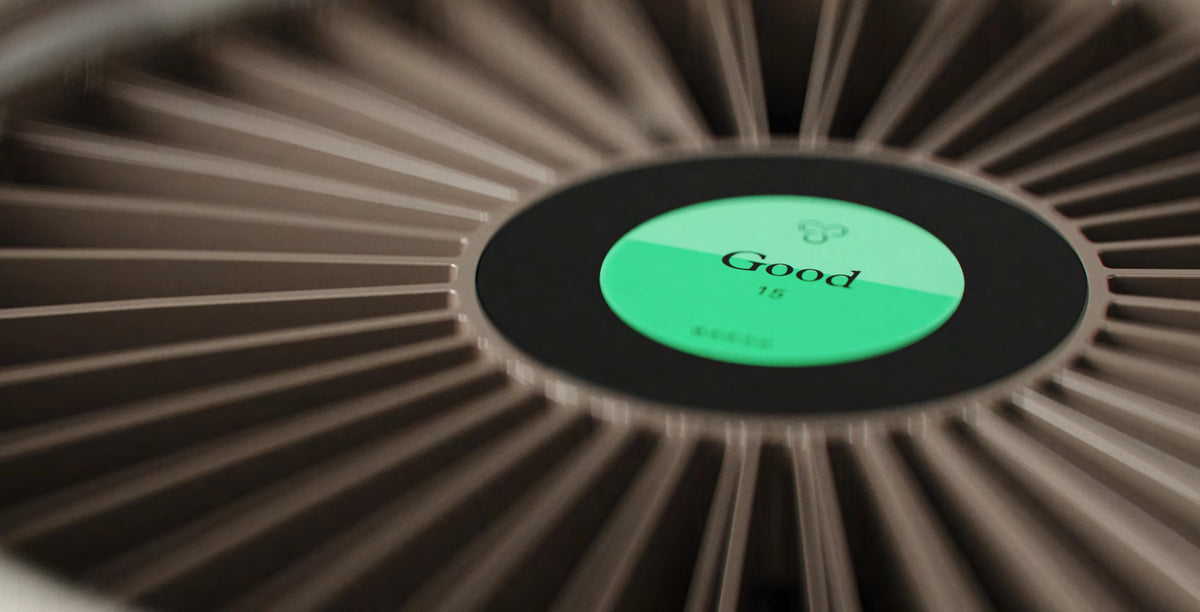
Vacuuming and grooming reduce dander at the source and on surfaces, but neither captures what's already floating in the air. An air purifier with true HEPA filtration intercepts airborne dander before it settles, which means less particulate accumulating on furniture and floors between cleanings. The EPA recommends air filtration as a complementary allergen control strategy alongside source reduction and mechanical ventilation.
Place air purifiers in rooms where pets and people spend the most time: bedrooms, living rooms, and areas near pet beds. Run the unit continuously throughout the day rather than in short sessions. Dander concentrations peak when pets are active, so consistent air circulation matters more than occasional high-speed bursts. Larger homes benefit from multiple units rather than one central device.
PECO vs. HEPA Air Purifiers: Which One Do I Really Need?
HEPA filters capture up to 99.97% of particles as small as 0.3 microns, including pet dander and dust mite debris. PECO technology goes further. It uses photoelectrochemical oxidation to break down organic pollutants, including pet allergens and volatile organic compounds (VOCs), at the molecular level rather than just trapping them.
FAQs
How Often Should I Change My HVAC Filter With Pets?
If you have pets, change your HVAC filter every 30-60 days. Check the filter visually at 3-4 weeks and if it looks dusty, replace it.
Do Air Purifiers Actually Help With Pet Dust?
Yes, air purifiers help with pet dust but they are not a one-stop solution. Without consistent grooming, vacuuming, and filter replacement alongside it, results will be limited.
Can Low-Shedding Breeds Eliminate the Dust Problem?
No. Low-shedding and hypoallergenic breeds produce less dander, but all pets shed skin cells continuously. Air quality management remains necessary regardless of breed.


