


New parents have thousands of concerns: how much (or how little) their babies are eating, sleeping, pooping, and plenty more.
But dust usually slips under the radar. There’s probably more dust in your home than you’d like to admit, and it’s not just a cosmetic issue. Household dust, specifically in the nursery room, can carry allergens, bacteria, volatile organic compounds (VOCs), and chemical residues that can irritate a newborn's developing respiratory system.
Newborns breathe approximately 40 times per minute, roughly 2-3 more than the average adult. This means that they inhale proportionally more airborne particles relative to their body weight, making indoor air quality especially important for babies, not even factoring in their underdeveloped respiratory and immune systems.
Indoor air can be 2-5 times more polluted than outdoor air, and because newborns spend upwards of 20 hours per day in the nursery, if not more. The air quality of your nursery is critical, as research links early-life dust mite allergen exposure to respiratory sensitization, asthma development, and late-onset wheezing in children.
Early-life contact with indoor pollutants, including particulate matter (PM2.5) and off-gassing chemicals, is linked to respiratory sensitization during critical developmental windows. Air purifiers for indoor environments help filter some contaminants, but protection starts with understanding what is actually in nursery air.
The Most Common Sources of Dust in Nurseries
A freshly prepared nursery contains more airborne pollutants than almost any other room in your home.
Mattresses
A baby's mattress is the most critical item in the nursery, as infants spend up to 16 hours a day with their bodies pressed directly against it. Conventional crib mattresses are often made of polyurethane foam and treated with chemical flame retardants or wrapped in vinyl (PVC) waterproof covers. These materials off-gas VOCs and toxic plasticizers directly into the baby's breathing zone, which can irritate developing lungs and aggravate respiratory issues.
Tip: Look for mattresses that are GREENGUARD Gold or GOTS (Global Organic Textile Standard) certified, which ensures they meet strict chemical emission limits. If using a conventional mattress, unbox it and let it off-gas in a well-ventilated garage or spare room for at least 3 to 4 weeks before bringing it into the nursery.
New Furniture and Off-Gassing Timelines
New furniture is the largest single source of volatile organic compounds (VOCs) in a home, especially a nursery, and these are especially dangerous to children. Cribs, dressers, and bookshelves made from plywood or particleboard are bonded with formaldehyde-based adhesives that release gases into the air for weeks after assembly. The EPA identifies formaldehyde as a probable human carcinogen and one of the most common indoor VOC sources.
Tip: Off-gassing rates are highest in the first 72 hours and taper over several weeks, so be sure to assemble furniture several weeks before your little one arrives to reduce the VOC concentration by the time they arrive.
Paint, Finishes, and VOC Emissions
Paint continues to emit VOCs for 2 to 3 weeks after application, even after it looks and smells dry. Standard interior paints can emit 250+ grams of VOCs per liter. Zero-VOC paints emit fewer than 5 grams per liter and carry GREENGUARD Gold certification, which applies stricter emission standards for children's environments. It costs just 10-20% more than standard formulations, and is well worth the investment.
Tip: Complete paint work at least two to three weeks before the baby uses the room, and open the windows as much as local weather allows during that window to significantly reduce the residual VOC load.
Synthetically-Produced Items
Polyurethane foam, vinyl, and plasticizers off-gas at higher rates than solid wood or GOTS-certified organic cotton. A conventional foam crib mattress can release detectable VOCs for months. Synthetic rugs shed particulate matter PM2.5 as fibers break down underfoot. Natural materials are not entirely VOC-free, but their off-gassing burden is measurably lower.
Tip: Use naturally-made products wherever possible and as your budget allows.
How Dust Accumulates in a Nursery
Dust near floor-level air vents and in room corners concentrates pollutant exposure exactly where a crawling baby spends time. Dust in a nursery carries allergens, bacteria, mold spores, and endocrine-disrupting chemicals absorbed from surrounding materials.
How to Create a Safe Indoor Air Environment in the Nursery
Paint and furniture choices reduce the pollutants you introduce into the nursery. Ventilation and humidity control determine whether those pollutants stay or leave.
Once painting is done and furniture is assembled, open the nursery windows and run a fan for at least two to four weeks before your baby arrives. This flushes VOCs that continue off-gassing from new materials long after they appear dry or odorless. Keep the door open to allow cross-ventilation with the rest of the house. If outdoor air quality is poor on a given day, close the windows temporarily, but return to open ventilation as soon as conditions improve.
Maintain Optimal Humidity Levels
The EPA recommends keeping indoor relative humidity between 30 and 50 percent to limit mold growth, suppress dust mite reproduction, and maintain an overall healthy indoor air quality.
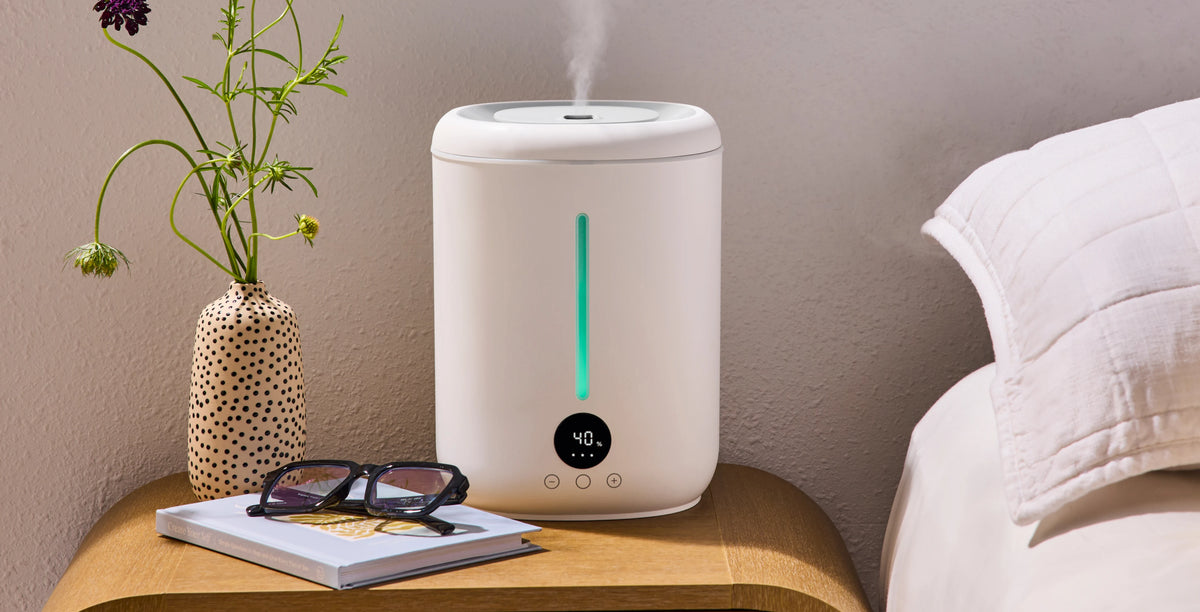
Dust mites thrive above 50% humidity; mold spores colonize surfaces and building materials when humidity stays consistently high. Below 30%, dry air irritates the delicate mucous membranes of a newborn's respiratory system. You can use a dehumidifier if your home is above 50% and a humidifier if levels fall below 30%.
Ventilate the Room Properly
Avoid closing the nursery door while running a dehumidifier alone. This concentrates moisture in a single space rather than moving it out. Passive ventilation (open windows, open door) or active ventilation through a supply vent moves humid air out of the room more effectively. Check that bathroom and kitchen exhaust ducts do not share ductwork with the nursery; moisture and cooking particulate matter can migrate directly into the room through shared systems.
Use a Hygrometer to Track Humidity
A hygrometer costs $10 - 20 and gives you a real-time humidity reading without guesswork. Check it weekly and adjust ventilation or add a humidifier if levels drop below 30% in winter. A single reading in the morning and evening tells you whether the room is trending toward a problem before mold spores or dust mite populations have a chance to build.
Use an Air Purifier
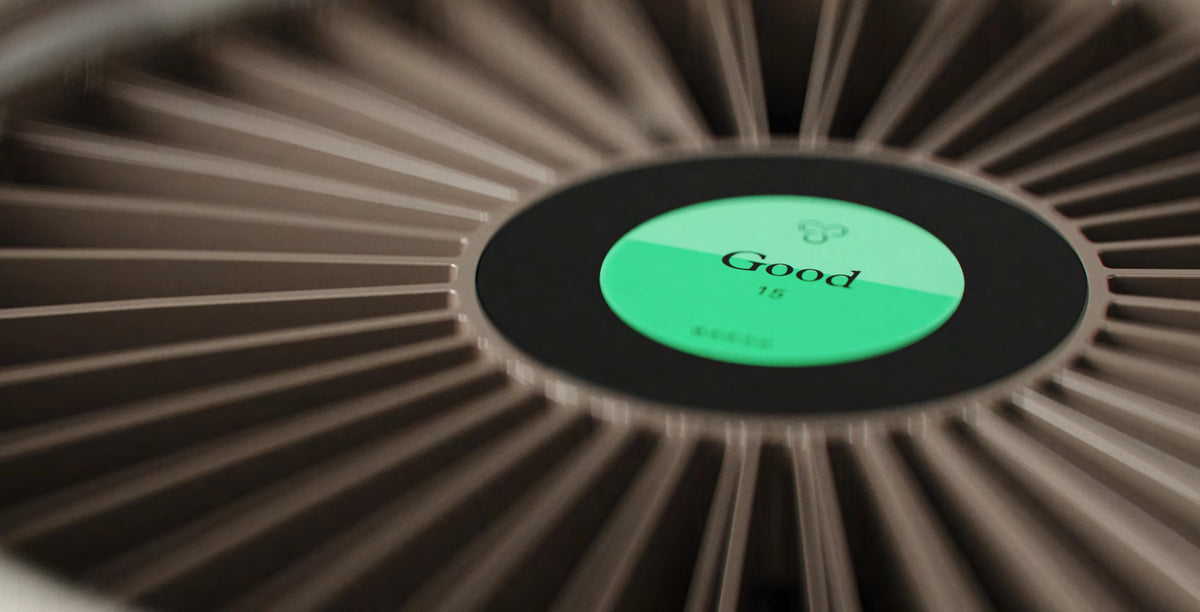
Because infants spend the majority of their time in the crib, placing a true HEPA PECO purifier in the nursery helps continuously reduce fine dust particles, pet dander, and mold spores that breach the home's envelope. To safely maximize its benefits, position the unit at least three feet away from the crib so the direct airflow doesn't create a draft on the baby, and ensure all electrical cords are safely anchored out of reach.
Month by Month Nursery Air Quality Plan
Months 3 - 4: Planning and Material Selection
-
Select zero-VOC paint (less than 5g VOC per liter) and confirm GREENGUARD Gold certification before ordering.
-
Finalize furniture orders. Prioritize GREENGUARD Gold-certified pieces for anything within 3 feet of the crib, where formaldehyde levels matter most.
-
Order your mattress. Look for GOTS-certified organic cotton construction. Allow 2 - 4 weeks for delivery so off-gassing can begin before the mattress enters the nursery.
Months 5 - 6: Paint and Initial Ventilation
-
Complete painting by month 6. The EPA recommends a 2 - 3 week minimum ventilation window before a newborn occupies a freshly painted room. Keep windows open continuously if weather permits.
-
Assemble flat-pack furniture outside the nursery where possible. Particleboard and plywood emit formaldehyde most heavily in the first weeks after unpacking.
Months 7 - 8: Furniture Assembly and Bedding Setup
-
Move furniture into the nursery after its initial off-gassing period and continue ventilating.
-
Wash GOTS-certified bedding and mattress covers at least twice before first use to reduce residual processing chemicals and particulate matter.
Months 9+: Air Purification and Ongoing Maintenance
-
Install an air purifier with HEPA filtration at least 4 weeks before your due date to help reduce airborne particles. HEPA filters capture 99.97% of particles 0.3 microns and larger, including mold spores and allergens.
-
Measure humidity. The CDC recommends keeping indoor humidity between 30 - 50% to limit mold growth and dust mite populations.
-
Set a maintenance schedule: dust weekly, check humidity monthly, replace air purifier filters per manufacturer guidance.
FAQs
How can I protect my baby from dust?
Keep windows closed during storms, use a True HEPA air purifier in the nursery, and wet-wipe surfaces regularly.
What is the 5-3-3 rule for babies?
It is a sleep-training structure where a baby sleeps for 5 hours, wakes for 3, and then sleeps for another 3 hours.
What is grandma's simple trick to eliminate dust?
Wipe surfaces with a damp cloth or a homemade dust-repellent spray made of vinegar, water, and a splash of olive oil.
Is house dust bad for babies?
Yes. Because babies crawl and breathe faster, dust exposure risks inhaling heavy metals, chemicals, and allergens.


