

When a Saharan dust plume arrives over Florida or the Gulf Coast, air quality monitors light up. Both PM2.5 and PM10 readings rise, sometimes significantly. If you have ever checked AirNow during a dust event and wondered what those numbers actually mean for your health and what you should do about them, this is the straightforward answer. Molekule air purifiers are built to address both particle types. Here is what the science says about how Saharan dust affects the air you breathe.
Key Takeaways
-
Saharan dust events raise both PM2.5 and PM10 levels, but the two particle sizes affect your health in different ways.
-
PM10 particles are filtered mostly by your nose and upper airways. PM2.5 particles are small enough to reach deep lung tissue and can enter the bloodstream.
-
The EPA's 24-hour standard for PM2.5 is 35 micrograms per cubic meter. During significant dust events, outdoor levels in Florida and the Gulf Coast can exceed this threshold.
-
Fine PM2.5 particles cause systemic inflammation linked to increased cardiac events, particularly in older adults and people with existing heart disease.
-
Saharan dust is not just mineral particles. Research has found viable bacteria, fungal spores, and heavy metals in transatlantic dust plumes.
-
Indoor PM levels during dust events can reach 50 to 70 percent of outdoor concentrations even in closed homes. Active air purification is the most effective way to reduce that indoor load.
What Is PM2.5 and PM10?
PM stands for particulate matter, the mix of solid particles and liquid droplets suspended in the air. The number refers to the maximum size of the particle in micrometers.
According to the EPA, PM10 includes particles with diameters of 10 micrometers or smaller. A human hair is about 70 micrometers wide, making PM10 roughly seven times smaller than a hair. PM2.5 is finer still, with diameters of 2.5 micrometers or smaller, about 30 times smaller than a human hair.
The difference in size matters enormously for health. PM10 particles are large enough to be caught by the nose, throat, and upper airways. Most are filtered before they reach the lungs. PM2.5 particles are so fine that they bypass those defenses entirely. They travel deep into the lung tissue, and the finest among them can cross into the bloodstream. Research on fine particulate matter and respiratory health found that for every 10 micrograms per cubic meter increase in PM2.5, overall mortality from cardiopulmonary disease increases measurably. This is why the EPA sets specific standards for PM2.5 and treats it as the more serious health concern.
Does Saharan Dust Raise PM2.5 or PM10?
Both. Saharan dust is a mixture of particle sizes. Coarser mineral particles, silica, clay, and sand grains, make up a large share of the total mass and drive PM10 readings up significantly during dust events. These particles tend to settle out of the atmosphere relatively quickly after a plume arrives.
Fine particles under 2.5 microns are also present in meaningful concentrations. These are the particles that travel farthest during the transatlantic crossing, because they are light enough to stay suspended for days. During significant SAL events, PM2.5 concentrations in Florida have exceeded the EPA's 24-hour standard of 35 micrograms per cubic meter. The EPA's health standards for particulate matter identify PM2.5 as posing the greatest health risk because fine particles are the ones that reach deep lung tissue and, in sufficient concentration, the bloodstream.
Research on Saharan dust and respiratory health confirms that Saharan dust episodes are associated with elevated PM levels across both size fractions and with increased respiratory health risks in downwind populations. The coarse PM10 fraction is not harmless, but it is the fine fraction that carries the most serious health implications.
What the Saharan Air Layer Does to Your Air
The Saharan Air Layer is the warm, dry air mass that carries the dust across the Atlantic. It typically sits between 5,000 and 15,000 feet in altitude during transit, which is what allows dust to travel thousands of miles without dispersing. As it moves over land, dust settles gradually and concentrations at ground level rise.
The SAL also carries more than mineral particles. Research on bacterial composition in Saharan dust found viable bacteria transported in conjunction with mineral aerosols across long distances, with findings suggesting that dust plumes may carry live microorganisms capable of colonizing new environments. A Houston study on Saharan dust event aerosols found bacteria, fungi, and elevated heavy metals in air samples collected during a Saharan dust episode. What long-term exposure to these biological and chemical hitchhikers means for health in affected populations remains under investigation, but the presence of microorganisms and heavy metals in addition to mineral dust is a reason to take SAL events seriously beyond just the PM readings on AirNow.
The Health Effects of Elevated PM During Dust Events
Respiratory effects are the most immediate. Elevated PM2.5 and PM10 during dust events trigger airway inflammation, worsen asthma and COPD symptoms, and increase emergency department visits. Research on Saharan dust and emergency admissions found increased emergency visits for children with respiratory conditions on dust event days compared to non-event days.
Cardiovascular effects are less visible but equally significant. Fine PM2.5 particles that enter the bloodstream trigger systemic inflammation. Research on PM2.5 and cardiovascular disease in older adults found that acute PM2.5 exposure increases the risk of arrhythmia and acute cardiovascular events, with the most serious impact on elderly populations. Florida's large older adult population faces elevated baseline cardiovascular risk, making SAL events a meaningful public health concern beyond just respiratory health.
Eye and skin irritation are common during active dust events even for healthy adults. The coarser PM10 fraction causes most of the visible irritation, including watering eyes, scratchy throat, and dusty surfaces.
Allergy and asthma flare-ups are directly linked to the mineral and biological content of Saharan dust. Saharan dust allergies are triggered not just by the mineral particles themselves but by the bacteria, fungal spores, and other biological material the dust carries with it.
AQI and What the Numbers Mean During a Dust Event
The Air Quality Index runs from 0 to 500 and translates PM readings into categories that describe health risk. During a Saharan dust event, the AQI for PM2.5 and PM10 can move through several categories in a single day as a plume arrives and intensifies.
-
0 to 50 (Good): No risk for anyone.
-
51 to 100 (Moderate): Acceptable for most people. Sensitive groups may notice effects.
-
101 to 150 (Unhealthy for Sensitive Groups): People with asthma, COPD, heart disease, children, and older adults should limit outdoor activity.
-
151 to 200 (Unhealthy): Everyone may experience health effects. Limit outdoor time.
-
201 and above (Very Unhealthy / Hazardous): Avoid outdoor exposure.
During significant Florida SAL events, AQI readings in the 101 to 150 range are common. The most intense events push into the unhealthy range. Saharan dust air quality readings on AirNow give you the real-time picture for your specific location during an active event.
What Happens to Indoor Air During a Dust Event
Closing your windows during a dust event significantly reduces how much dust enters your home, but it does not eliminate it. Fine PM2.5 particles infiltrate through HVAC systems, gaps around doors and windows, and ventilation pathways. Research on indoor PM2.5 during outdoor pollution events found that indoor concentrations track outdoor levels at roughly 0.5 to 0.7 times the outdoor concentration.
If outdoor PM2.5 reaches 50 micrograms per cubic meter during a dust event, indoor levels in a typical closed home can still reach 25 to 35 micrograms per cubic meter, which is at or above the EPA's 24-hour standard.
Saharan dust indoors is therefore not just a possibility during active events. It is the norm in most homes without active air purification. The EPA notes that indoor PM levels are directly determined by outdoor concentrations and the type of filtration system in use.
How Air Purifiers Help
-
Standard HVAC filters are not enough. They capture larger particles but let fine PM2.5 through. Air purifiers for dust are built specifically for this and perform significantly better than HVAC filters alone during high-concentration outdoor events.
-
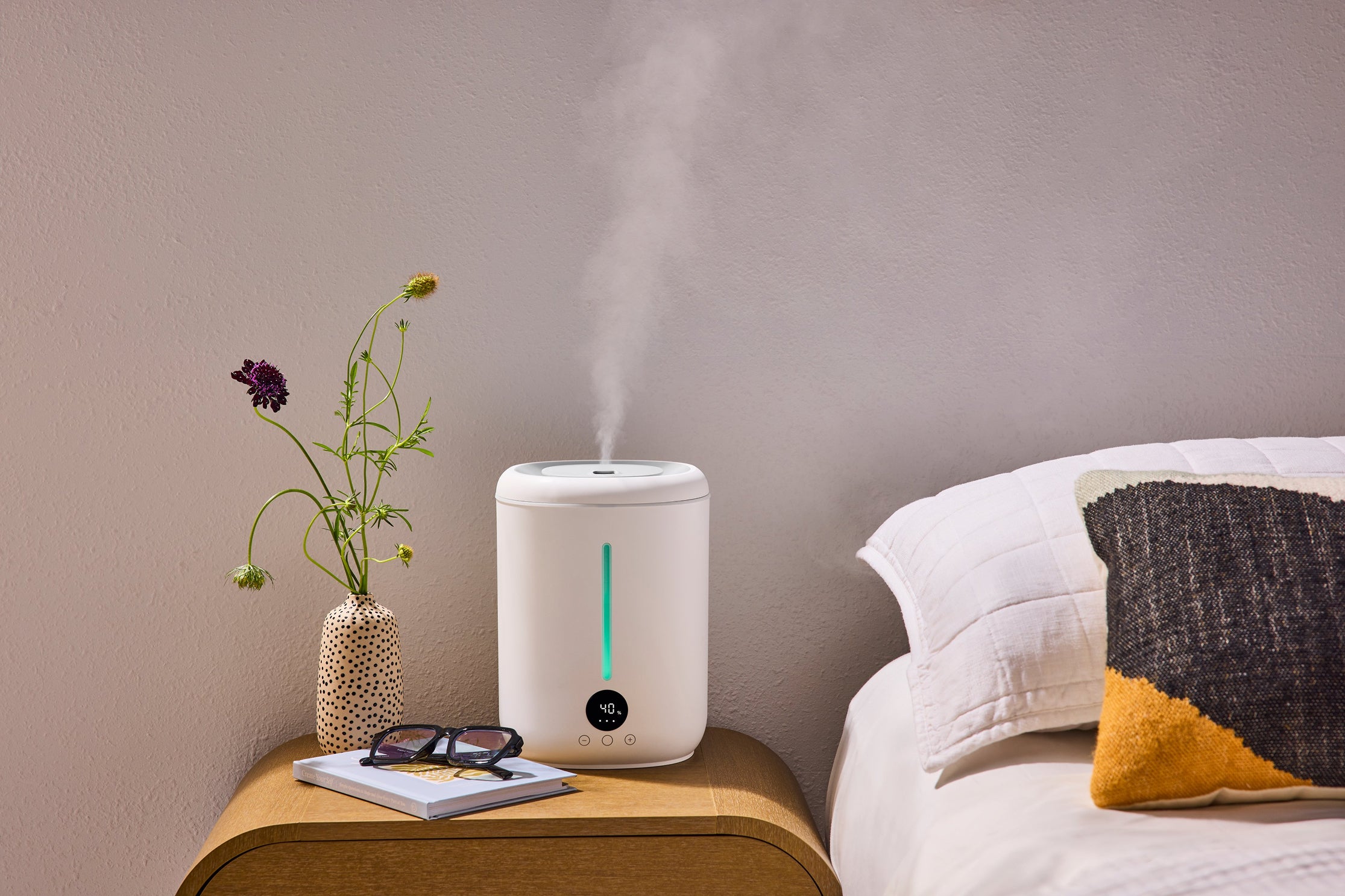
Molekule combines HEPA filtration, which captures fine mineral dust particles, with PECO technology, which destroys organic pollutants and biological compounds like bacteria and fungal spores at the molecular level. Together they address the full range of what Saharan dust carries.
-
Your bedroom is the highest priority. You spend seven to eight hours asleep while your body repairs itself. Air purifiers for the bedroom are the most high-impact placement during dust season.
-
For asthma, allergy, and cardiovascular conditions, air purifiers for allergies address the full range of airborne triggers dust events introduce, including the biological material that standard filtration misses.
Frequently Asked Questions
Does Saharan dust increase PM2.5 or PM10?
Both. Saharan dust raises both PM2.5 and PM10 levels, but the fine PM2.5 fraction carries the most serious health risk because those particles bypass the upper airways and reach deep lung tissue.
What is a dangerous PM2.5 level during a dust event?
The EPA's 24-hour standard for PM2.5 is 35 micrograms per cubic meter. Readings above this level are considered elevated. During significant Florida SAL events, outdoor concentrations can exceed this threshold.
Can I stay healthy indoors during a dust event?
Staying indoors significantly reduces exposure, but fine particles still infiltrate through gaps and HVAC systems. Running an air purifier and keeping windows closed gives you the most protection.
Who is most at risk during a Saharan dust event?
People with asthma, COPD, allergies, heart disease, older adults, and children face the highest risks. Healthy adults can also experience symptoms during significant events.
How do I track PM2.5 and PM10 during a dust event?
AirNow at airnow.gov provides real-time AQI readings including PM2.5 and PM10 levels for locations across the US. NOAA's Saharan Air Layer page tracks plume positions and predicted paths.


