


Yes. And most people have no idea it is happening. When a Saharan dust plume arrives over Florida or the Gulf Coast, the instinct is to close the windows and stay inside. That is the right first move. But closing your windows does not seal your home. Fine dust particles still infiltrate through gaps around doors and windows, through HVAC systems, through any ventilation pathway connecting your indoor and outdoor air.
Within hours of an active plume overhead, your indoor air quality can deteriorate significantly, and standard home filtration may not be enough to keep up. High quality air purifiers are specifically designed to address what gets through. Here is exactly what happens to the air inside your home during a Saharan dust event, and what you can do about it.
Key Takeaways
-
Saharan dust particles range from very fine (under 1 micron) to coarse (over 100 microns), but it is the fine PM2.5 fraction that travels farthest and poses the greatest health risk indoors.
-
Indoor PM levels begin rising within a few hours of an active outdoor plume, depending on your home's air infiltration rate and HVAC operation.
-
Closing windows significantly reduces infiltration but does not stop it. Gaps, HVAC systems, and ventilation pathways all allow fine particles to enter.
-
Research on indoor PM reduction shows that HEPA air purifiers can reduce indoor PM2.5 by 50 to 60 percent compared to no filtration.
-
Sensitive individuals can experience respiratory symptoms for 12 to 48 hours after outdoor dust levels normalize if indoor filtration is inadequate.
-
Ionizers and UV systems have inconsistent results in peer-reviewed research for particle removal and some generate ozone, a known lung irritant, as a byproduct.
-
The most effective indoor protection is layered: windows closed, HVAC set to recirculate with a high-rated filter, and a dedicated air purifier running.
Saharan Dust Indoors: At a Glance
|
What's Happening |
What to Do |
|
|
Particle sizes |
The finest particles stay airborne longest and are small enough to pass through gaps that stop larger dust. |
Focus on fine particle filtration, not just visible dust. |
|
How it gets in |
HVAC systems, gaps around doors and windows, exhaust fans, and open doors all let fine dust inside. |
Set HVAC to recirculate. Avoid running exhaust fans during active events. |
|
How fast it builds up |
Indoor dust levels start rising within 2 to 6 hours of a plume arriving outside. |
Start running air purifiers before outdoor levels peak, not after. |
|
Even closed homes are affected |
In a typical closed home, indoor dust can reach more than half the outdoor concentration. |
Active air purification is the only reliable way to reduce this further. |
|
Health effects |
Nasal irritation comes first, then airway inflammation, then broader effects with longer exposure. |
Reduce exposure early. Do not wait for symptoms to act. |
|
After the plume passes |
Fine particles stay suspended inside for hours after outdoor levels drop and settle on surfaces. |
Run air purifiers for 1 to 2 days after outdoor levels normalize. Clean soft surfaces afterward. |
|
Ionizers and UV devices |
Some generate ozone as a byproduct, which irritates the lungs and makes symptoms worse. |
Use filtration-based purification only. |
|
Why Saharan dust is different |
It carries fungal spores and bacteria alongside mineral particles, adding allergen and immune triggers. |
Choose a purifier that addresses biological material, not just particles. |
What Saharan Dust Actually Looks Like by Particle Size
By the time a plume reaches Florida or the Gulf Coast, the particles that remain suspended are mostly fine to very fine. These are the ones that matter indoors:
Coarse particles (PM10, 2.5 to 10 microns): Filtered by the nose and upper airways. Settle on surfaces quickly. Irritating but not the main health concern.
Fine particles (PM2.5, under 2.5 microns): The primary concern. According to the EPA, these bypass the upper airway entirely and reach deep into the lungs. They also infiltrate indoor spaces most effectively because their size allows them to pass through gaps that stop larger particles.
Ultrafine particles (under 0.1 microns): Present in dust plumes, penetrate deepest, and are the hardest to filter. Most consumer air purifiers are optimized for PM2.5; performance against ultrafine particles varies.
How Dust Gets Into Your Home
-
HVAC systems are the most significant pathway. Unless set to full recirculation mode with a high-rated filter, every cycle brings in some outdoor air.
-
Gaps around doors and windows allow fine particles to move through along with air pressure differentials, even in well-sealed homes.
-
Exhaust fans and range hoods create negative pressure that pulls outdoor air in more aggressively through every gap in the building.
-
Open doors let particles in both through the air and on clothing and shoes, which then become secondary indoor sources when particles settle on floors and carpets.
Research on indoor PM during extreme dust episodes confirmed that indoor concentrations tracked outdoor levels and rose measurably during events, with timing depending on building infiltration characteristics.
How Quickly Does Indoor Air Quality Deteriorate?
Indoor PM2.5 typically begins rising within two to six hours of a plume arriving. During a significant event where outdoor PM2.5 reaches 50 µg/m³, indoor levels in a typical home without active purification can reach 25 to 35 µg/m³, at or above the EPA's 24-hour standard. Research on PM2.5 infiltration found indoor concentrations track outdoor levels at roughly 0.5 to 0.7 times the outdoor concentration.
Fine particles do not disappear when outdoor levels drop. They remain suspended indoors for hours and settle on surfaces where movement re-suspends them. Research on sensitive individuals found respiratory symptoms can persist well after outdoor levels normalize.
What Indoor Dust Does to Your Body
Nasal and upper airway irritation comes first. Research on PM2.5 and mast cell function found that PM2.5 enhances histamine release, explaining congestion, runny nose, and watery eyes even when indoors.
Airway inflammation develops over the following hours. Research on PM2.5 and asthma and COPD found it directly triggers wheezing, chest tightness, and increased cough frequency.
Systemic effects develop with more sustained exposure as fine particles cross from the lungs into the bloodstream, increasing cardiovascular risk particularly in older adults.
What Actually Works for Keeping Dust Out
-
Set HVAC to recirculate before the plume arrives. Check your thermostat for the recirculation or indoor air setting specifically, not just the fan setting.
-
Upgrade your HVAC filter to MERV 13 or above. Standard filters with MERV ratings of 1 to 4 let PM2.5 through almost entirely. Replace more frequently during dust season.
-
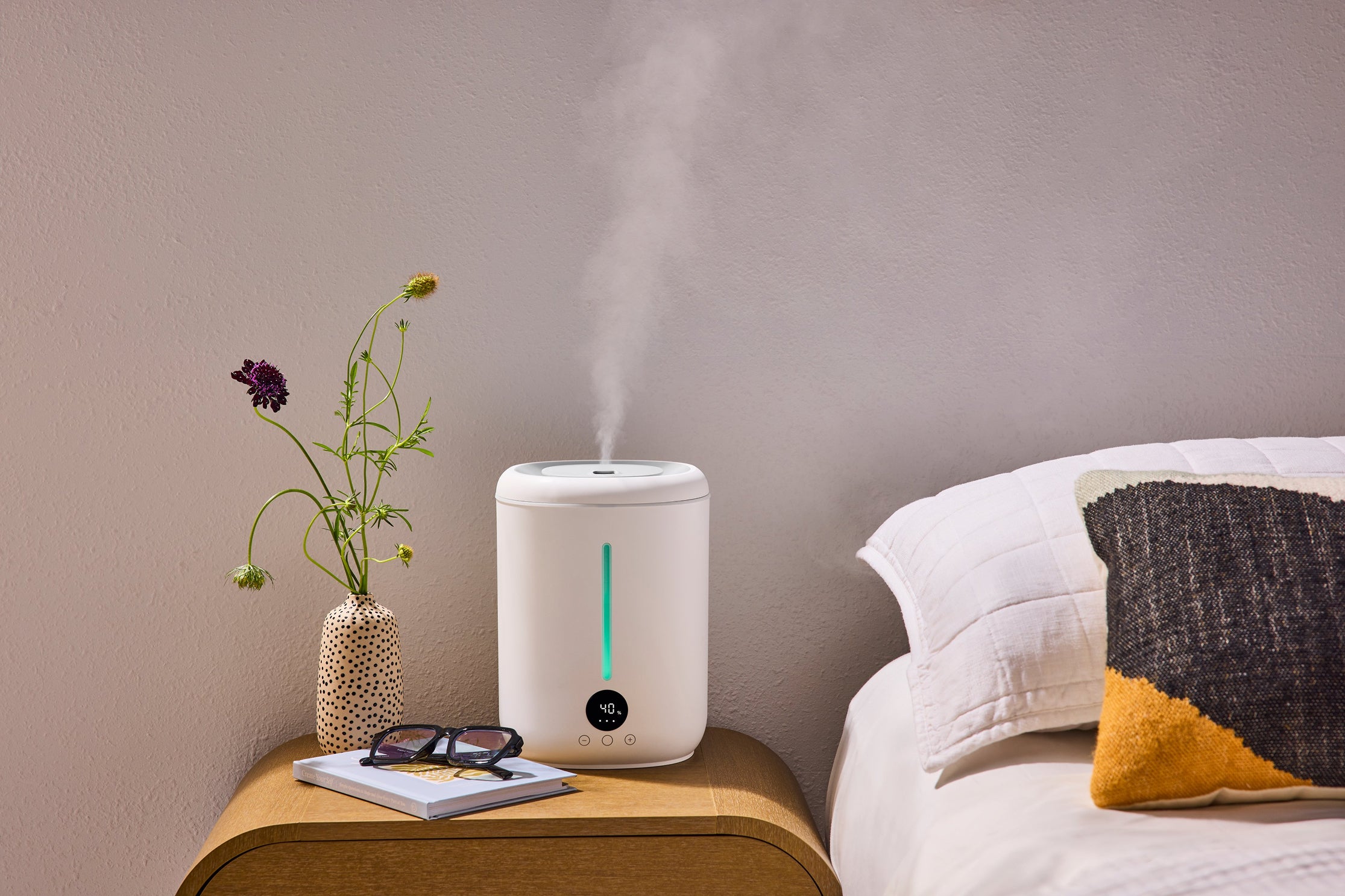
Run a dedicated air purifier. Research on HEPA purifiers documented 50 to 60 percent indoor PM2.5 reductions compared to no filtration. Air purifiers for dust are built for fine particulate matter. Molekule combines HEPA filtration, which captures fine mineral particles, with PECO technology, which breaks down organic compounds and biological material like fungal spores and bacteria at the molecular level. Together they address the full range of what Saharan dust carries indoors.
-
Avoid ionizers and UV-only systems. The EPA confirms ionizers show inconsistent results and some generate ozone, a lung irritant that worsens respiratory symptoms.
-
Prioritize your bedroom overnight. Air purifiers for the bedroom deliver the most health benefit during dust season. Run continuously from when the plume arrives through a day or two after outdoor levels drop.
-
Clean surfaces after a dust event. Damp mop hard floors rather than dry sweeping. Vacuum carpets with a HEPA-equipped vacuum to avoid re-suspending settled particles.
How Long Does Indoor Dust Last After a Plume Passes?
Fine particles remain suspended and continue settling on surfaces for days after outdoor levels normalize. Sensitive individuals can experience symptoms for 12 to 48 hours after outdoor dust clears if indoor filtration is inadequate. Run your air purifier for one to two days after outdoor levels drop and clean soft surfaces after major events.
Does Saharan Dust Affect Indoor Air Differently From Other Pollution?
Yes. Saharan dust carries fungal spores and bacteria that standard outdoor pollution does not. A home with elevated indoor Saharan dust is not just dealing with fine particles. It is dealing with a complex aerosol including microbiological material your immune system may not have encountered before.
Molekule combines HEPA filtration, which captures the fine mineral dust particles, with PECO technology, which breaks down organic pollutants and biological material like fungal spores and bacteria at the molecular level. That combination is why it performs differently from a standard HEPA filter alone during a Saharan dust air quality event.
Frequently Asked Questions
Does Saharan dust actually get inside a closed home?
Yes. Fine particles infiltrate through HVAC systems, gaps around doors and windows, and any active ventilation pathway. Closing windows significantly reduces how much gets in but does not stop it entirely.
How long does it take for indoor air to be affected?
Indoor dust levels typically begin rising within two to six hours of a plume arriving outside, depending on how well-sealed your home is and how your HVAC is set up.
What is the best way to keep Saharan dust out of my home?
The most effective approach is layered: set your HVAC to recirculate, upgrade to a higher-rated HVAC filter, and run a dedicated air purifier. The bedroom is the highest priority room.
How long do dust particles stay in my home after a plume passes?
Fine particles remain suspended indoors for hours after outdoor levels drop and continue settling on surfaces for days. Running an air purifier for one to two days after outdoor levels normalize and cleaning soft surfaces afterward reduces the residual load.
Are ionizers or UV air purifiers effective against Saharan dust?
No. The EPA confirms ionizers show inconsistent results for particle removal and some generate ozone as a byproduct, which worsens respiratory symptoms. Filtration-based purifiers are the more reliable option.


