

Key Takeaways
-
Dry indoor air increases how much water your skin loses overnight through a process called transepidermal water loss (TEWL).
-
Keeping bedroom humidity between 40 and 60% supports your skin barrier and reduces overnight moisture loss.
-
Raising humidity from very low levels to around 45% can significantly reduce TEWL, helping your skin retain moisture while you sleep.
-
Humidity above 60% encourages mold growth and dust mites, both of which are known triggers for allergic skin reactions.
-
Tap water in ultrasonic humidifiers releases mineral dust into the air that can settle on skin and irritate it. Use distilled or demineralized water instead.
-
Stagnant water in a humidifier tank breeds bacteria and mold within 48 hours. Clean your humidifier every one to three days.
-
Your skin does its most active repair during deep sleep. Anything that disrupts sleep quality, including dry or polluted air, interrupts that process.
Yes, sleeping with a humidifier can be good for your skin, but it’s more nuanced than that. The right humidity level, the right water, and a clean machine make the difference between a genuine skin benefit and a bedroom that breeds mold and bacteria. Air purifiers for bedrooms pair well with humidifiers to make sure the air you breathe at night is both properly humidified and clean.
Why Dry Air Is Hard on Your Skin
Your skin has a natural moisture barrier called the stratum corneum. It holds water in and keeps irritants out. When the air around you is very dry, your skin loses moisture faster than it can replace it through a process called transepidermal water loss, or TEWL.
Research on low humidity and skin barrier function found that when ambient humidity drops significantly, the skin's barrier function deteriorates. Indoor air in winter, particularly in heated rooms, regularly drops to 10 to 20% relative humidity. At those levels, your skin is working hard just to hold onto its own moisture overnight.
A study on dry environment exposure and skin barrier found that raising humidity from very low levels, around 15%, to around 45% significantly reduced transepidermal water loss. That matters because what your skin loses overnight it has to work to rebuild during the day, and if the cycle repeats every night, your skin barrier gradually weakens over time.
What the Right Humidity Does for Your Skin
When you sleep in a room with proper humidity, a few things happen that directly benefit your skin.
Your skin barrier holds moisture better. With consistent exposure to 40 to 60% relative humidity, the outer layer of skin has the environment it needs to maintain its lipid structure, the natural fats that keep moisture locked in and irritants out.
You lose less water overnight. Even a moderate increase in bedroom humidity reduces the amount of moisture your skin loses while you sleep, meaning you wake up with skin that feels and functions better.
Your skin can repair itself properly. Research on sleep and cellular repair found that your body does its most active tissue regeneration during deep sleep. Skin cells renew, collagen is produced, and the skin barrier rebuilds. Dry, irritated skin, or sleep disrupted by nighttime coughing and nasal dryness, interrupts all of that.
Nighttime discomfort goes down. Humidified air reduces dry throat, nasal irritation, and overnight coughing. Studies on humidification and nasal symptoms found that humidified air meaningfully reduced nighttime nasal dryness and discomfort compared to dry air. Better sleep means more time in deep sleep, which is when skin repair actually happens.
The Ideal Humidity Range for Skin
The sweet spot is 40 to 60% relative humidity.
Research on dust mite control found that dust mites thrive at higher humidity levels. Mold spores also grow more readily above 60%. Both are well-documented triggers for allergic skin reactions including eczema flares and contact dermatitis. So a humidifier turned up too high actively makes things worse for people with sensitive skin.
A hygrometer, which measures relative humidity as a percentage of the maximum moisture air can hold at a given temperature, is worth keeping in your bedroom so you can see exactly where your levels sit. They cost a few dollars at most home improvement stores.
When a Humidifier Might Not Be Good to Sleep With
A humidifier is not automatically beneficial to everyone. Used incorrectly, it can make your bedroom air worse, not better.
Tap Water and Mineral Dust
Ultrasonic humidifiers turn water into a fine mist. If you use tap water, the minerals in it, calcium, magnesium, and other dissolved solids, get dispersed into the air along with the moisture. Research on ultrasonic humidifiers and airborne minerals found that this mineral dust settles on surfaces, and on skin, where it can clog pores and counteract the hydration benefits you were trying to achieve.
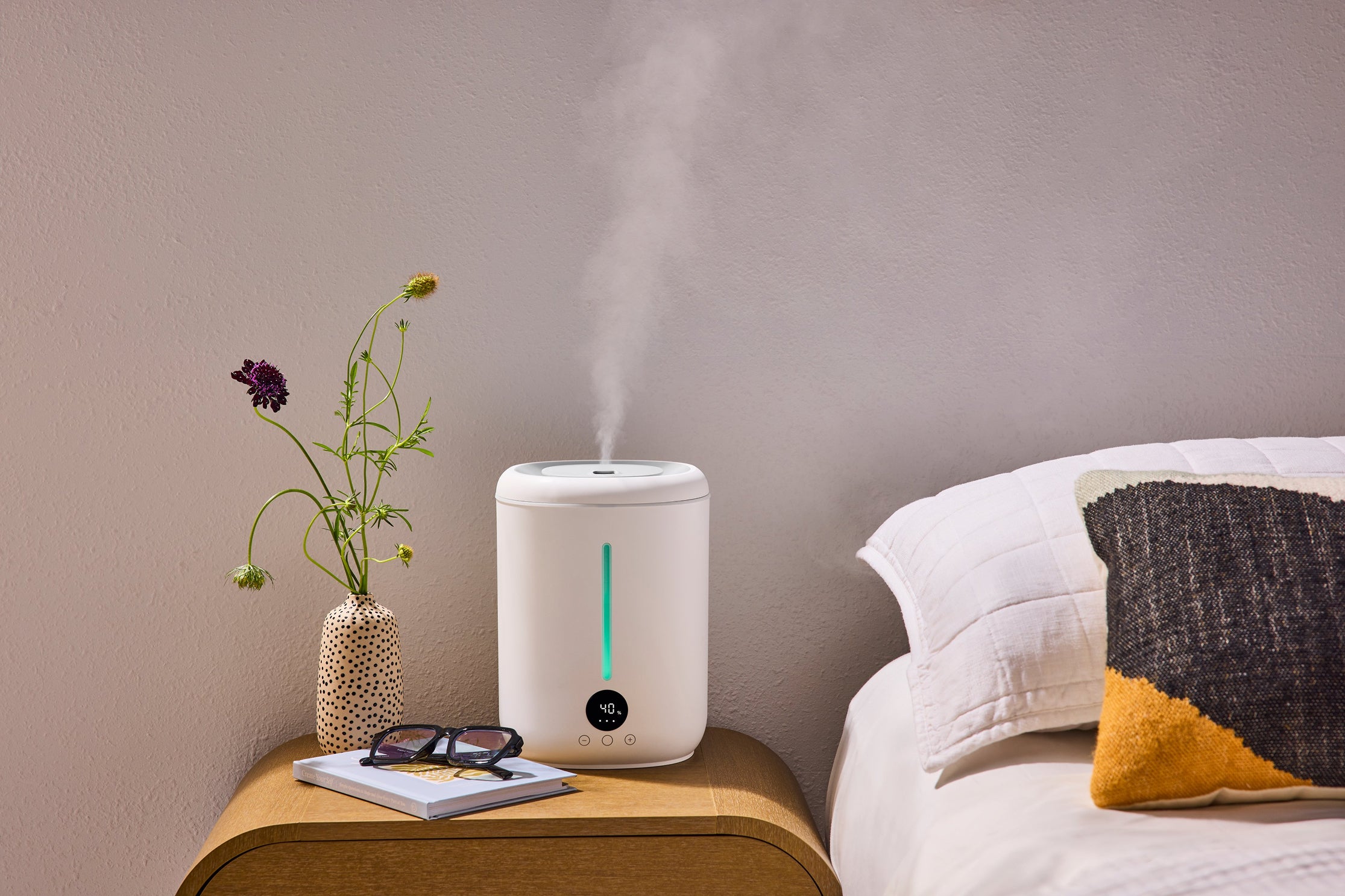
We recommend using distilled water with Glow, our ultrasonic humidifier.
Bacteria and Mold in the Tank
Stagnant water is a breeding ground for bacteria and mold. Research found that portable humidifiers can raise indoor bacterial concentrations and disperse potentially pathogenic microorganisms into the air. This only happens when tanks are not cleaned regularly, so as long as you clean it regularly, there shouldn’t be any issues.
The same moisture conditions that allow mold to grow in air conditioners apply to humidifier tanks, where stagnant water creates identical conditions for bacterial and mold growth. Clean your humidifier every one to three days, empty the tank when not in use, and let it dry completely before refilling.
Too Much Humidity
Running your humidifier on the highest setting all night is counterproductive. As noted above, humidity above 60% encourages mold spores and dust mites. If you have a sensitive skin condition like eczema or rosacea, this can trigger flares rather than soothe them. Set your humidifier to maintain the 40 to 60% range and monitor with a hygrometer.
Humidifier vs. Air Purifier: Do You Need Both?
A humidifier adds moisture to the air. An air purifier removes pollutants from the air. They do different things and they work well together.
If you run a humidifier in a room with elevated VOCs, dust, or mold spores, you are adding moisture to already compromised air. That moisture can actually make some pollutants, like mold spores, more active.
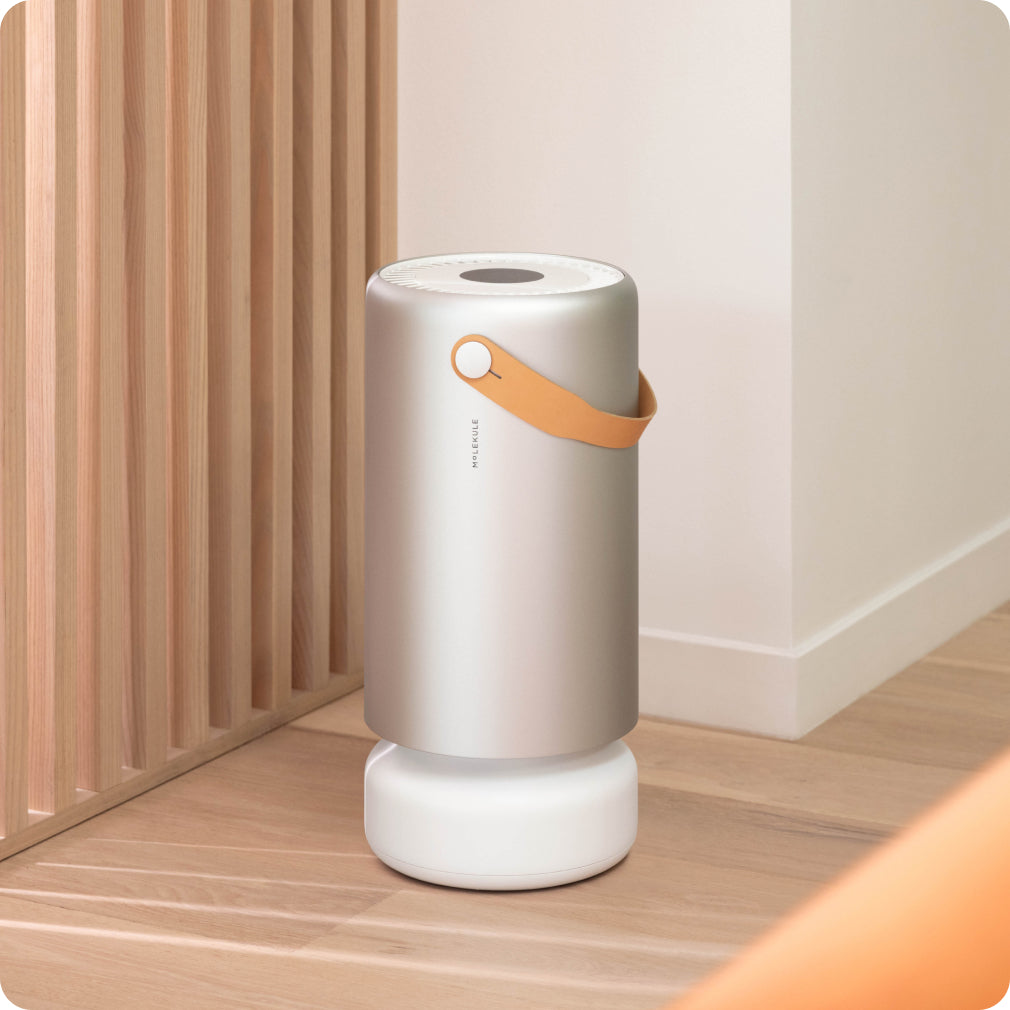
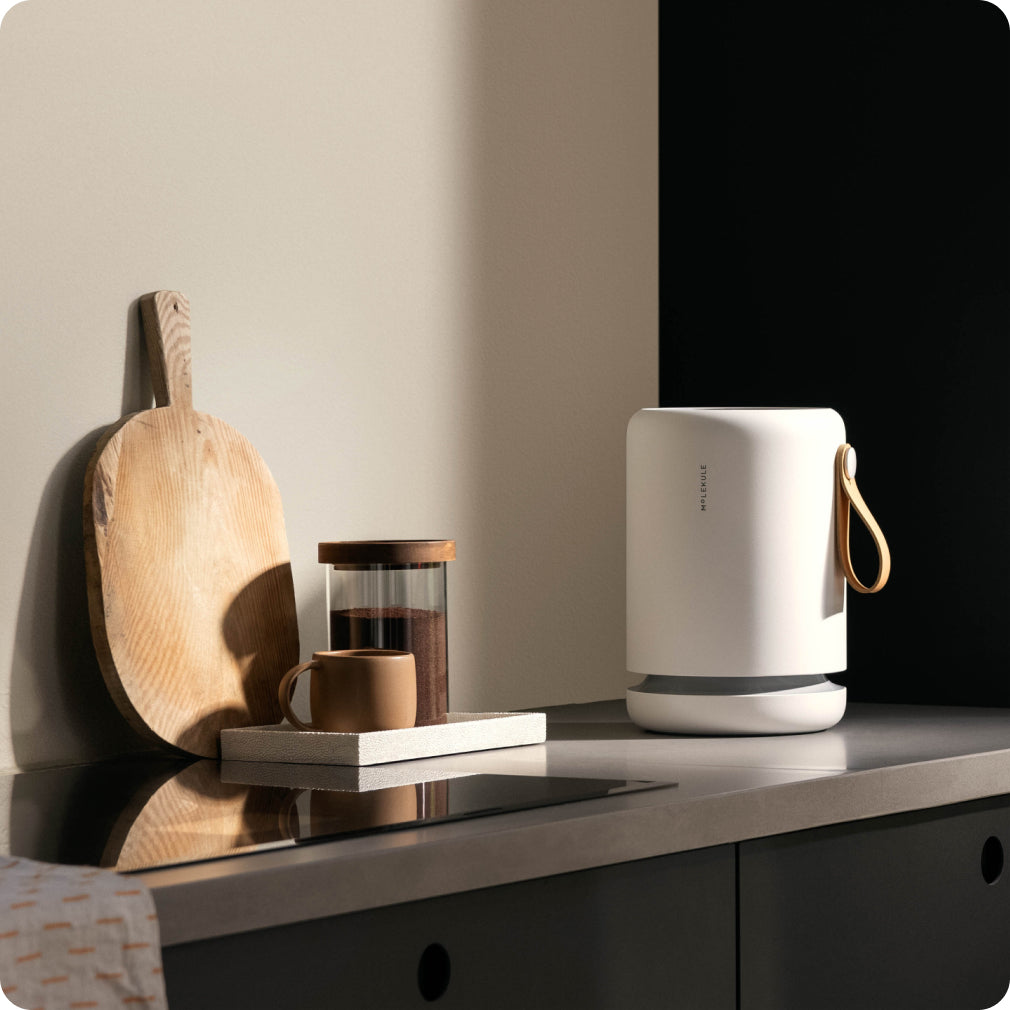
For the cleanest possible sleep environment, running a Molekule air purifier alongside a humidifier means the air you are breathing is both properly moisturized and free of many of the pollutants and allergens that would otherwise work against your skin while you sleep.
Tips for Getting the Most Out of Your Humidifier at Night
-
Use distilled or demineralized water to avoid mineral dust dispersal.
-
Clean the tank every one to three days and let it dry fully between uses.
-
Keep humidity between 40 and 60% and monitor with a hygrometer.
-
Position the humidifier away from your bed so mist does not land directly on your bedding or skin.
-
Run it alongside an air purifier to keep the humidified air clean.
-
Apply moisturizer before bed to give humidity something to work with. Damp skin absorbs moisturizer better than completely dry skin.
Using a humidifier correctly, including where you position it and how often you clean it, makes a significant difference to whether it actually benefits your skin or works against it. People who sleep with a humidifier in very dry climates or heated winter bedrooms tend to see the most noticeable skin improvement, since those are the conditions where baseline humidity is lowest.
Frequently Asked Questions
Does sleeping with a humidifier help your skin?
Yes. Keeping bedroom humidity between 40 and 60% reduces overnight transepidermal water loss, helping your skin hold onto moisture while you sleep.
What humidity level is best for skin while sleeping?
40 to 60% relative humidity. Below that your skin loses moisture faster than it should. Above 60% you risk encouraging mold and dust mites, both of which can trigger skin reactions.
Can a humidifier make your skin worse?
Yes, if used incorrectly. Tap water disperses mineral dust that can irritate skin. A dirty tank disperses bacteria and mold. Too high humidity encourages allergens that trigger skin reactions.
Should you use distilled water in a humidifier?
Yes. Distilled or demineralized water prevents the mineral dust that ultrasonic humidifiers release when tap water is used, which can settle on skin and clog pores.
Do you need both a humidifier and an air purifier?
They do different things. A humidifier adds moisture. An air purifier removes pollutants. For the best sleep environment for your skin, both together produce better results than either alone.