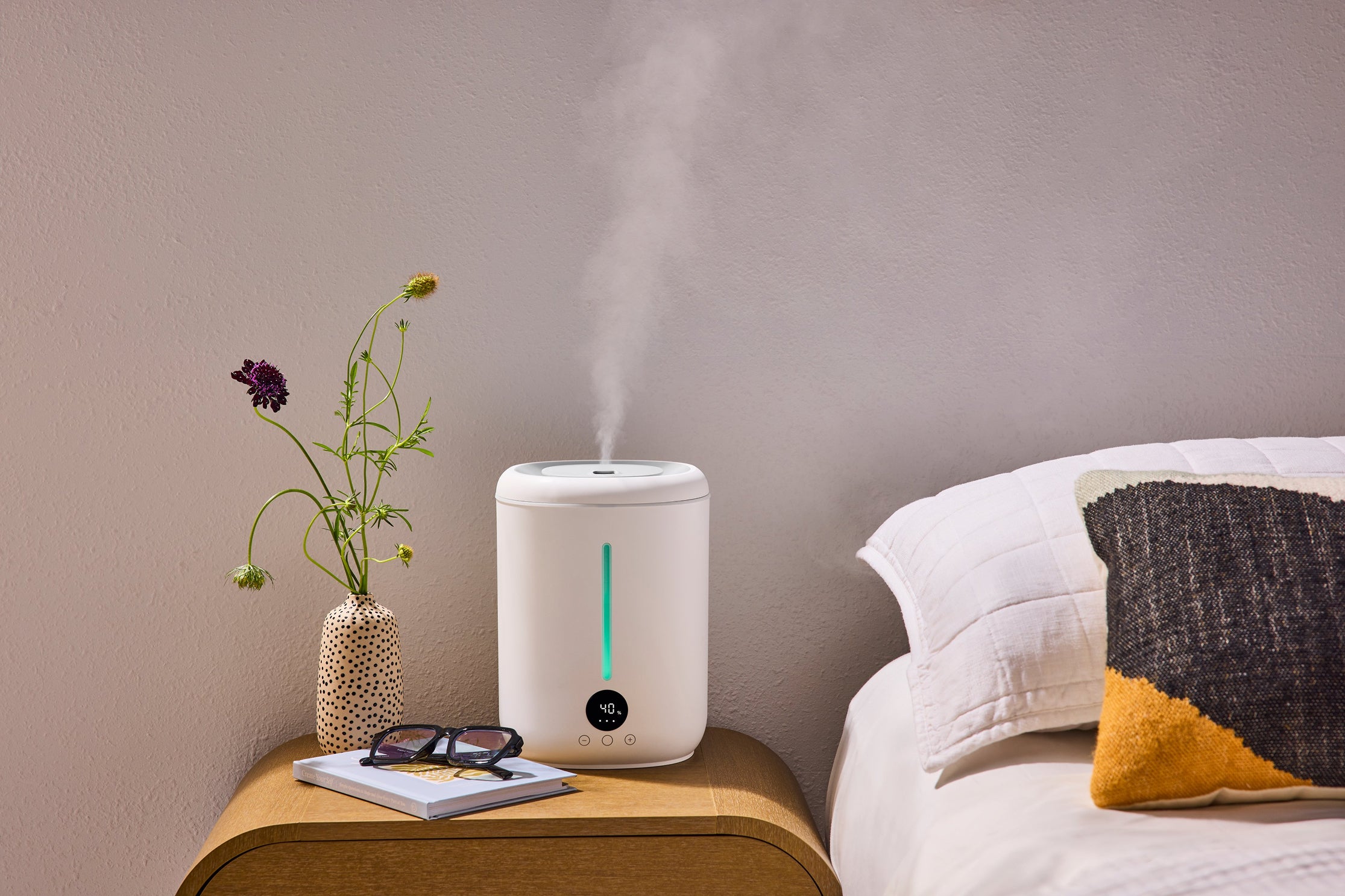


For most people, sleeping with a humidifier every night is safe and beneficial, as long as you keep indoor humidity between 40–50% and maintain the unit properly.
The specific question people tend to have is about frequency: what does nightly use of a humidifier do for your body over time and when should you pause, if ever?
Can You Leave a Humidifier On All Night?
Yes, you can safely leave a humidifier on all night under three conditions:
-
Humidity stays below 55%. Above that threshold, mold growth accelerates and dust mite populations increase. Both worsen respiratory symptoms.
-
The tank is cleaned every 1–3 days. Stagnant water grows bacteria and biofilm. An unclean tank running all night aerosolises that contamination toward you.
-
You're using distilled or low-mineral water. Tap water in ultrasonic models produces airborne mineral particles (the "white dust" you may notice on surfaces near the unit).
You should turn it off if you notice condensation forming on windows, bedding feels damp or cold to the touch, or a musty smell developing in the room. A cool mist humidifier that shuts off automatically at a set humidity level removes the monitoring requirement entirely.
What Happens to Your Body When You Sleep with a Humidifier Every Night
The benefits of nightly humidifier use are cumulative. One night of humidified air can relieve symptoms, but consistent use over weeks produces more notable health benefits that compound over time.
Clearer Nasal Passages in the Morning
Consistently moist nasal passages maintain cilia function, which are the hair-like structures that clear mucus and debris from the respiratory tract. Chronic dry air in the bedroom suppresses this mechanism over weeks, which is why people in heated buildings often develop what feels like ‘chronic’ congestion by midwinter.
A nightly humidifier addresses the cause, preventing the relative humidity from dropping to a point where cilia function is impacted. If you’ve never used a humidifier, you’ll likely notice the impact after the first night, and the effects should continue to compound with regular use.
Less Snoring Caused by Dry Air or Congestion
Dry, irritated throat tissue vibrates more readily, resulting in more snoring. Sleeping with a humidifier won’t immediately prevent you from snoring, but with regular use, nightly humidity reduces throat tissue irritation and thus, snoring caused by dry air or congestion.
If your snoring is caused by obstructive sleep apnea (OSA), obesity, deviated septum, enlarged tonsils, or another health issue, humidifiers will have no impact on your snoring.
Better Skin Hydration Through the Night
Your skin repairs itself overnight. Humidity above 40% reduces transepidermal water loss (TEWL) during this time, which contributes to dry skin, eczema flares, and the kind of tight, parched-feeling skin that often worsens in heated winter environments.
Put more simply, your skin repairs better in a room with relative humidity above 40%.
Lower Risk of Getting Sick During Dry-Air Season
Dry winter indoor air is a consistent by-product of central heating. While it’s important to heat your home during the winter, central heating creates conditions where viral particles remain suspended and infectious longer. By using a humidifier in conjunction with an air purifier and central heat, you can reduce your exposure to infectious particles, potentially lowering your risk of getting sick.
Easier, Deeper Sleep
Breathing comfortably through clear nasal passages produces fewer micro-arousals during sleep. When the airway is less congested and throat tissue is less irritated, your sleep improves. This means more time spent in deep sleep and REM stages, plus fewer coughing fits and dry-air discomfort during the night.
When You Should Turn the Humidifier Off
Not every single person needs to sleep with a humidifier every night. There are specific circumstances where you should skip it, or stop using it completely until conditions change. Those conditions are:
-
If indoor humidity already exceeds 50% without the humidifier running. This is common in humid US climates (the Southeast, Gulf Coast) and during humid summers even in typically dry regions. Adding more moisture at that point creates mold and dust mite conditions rather than preventing them. Use a hygrometer to determine your home’s relative humidity.
-
If condensation appears on windows or bedding feels damp. These are signals that humidity has exceeded the safe range. Reduce output, ventilate briefly, and drop the target.
-
If you have COPD or a respiratory condition where humid air worsens breathing. Some patients find increased ambient humidity harder to manage. Consult a physician before committing to nightly use.
-
If you can't clean the tank every 2–3 days. A dirty humidifier running every night is worse than no humidifier. If it’s contaminated, it can disperse bacteria, mold spores, mineral deposits, all of which can cause adverse health effects. If you can’t commit to consistently cleaning it, you may want to look for another solution.
How to Maintain Your Humidifier for Safe, Nightly Use
Refill with Fresh Water Daily
Water left in the tank for more than 24 hours begins growing bacteria and biofilm. Empty the tank completely, rinse it, and refill with fresh distilled water each day. If you simply top up the water up what's already there carries yesterday's bacterial load forward.
Clean the Tank Every Two to Three Days
To clean a humidifier and prevent mold buildup, simply clean the tank, wipe down the interior with a clean cloth, and allow it to air-dry before refilling. You can do a quick rinse and wipe weekly, then a deeper clean with water and vinegar once per month. This helps prevent any mold growth or buildup of minerals from water.
Check the Filter or Wick Monthly for Discoloration
If your model uses a filter or wick, inspect it monthly. Discolouration, mineral encrustation, or a persistent smell after cleaning means the wick needs replacing.
How to Get the Most from Your Humidifier Every Night
-
Set the target at 40–50%. Don't chase a higher relative humidity because it feels drier in the room, set the target to 40-50% and then leave it alone.
-
Use a hygrometer. Humidity varies considerably with room size, ventilation, and outdoor conditions. Don't rely on feel.
-
Placement: 3 feet from the bed, elevated on a nightstand or dresser. Don't point mist at pillows, bedding, or electronics.
-
Water type: Distilled > filtered > tap. Mineral deposits from tap water aerosolise in ultrasonic models and land on surfaces and in airways.
-
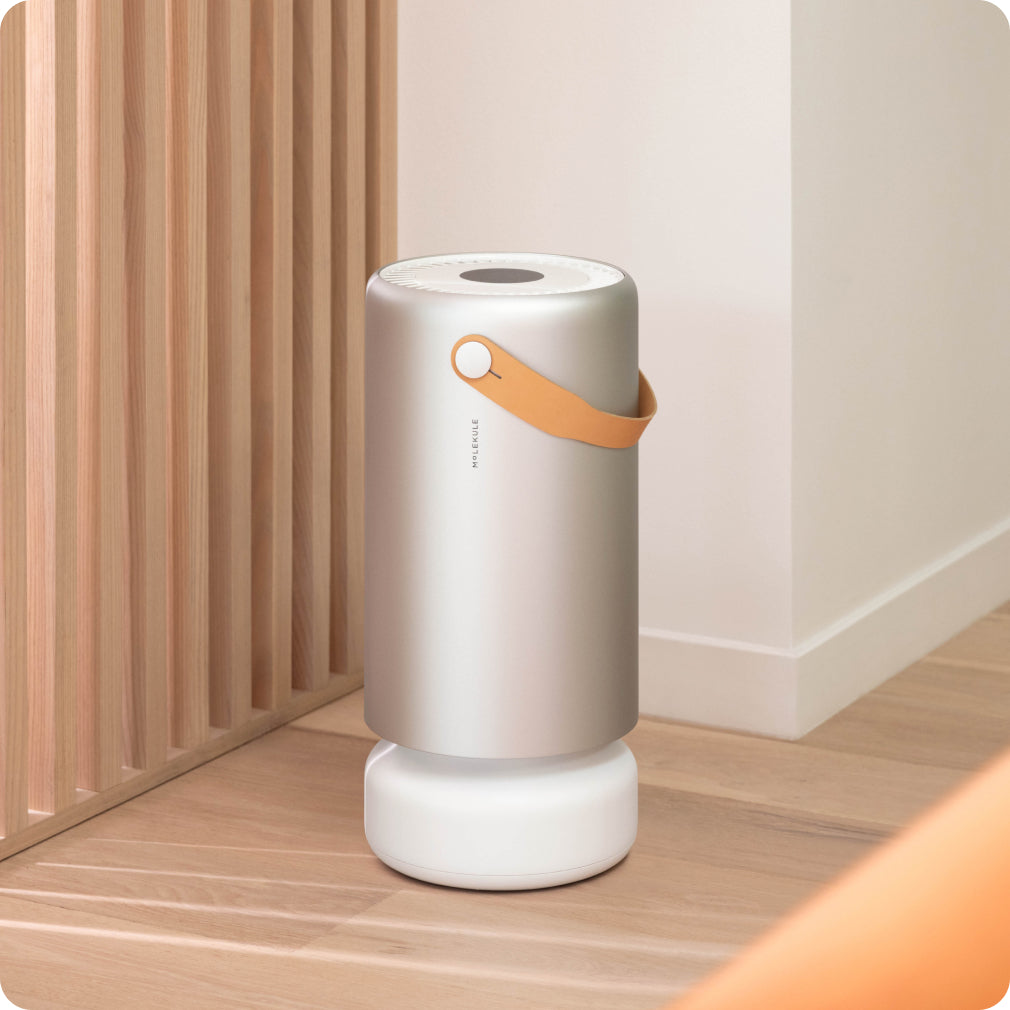
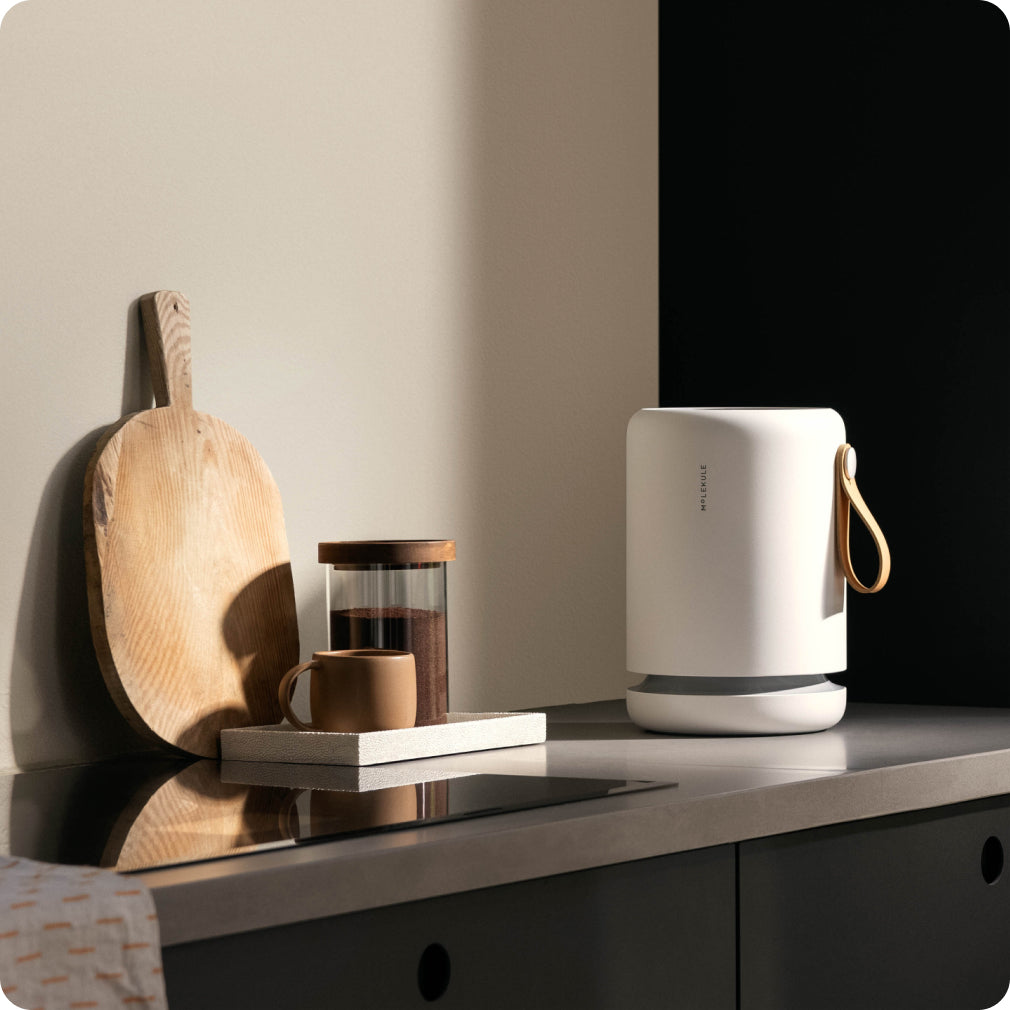
Pair it with an air purifier. A humidifier adds moisture but does nothing about airborne particles, mold spores, or bacteria in the room. For the best overnight air quality, pair it with a HEPA air purifier.
Frequently Asked Questions
Should you sleep with a humidifier every night?
Yes, for most people, as long as relative humidity stays at 40–50% and the tank is cleaned regularly. Nightly use is safe and produces cumulative benefits for nasal health, skin hydration, and sleep quality.
Is it bad to sleep with a humidifier every night?
Not if you use it correctly. Over-humidifying (above 55–60%) and dirty tanks are the two ways nightly use goes wrong, and both are preventable with the maintenance routine above.
How do I know if the humidity is too high?
Condensation on windows, damp-feeling bedding, or a musty smell developing in the room. Check with a hygrometer and reduce output or ventilate briefly.
Is it better to sleep with a humidifier or air purifier?
They serve different functions. A humidifier adds moisture; an air purifier destroys airborne particles. Both can run simultaneously to address humidity and air quality as separate problems with separate tools.