


An air purifier reduces harmful particles you breathe indoors. Depending on the filter, that means fewer airborne allergens, less particle pollution, fewer airborne viruses and bacteria, and less odor and chemical gas. The measurable benefits follow from that single mechanism: lower exposure. An air purifier does not clean surfaces, remove carbon dioxide, or fix a pollution source, so it works best alongside ventilation and regular cleaning.
The seven benefits covered below:
-
Fewer allergens in the air
-
Fewer airborne asthma triggers
-
Lower exposure to airborne viruses
-
Fewer fine particles, which affect heart, metabolic and cognitive health
-
Less odor
-
Less dust buildup
-
A better sleep environment
|
Benefit |
What the evidence supports |
Strength |
|---|---|---|
|
Fewer allergens |
Filtration removes airborne pollen, dander, dust and mold spores |
Strong for air; no effect on allergens in bedding or carpet |
|
Fewer asthma triggers |
Lower particle exposure means fewer airway irritants |
Strong for exposure; individual symptom benefit varies |
|
Lower virus exposure |
HEPA filtration captures particles carrying SARS-CoV-2 |
Good for capture; no purifier prevents transmission |
|
Fewer fine particles |
A randomized trial found portable filtration lowered systolic blood pressure in older adults within three days |
Strongest evidence on this page |
|
Less odor |
Carbon adsorbs, and PECO breaks down, the volatile organic compounds that carry smell |
Good for airborne odor; no effect on the source |
|
Less dust buildup |
Removing airborne particles before they settle should slow accumulation |
Limited direct evidence; plausible but not measured here |
|
Better sleep |
Fewer airborne irritants means less nighttime congestion and disruption |
Moderate; observational rather than trial evidence |
1. Remove allergens
Your home is supposed to be your oasis, but it may not feel like much of one when your indoor air is loaded with allergy triggers like pollen, pet dander, dust, and mold spores. One of the top benefits of an allergen-specific air purifier is its ability to cut down your household allergen load.
Exposure to airborne allergens can cause symptoms such as sneezing, congestion, a runny nose, and itchy or watery eyes. If your allergy symptoms get worse at night or around the time you wake up, it’s a good clue that you’re reacting to allergens in your home.
To give your respiratory system a break, place an air purifier in your bedroom, living room, or wherever you spend the most time. Then, turn it on, keep it on, and let it do its thing.
2. Reduce asthma triggers in the air
An air purifier can help you manage the pollution levels in your home and reduce your exposure to pollution that can trigger asthma flare-ups. When you inhale airborne pollutants, they irritate your airways as they travel through your respiratory system, which can trigger your asthma and make breathing difficult.
Exposure to small airborne particles or ozone may worsen asthma symptoms and increase the need for asthma medication. And, childhood exposure to air pollution, both particulate matter and gaseous pollution, may also increase someone’s chance of developing asthma at some point during their life.
Airborne particles can range in size. Some are big enough to spot with the naked eye, like the floating dust particles you see when the sun shines through your window. Others are microscopic. High-efficiency mechanical air filters, like HEPA filters, are rated to remove at least 99.97% of pollen, dust, and other airborne particles 0.3 microns in size.
Molekule air purifiers also remove fine particles, but they go even further by destroying organic pollutants using patented Photo Electrochemical Oxidation (PECO) technology.
3. Reduce risk of airborne virus exposure
Viruses like the cold, flu, and COVID-19 can be transmitted through airborne particles and droplets. So, when someone in your home catches a respiratory bug, they can’t help spreading the virus through the air when they cough, sneeze, or even breathe. (Wearing a mask can certainly help, though.) That’s why it’s so common for viral infections to make their way through the entire household. Everyone’s breathing the same indoor air, so they’re bound to come into contact with the virus at some point.
Some air purifiers can capture bacteria and viruses, helping remove them from the air as they pass through the filter. HEPA filters have been found to capture particles containing COVID-19.
Molekule PECO-Filters remove viruses like coronavirus and flu strains from the air too, but they also inactivate them by up to 99.99% in single-pass laboratory chamber testing.
(You can read more about how Molekule destroys airborne viruses here, and keep in mind that no air purifier can totally prevent transmission of a virus.)
4. Less harmful particles in your home
Helps Lung & Heart health
Fine particles can get deep into your lungs and enter your blood like oxygen, where they have access to the rest of your body and can affect almost every biological system. Studies show that exposure to particle pollution can negatively impact heart health. A meta-analysis of 14 studies reported by the American Heart Association linked air pollution exposure to higher blood pressure in children and adolescents. Even short-term exposure has been linked with increased blood pressure and inflammation. Lowering your exposure to pollution, especially airborne particles, can help to protect your heart from the effects of bad air quality.
Some studies suggest using an air purifier to reduce particle pollution in your home may benefit your heart and lung health, especially if you live in an area with high levels of outdoor air pollution. For example, you might consider using an air purifier for smoke (here is how air purifiers handle smoke particles).
The strongest evidence that air purifiers help comes from a randomized, double-blind trial published in JAMA Internal Medicine in 2018. Researchers gave 40 older adults in a Detroit senior residence three-day periods of real air filtration or a sham unit that looked identical. Filtration cut personal PM2.5 exposure roughly in half, and systolic blood pressure fell by an average of 3.2 mm Hg compared with the sham.
The effect showed up within three days. It was a small trial, and most of the secondary heart measures did not improve significantly, but it remains one of the few studies to test portable air purifiers directly rather than measuring the harm of pollution.
Diabetes risk
Your risk of diabetes depends on many factors. Air pollution is not among the risk factors the CDC lists, but a growing body of research has examined the link.
A 2018 analysis in The Lancet Planetary Health estimated that in a single year, ambient PM2.5 pollution contributed to roughly 3.2 million new cases of diabetes worldwide (with an uncertainty range of 2.2 to 3.8 million). That figure covers outdoor air pollution rather than indoor air specifically, but outdoor fine particles do make their way inside, which is part of why indoor particle levels are worth managing. One long-term study, the Danish Nurse Cohort, followed nearly 29,000 women from the 1990s to 2013 and found that diabetes risk rose by 39% for every 10 μg/m3 increase in long-term PM2.5 exposure, though the range around that estimate was wide (4% to 86%). Nonsmokers and people with heart disease or obesity may be the most vulnerable to the effects of pollution on the risk of type 2 diabetes.
Focus and cognitive performance
Exposure to air pollution has also been linked to cognitive effects in both the short- and long-term, such as difficulty concentrating. These effects have been noticed at pollution levels commonly found in indoor environments. This highlights how important it is to use air filters that can effectively handle wildfire smoke to avoid any long-term health effects of wildfire smoke and other pollutants.
A 2021 Harvard research study demonstrated the link between air quality and cognitive performance by observing office workers in urban commercial buildings all over the world.
When levels of airborne particles (PM2.5) increased and ventilation decreased, participants took longer to answer test questions, and their answers were more likely to be wrong. It didn’t take that much air pollution to cause these effects, either.
These studies look at the effects of carbon dioxide, which air purifiers can’t address, but also fine particles, which they can.
5. Freedom from stinky odors
Some bad smells are easy to get rid of, like taking out the trash when it starts to stink. Others can be a little bit more stubborn. Whether you’re having trouble ridding your home of odors from cooking or increased PM concentration after a meal, new furniture, pets, or a stinky carpet, an air purifier may be able to help.
Scent molecules are volatile, meaning they evaporate quickly at room temperature. Then, they exist as a gas in your indoor air, ready to assault your unlucky nose at their first chance. Some air purifiers are equipped to handle volatile organic compounds (VOCs), a type of chemical gas which include most scent-causing molecules.
Activated carbon filters capture chemical gasses through a process called adsorption. As the air passes through the filter, VOCs and harmful gasses get stuck to the activated carbon. With a VOC air purifier, VOCs come into contact with a light-activated catalyst as they pass through the filter. This catalyst reacts with odor-causing gasses and breaks them down at the molecular level, removing them from the air for good.
6. Less dust buildup
Dust tends to look the same no matter where you find it. If you judged it by its uniform gray color, you’d never suspect it’s made up of a wide range of different particles. Dead skin cells, dirt, mold spores, bacteria, hair fragments, pollen, pet dander, dust mites (living and dead), and even heavy metals like lead can be found in house dust.
When you know what dust is made of, it’s even more annoying to watch it slowly cover the surfaces in your home. An air purifier can help slow the spread of dust by removing particulate matter from the air before it has a chance to settle, so you can spend less time dusting and more time doing something you actually enjoy.
7. Better sleep environment
Few things can ruin a morning faster than a bad night’s sleep, and poor indoor air quality can make getting quality shuteye feel almost impossible. Dust, pet dander, pollen, or other allergens in your air or on your bedding can cause respiratory irritation that interrupts your sleep with symptoms such as sneezing and nasal congestion. Even if you don’t usually experience allergies, breathing in particle pollution may still disrupt sleep.
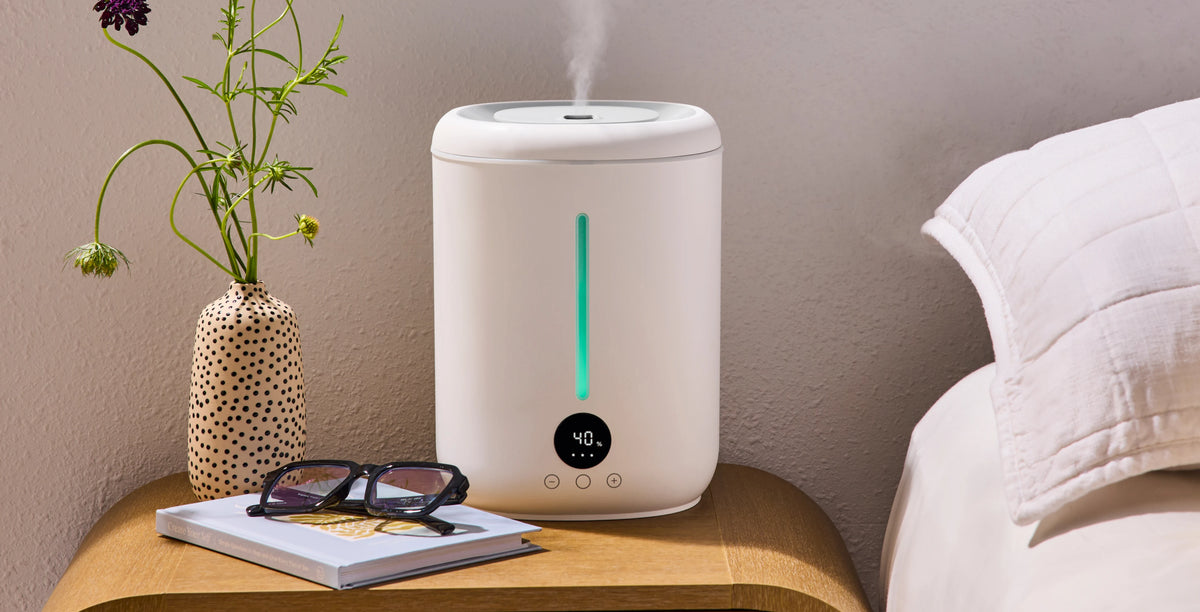
Putting an air purifier in your bedroom can help reduce your nighttime exposure to airborne particles. Try placing it on your nightstand or dresser, somewhere where the air intake won’t be blocked by walls, furniture, or upholstery. Then, keep the air purifier on all night at the highest setting that won’t disrupt your sleep.
What an air purifier will not do
-
Clean your surfaces. It treats air, not the dust, dander and residue already settled on bedding, carpet and furniture. Cleaning still matters.
-
Remove carbon dioxide. CO₂ builds up from breathing and needs ventilation, not filtration. This is why the cognitive research above points to ventilation as well as filtration.
-
Fix the source. A purifier reduces what is already airborne. It cannot stop a gas stove, a damp wall or a smoker from producing more.
-
Work with the wrong filter. Particle filters do not capture gases, and carbon filters do not capture particles. Match the filter to the pollutant you actually have.
All the benefits of air purifiers boil down to one thing: reducing your exposure to bad air quality. Using an air purifier (or two, or three) to clean the air in your house can be a great way to cut down on indoor air pollution or prepare for a wildfire or other air quality disaster.
Conditions like wildfires can spread fast, and you want to be ready. You’ll have even more success if you combine air purification with other good air quality habits, like regular cleaning, increasing ventilation, and decreasing your use of high-VOC products.
Frequently Asked Questions
Do air purifiers actually improve air quality?
Yes, air purifiers reduce airborne particles, allergens, VOCs, and in some cases viruses and bacteria, which directly lowers what you breathe indoors.
Are air purifiers worth it for allergies?
Yes, filtration removes airborne pollen, pet dander, dust, and mold spores, which are the most common triggers for indoor allergy symptoms.
Can an air purifier help with asthma?
An air purifier reduces the airborne particles and irritants that trigger asthma flare-ups, though individual symptom improvement varies depending on the person and pollution source.
Do air purifiers help with COVID-19?
HEPA filters have been shown to capture particles carrying SARS-CoV-2, and Molekule PECO filters inactivate coronavirus strains by up to 99.99% in single-pass laboratory chamber testing, though no air purifier can fully prevent viral transmission.
Can an air purifier reduce dust in my home?
An air purifier removes airborne particles before they settle, which slows dust buildup on surfaces, though it has no effect on dust already settled on furniture, carpet, or bedding.
Do air purifiers help you sleep better?
Reducing airborne allergens and particles lowers nighttime respiratory irritation, which can improve sleep quality, particularly for allergy and asthma sufferers.
What will an air purifier not do?
An air purifier will not clean your surfaces, remove carbon dioxide, or fix the source of pollution, it only treats what is already airborne.
How long should you run an air purifier?
Run it continuously for the best results, since air pollution builds up whenever the unit is off, especially in rooms you spend the most time in.


