

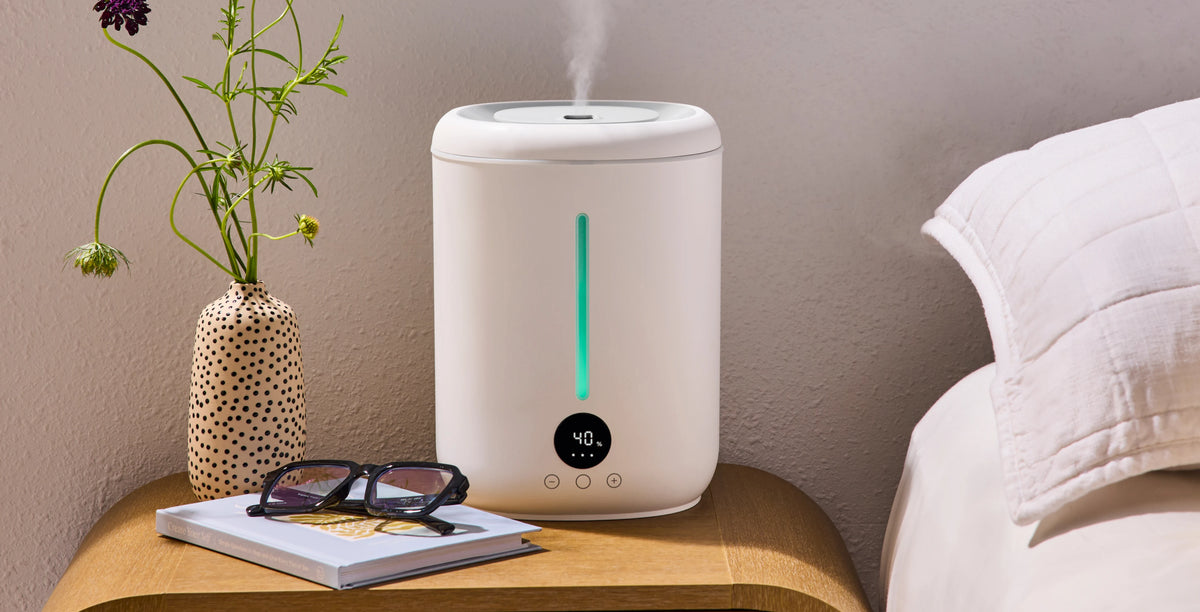


Winter dust is almost always caused by dry air and static electricity. But dry air and static don’t just happen; heating your home causes indoor moisture to dip below healthy levels. However, it’s possible to heat your home and maintain safe levels of relative indoor humidity by using a cool mist humidifier and other easy fixes.
What Causes Dry Winter Air?
During winter, forced-air heating reduces indoor relative humidity, often below 30%. Warm air holds more moisture capacity than cold air, so when your furnace heats incoming outdoor air, the relative humidity of that air drops sharply inside your home. The result is air that feels dry, stale, and increasingly uncomfortable.
Relative humidity is a measure of how much moisture air holds compared to its maximum capacity at a given temperature. When indoor air is heated by a furnace or space heater, it expands and gains the capacity to hold more moisture.
But because the actual amount of water vapor in the air remains the same, the relative humidity percentage drops. The recommended relative humidity level for a home is between 30-50%, and without proper humidifying efforts, indoor air levels can often drop below this range.
Most homes don’t monitor their relative humidity at all. By the time they notice the first symptoms: chapped lips, static shocks, dry skin, and dust collecting on every surface, the level has already dropped below the recommended range.
You can easily measure with a digital hygrometer, available at most home-improvement stores. Or if you choose to install a full-home humidifier or use the Molekule Glow, these systems detect low relative humidity levels and act accordingly to maintain healthy levels.
How Low Humidity Creates Static Electricity
Below 40% relative humidity, surfaces in your home accumulate electrostatic charge because water molecules in humid air conduct electrical charge away from surfaces before it can build up. Dry air has far fewer of those molecules, so charge accumulates instead of dissipating.
Forced-air heating systems push warm, moisture-depleted air throughout the house, consistently driving relative humidity below that 40% threshold. When you touch a metal doorknob and get shocked, or pull a shirt from a pile of laundry only to watch it cling to everything, that's electrostatic charge releasing.
Static buildup indicates that the ionic balance in your air has shifted. Charge isn't just collecting on your body and furniture, it's also acting on airborne particles, even though you can’t physically see it.
Dust and allergens acquire electrostatic charge under low-humidity conditions, which changes how they move and where they settle indoors.
Why Dust Clings and Floats Longer in Dry, Winter Air
Most dust particles are hygroscopic, meaning they absorb and release moisture from the surrounding air. When indoor relative humidity drops below 30%, these particles lose that moisture, become lighter, and stay suspended in your breathing zone far longer than they would in humid air.
Electrostatic charge compounds this, allowing surfaces to accumulate charge that attracts dust to walls, furniture, and bedding rather than letting it fall to the floor.
Dust carries dust mite feces, pet dander, mold spores, and bacteria. When these particles stay airborne longer, you inhale more of them. The EPA estimates that indoor air can be 2 to 5 times more polluted than outdoor air, and winter conditions push that figure higher.
How Dry Air Affects Your Respiratory System
Low humidity impairs mucociliary clearance, the process your nose and throat use to trap and expel airborne particles before they reach the lungs. When mucous membranes dry out, this defense weakens, and allergens penetrate deeper into the respiratory tract.
The American Academy of Allergy, Asthma & Immunology notes that low indoor humidity increases allergen exposure and worsens symptoms for people with asthma and allergies.
How Low Humidity and High Dust Levels Impact Your Health
When indoor relative humidity drops below 30%, your body registers it quickly. You’ll notice the following symptoms:
Respiratory and Sinus Symptoms
Mucous membranes in your nose and throat depend on moisture to trap and expel airborne particles. Dry air strips that protective layer, leaving you with a dry cough, nosebleeds, and a scratchy throat.
Reduced mucociliary clearance means your airways move allergens and pathogens less efficiently, increasing your susceptibility to respiratory infections, according to the American Lung Association.
Allergy and Asthma Worsening
Elevated dust levels in dry air increase allergen exposure directly. Low indoor humidity is associated with worsened asthma and allergy symptoms, particularly when airborne particulate matter stays suspended longer.
Skin and Comfort Issues
Below 30% relative humidity, skin loses moisture faster than it can replenish, causing chapping, tightness, and flaking. Static-charged bedding traps dust and allergens close to your face overnight, which can disrupt sleep.
How to Address Winter Dust Problems
Once you've confirmed humidity is low, two tools solve different parts of the problem.
Use a Humidifier
Using a humidifier in the winter raises indoor relative humidity back into the 30 - 50% range when using the correct settings, reducing electrostatic buildup and supporting mucociliary clearance. This is your respiratory tract's natural ability to trap and expel particles.
Whole-home units integrated with forced-air heating systems maintain consistent humidity across every room, though standalone units work well for main living areas, bedrooms, or apartments.
Use an Air Purifier
Humidification addresses the cause, but dust and allergens already suspended in your air need active removal. HEPA filtration captures up to 99.97% of airborne particles as small as 0.3 microns, including dust, mold spores, and common indoor allergens.
FAQs
How to fix dry air in the house during winter?
Use a whole-house or portable humidifier, boil water on the stove, and lower the thermostat to reduce dry heat.
How to get rid of static in the house during winter?
Raise indoor humidity above 30%, spray anti-static or water mist on carpets, and use dryer sheets or fabric softener.
Why is my house so dusty in the winter?
Closed windows trap dead skin and pet dander, while forced-air heating systems blast settled dust out of your ducts.
Does dry winter air dehydrate you?
Yes. Low humidity accelerates moisture evaporation from your skin and causes you to lose more water through breathing.


