

September 2026
•
5 min read
You’re not allergic to cat hair. You’re allergic to something in the air.
The protein Fel d 1 comes from skin and saliva, not fur. And it can be reduced with the right tools.

By: Mark Ham

KEY TAKEAWAYS

Cat allergy is roughly twice as common as dog allergy. The allergen responsible is a protein called Fel d 1.
Fel d 1 comes from skin and saliva, not fur. Brushing, breed, and coat length are largely beside the point.
It is transported on unusually small particles. Cat allergen can stay airborne for hours.
It has been detected in schools, offices, and homes that have never had a cat. It’s carried on clothing.
A HEPA air purifier captures dander and holds it. But only PECO destroys the allergen proteins that trigger your symptoms.
THE PART NOBODY EXPLAINS
The fur was never the problem.
Almost everyone assumes it’s pet hair they’re allergic to, which is why the standard advice leads to more brushing or choosing hypoallergenic breeds. Unfortunately, that advice has a poor track record, and the reason is hidden in the biology of allergens.
Cat allergies affect roughly twice as many people as dog allergies. The allergen responsible is Fel d 1, a protein produced in a cat’s sebaceous glands and saliva. Grooming spreads it across the coat, and from there it moves into the air on flakes of skin too small to see.
Source: Allergen Prevalence and Fel d 1 Characterization, ScienceDirect
That means the usual advice is aimed at the wrong target. You can brush away hair, but it doesn’t reduce the protein you’re actually allergic to.
Fel d 1 travels differently than every other allergen in your house.
Not all household allergens behave the same in the air. Dust mite allergens, for instance, ride on large, heavy particles. Disturb a mattress or a rug, and they go up, then come back down within minutes—which is why dust mite management is largely a bedding exercise.
Cat allergens are different. A substantial share of airborne Fel d 1 is carried on particles small enough to remain suspended for hours, and small enough to travel between rooms with ordinary air movement.
Source: Allergen Prevalence and Fel d 1 Characterization, ScienceDirect

That difference explains something every allergic pet owner has noticed: Keeping the animal out of the bedroom doesn’t fix the bedroom. The allergen was never confined to where the animal was standing.
Pet dander shows up in places that have never even had a pet.
Because those pet dander particles are small and adhesive, they travel on clothing. Researchers have found Fel d 1 in schools, offices, and homes where no cat has ever lived—which explains why a child can react in a building with no animal in it. It also means exposure isn’t a question of whether you own a pet. It’s a question of what’s in the air of the room.
None of which changes the part that actually matters to you.
You know the trade already. The cuddle you pay for forty minutes later. The antihistamine that’s become part of breakfast. Or when your kid has been asking for a dog for two years and you quietly do the math on what that would cost you in terms of allergy symptoms.

The most common remedies and misconceptions:
Antihistamines and nasal sprays: They work on the reaction after exposure has already happened. But they have no effect on the allergens in the room. It’s like taking a Tylenol for the rock in your shoe.
Keeping the pet out of the bedroom: Sure, it reduces direct contact. But Fel d 1 stays airborne and just relocates through the air.
Hypoallergenic breeds: Fel d 1 production varies between individual cats far more than it varies by breed. Lint rollers and vacuuming help on surfaces, but a low-shedding coat isn’t a low-allergen animal.
Bathing the animal: Lowers allergen on the coat measurably, then returns to baseline within a day or two. A treadmill rather than a solution—and your cat has opinions.
A HEPA purifier: The closest anyone has come, and the reason for the next section.
One of your highest ROI moves is to invest in a high-quality air purifier with both HEPA and PECO technology.
Why a HEPA-only purifier may not be enough for dander.
HEPA is a real standard, not a technology or a brand. To qualify, a filter has to capture at least 99.97 percent of particles at 0.3 microns. It is genuinely good at that job—for particles that hold still.
But capture is basically just storage. Fel d 1 gets trapped in the fibers, intact, until someone changes the filter. In the meantime, it can still be disturbed and re-released back into the room, and none of it is broken down or neutralized—it just moves from the air to the filter and waits there.
Which raises the question this page has been building toward: what actually destroys an allergen, instead of just relocating it?
The only technology proven to destroy allergens at a molecular level.
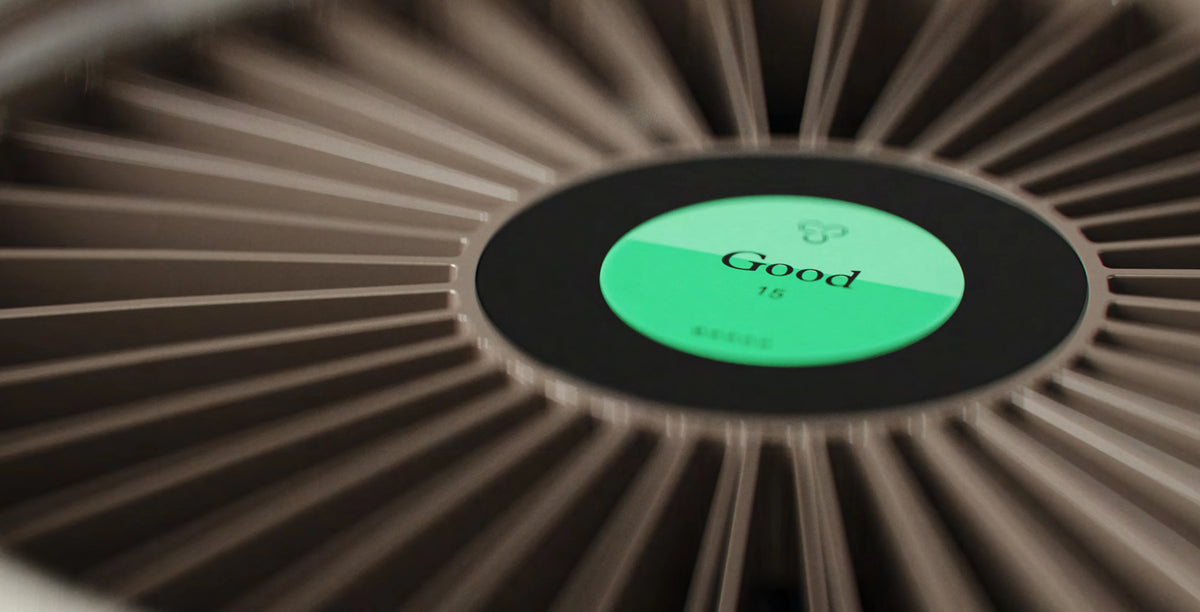
Thus far, only one brand uses Photo Electrochemical Oxidation (PECO). Air passes over a filter coated in a proprietary nanocatalyst. When UV-A light activates the coating, it triggers a reaction on the filter's surface that breaks pollutants apart at the molecular level, leaving only harmless compounds naturally found in the air. Not just captured. Destroyed.
Molekule has spent about 30 years developing PECO, and it's scientifically proven to destroy allergens, mold, viruses, bacteria, and chemicals. No ozone. No harmful byproducts.
It is combined with true HEPA filtration and a carbon layer for PECO-HEPA Advanced—carbon handles gases and odors, HEPA captures particles at 99.97 percent, and PECO destroys what the other two can only hold onto.
Proven against Fel d 1: Studies have shown that PECO is effective at breaking down Fel d 1 proteins found in cat dander.

You shouldn’t have to choose between your pet and breathing comfortably in your own house.
That’s the premise PECOAir+ is built on—and it’s arriving with a few things designed specifically for households with pets.
Whisper-quiet power: Strong enough for a home with pets, quiet enough to run while they nap.
Next-gen PECO: The only process proven to destroy Fel d 1 rather than just collect it.
This is your chance to experience it first.
Get notified for the presale of the new purifiers, built for the half of the problem you were never going to see.
Scientifically better air
™

© 2026 Molekule Group, Inc.