


That feeling when you’re sound asleep in the middle of winter, only to get woken up by your child at the side of your bed saying, “I’m stuffy…” The tissues are stocked, the sheets are clean and the particle level on your air purifier is as good as it gets. Yet no matter what you do, the stuffy noses, dry coughs and occasional nosebleeds keep coming back, even with good IAQ. It turns out the culprit might not be what’s in your air, but what’s missing from it—moisture.
Dry indoor air is not uncommon during the winter, especially when heaters are on blast 24/7. Everyone can feel the effects of low humidity, but children are particularly sensitive. Smaller nasal passages, developing immune systems and a faster rate of breathing mean your kids are getting the brunt of the dry air.
Here’s why maintaining healthy relative humidity for kids matters even more than you might think, and what you can do about it at home.
Why Children Are More Sensitive to Dry Air
Kids quite literally breathe more rapidly than adults. Newborns can take up to 60 breaths per minute, while adults average around 12–20. That faster pace means children simply inhale more air, including the dryness it carries, relative to their size.
When relative humidity drops below 30%, the moisture in our nasal passages and airways evaporates much more quickly. This thin layer of mucus normally serves as a protective barrier, trapping dust, allergens and pathogens before they reach the lungs. When the air is dry, that defense mechanism dries out too, making it harder to block or clear viruses.
Because children's’ airways and nasal passages are narrower, dry air can lead to congestion, mouth breathing and disrupted sleep. The result? More restless nights, more stuffiness and more sore throats in the morning.
Children’s immune systems are still learning how to respond to the world. The body’s first line of defense is its hydrated airways. When that fails, it gives viruses and bacteria a better chance to take hold. That’s one reason why dry air and colds in children tend to go hand in hand during the winter months.
The Science of Relative Humidity (and Why It Matters!)
Relative humidity (RH) is a measure of how much moisture is in the air compared to how much it could hold at a given temperature. The EPA recommends keeping your indoor RH between 30% and 50%, a balance that’s comfortable for most people and unfriendly for most viruses.
When humidity dips below that threshold, two things happen. First, the air gets drier, meaning the necessary moisture lining our noses, throats and lungs will evaporate faster. Second, viruses live longer. In dry air, respiratory droplets shrink into tiny “droplet nuclei.” These microscopic particles can float in the air for hours, carrying viruses like influenza and coronaviruses farther and for longer periods of time. When humidity levels are within the optimal range of 30–50%, those droplets stay larger and heavier, falling out of the air more quickly. This reduces the chance of airborne transmission and helps protect your family from seasonal viruses.
Air that’s too dry doesn’t just affect breathing—it also contributes to dry, itchy skin, cracked lips and even static electricity shocks. Maintaining that RH sweet spot of 30–50% helps support healthy skin, better sleep and more comfort in general.
What Happens When Air Gets Too Dry
There’s more at stake than just comfort during the winter. Low humidity can undermine the body’s natural defenses. The layer of mucus in the respiratory tract helps trap germs and particles before they reach deeper airways. When that layer dries out, it becomes thin and less effective. The tiny hair-like cilia that help sweep away pathogens also slow down, allowing viruses to linger and multiply.
That’s why health concerns from dry air go beyond nosebleeds or chapped lips. It’s about keeping your kids’ natural defense systems working the way they should. Studies have shown that maintaining 30–50% relative humidity in your home can reduce infection rates, support faster recovery while keeping the respiratory system functioning. If frequent colds, nosebleeds and irritated sinuses are the norm in your household, a humidifier could help mitigate the winter woes.

Simple Ways to Maintain Healthy Humidity
1. Add a Humidifier
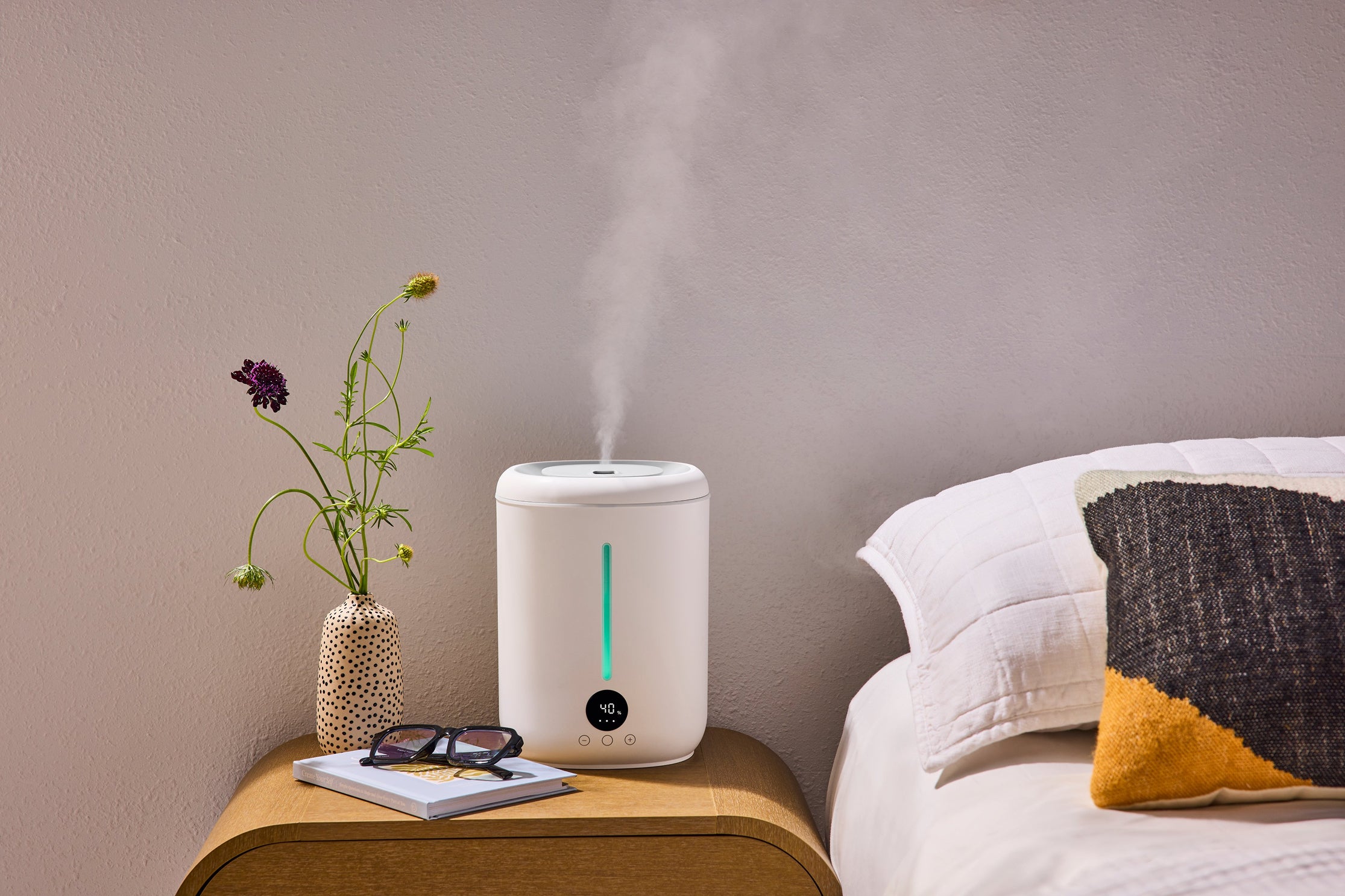
A high-quality humidifier is one of the simplest, most effective ways to bring moisture back into dry air. Look for models with automatic humidity sensors that help maintain the EPA-recommended 30–50% range. Run it in your child’s bedroom during sleep for maximum comfort.
2. Monitor Your Indoor RH
Consider using a hygrometer (a device that measures humidity) or a smart air monitor to track humidity levels in real time. Fluctuations can happen quickly as temperatures change or heaters cycle on and off. Just make sure you monitor for over-humidification, which can lead to condensation or even mold growth.
3. Hydrate from the Inside Out
Encourage your kids to drink plenty of water throughout the day. Proper hydration helps maintain the moisture barrier in their skin and respiratory tract, giving their natural defenses a boost.
4. Clean Air + Moisture = Healthier Air
It’s not a choice between clean air and moist air. Air purifiers remove airborne particles and allergens, while humidifiers restore the right amount of moisture. Together, they create a balanced environment where your kids can breathe easier and sleep better.
5. Mind the Season
Winter is when humidity tends to drop most dramatically, mostly due to indoor heating. However, dryer climates may require you to use humidifiers all year long. If nosebleeds, dry skin and static shocks are common occurrences, that’s a sign that your air needs moisture.
Helping Kids (and Parents) Breathe Easier
As much as you want to as a parent, you can’t prevent every cold or cough of the season. But you can equip your home for healthier air. Maintaining proper relative humidity for your family is a simple step that pays off in improved comfort, sleep and fewer sick days.

Think of humidity as a core part of your family’s wellness routine—right alongside good nutrition, sleep and clean air. By keeping your air both purified and properly humidified, you’re improving your child’s health with every breath they take, resulting in fewer nighttime wake-ups, less irritation, and a healthier, happier household overall.


