


Most sleep advice is the same: reduce screen time, don’t drink caffeine before bed, lower the bedroom room temperature, eliminate as much light as possible, and sleep on a comfortable mattress.
Air quality almost never comes up in conversations about sleep. But a growing body of research suggests that what you breathe at night, specifically the particulate matter, allergens, and gases present in your bedroom, shapes how deeply you sleep and whether you spend enough time in REM.
A 2019 study from the Annals of the American Thoracic Society found that people living in areas with higher fine particulate pollution, specifically, NO2 and PM2.5 had greater odds of sleep apnea. And “in addition to individual risk factors, environmental factors also contribute to the variation of sleep disorders across groups, possibly contributing to health disparities.”
Aside from sleep apnea, these particulates, and more broadly, poor air quality, can shorten sleep duration and cause you to wake up more regularly at night. Of course, this leads to daytime tiredness, but poor sleep quality is linked to a host of health issues: impaired memory, inconsistent mood, and weakened immunity in the short-term, and raises long-term risk of heart disease, diabetes, obesity, and cognitive decline.
To get the best night of sleep, your bedroom’s air quality needs to be within healthy levels. And to help you achieve this, we’ll cover what REM sleep actually does, how specific airborne pollutants disrupt it, and how to improve your bedroom’s air quality with air purifiers and other tips to sleep better every night.
What REM Sleep Is and Why Losing It Matters
REM (Rapid Eye Movement) sleep is one of four sleep stages, but it carries a disproportionate share of the night's most important functions. During REM, the brain consolidates memories, processes emotional experiences, and regulates mood. Adults typically spend around 20 to 25% of their total sleep time in REM, mostly concentrated in the later hours of the night.
Depriving your brain and body of REM has significant consequences. Insufficient REM sleep has been directly linked to impaired cognitive function, increased emotional reactivity, and disrupted metabolic regulation. And more recently, though startling, research has linked insufficient REM to increased mortality in middle age and older adults. Unlike light sleep stages, REM is particularly vulnerable to respiratory disruption. Even mild airway obstruction reduces how much time your body spends in REM.
Pollutants trigger arousal responses (moments of waking up) and physiological stress that pull the brain out of deeper sleep stages. REM occurs during the lightest and most vulnerable phase of the sleep cycle, and as a result, gets shortened in the process when exposed to these pollutants.
The Research Link Between Air Quality and Sleep Health
The research connecting air quality to sleep health has become substantially stronger over the past decade.
A 2017 study analyzed data from the Multi-Ethnic Study of Atherosclerosis and found that people in areas with high air pollution, particularly nitrogen dioxide from traffic, have a 60% higher likelihood of experiencing disrupted sleep compared to those in cleaner areas.
More recently, a 2024 study found that breathing in fine particulate matter (PM2.5) while sleeping disrupts deep sleep quality, resulting in impaired cognitive function and reduced physical performance the following day.
The researchers used wearable sleep trackers and indoor air quality monitors simultaneously, which gives the findings more direct relevance to home environments than city-level epidemiological data.
Pollutants are inflammatory. Inhaling fine particles during sleep triggers low-grade systemic inflammation, and inflammatory cytokines can cross the blood-brain barrier and interfere with normal sleep cycling.
So the effects are not just limited to people with asthma or existing respiratory conditions, but they can impact healthy individuals with no pre-existing condition as well.
Bedrooms Are Particularly Low Air Quality Rooms
Most people spend seven to nine hours in their bedroom with windows closed. Of course this amount of time varies by household, and certain people may sleep with the windows open when the weather allows.
If the windows are closed, whatever pollutants enter your bedroom accumulate overnight rather than dispersing.
If you sleep with the windows open, ventilation will improve but the pollutant risk from outdoors increases significantly, especially if you live in a city or near a high-traffic area.
So this may surprise you, but your bedroom can be one of the most problematic rooms in your room in terms of air quality. Here’s why:
-
Mattresses and bedding can host millions of dust mites, and their waste particles become airborne as you toss and turn at night. As you shift position, you disturb the surface and release particles directly into the air you are breathing.
-
Carpets and upholstered furniture in the bedroom trap dust, pet dander, and mold spores that then become resuspended during movement.
-
Pet dander is one of the most potent bedroom allergens. Even if the pet is not in the room, dander particles are small and persistent enough to circulate for hours after the animal was last present.
-
Off-gassing from furniture and building materials contributes VOCs throughout the night in a sealed room. VOCs (volatile organic compounds) come from a number of locations, and have demonstrated effects on the central nervous system at low concentrations over extended exposure.
-
CO2 accumulation is associated with restlessness and lighter sleep, and CO2 levels continue to increase overnight in sealed rooms.
How Specific Pollutants Affect Sleep
Each category of airborne pollutant disrupts sleep through a somewhat different mechanism:
Particulate matter (PM2.5)
PM 2.5 penetrates deep into lung tissue and triggers systemic inflammation, affecting the brain and interfering with sleep cycling. PM2.5 also worsens breathing in people with pre-existing asthma or respiratory sensitivity, increasing the likelihood of arousal events.
Allergens from dust mites, pet dander, and mold spores
These trigger nasal congestion and airway inflammation in sensitive individuals. Reduced nasal airflow during sleep forces mouth breathing, which increases the risk of snoring and reduces blood oxygen saturation. Both outcomes fragment sleep and reduce restorative stage time. Research from the Sleep Foundation notes that nasal congestion is one of the most consistent predictors of poor sleep quality in people with allergies.
VOCs
Formaldehyde and benzene irritate the upper airway during sleep, triggering micro-arousals that pull you out of slow-wave and REM stages before completing a full sleep cycle. Since slow-wave sleep is when physical repair occurs and REM is when memory consolidates, repeated disruption to both stages compounds over time. In the short term, this means non-restorative sleep. Over the long term, it can mean considerable adverse health effects.
How You Can Improve Bedroom Air Quality
Manage bedroom allergen sources
Allergen-proof mattress and pillow encasements have the most consistent evidence for reducing exposure to dust mite particles. Wash your bedding in water heated above 130 degrees Fahrenheit each week to kill dust mites.
Control humidity
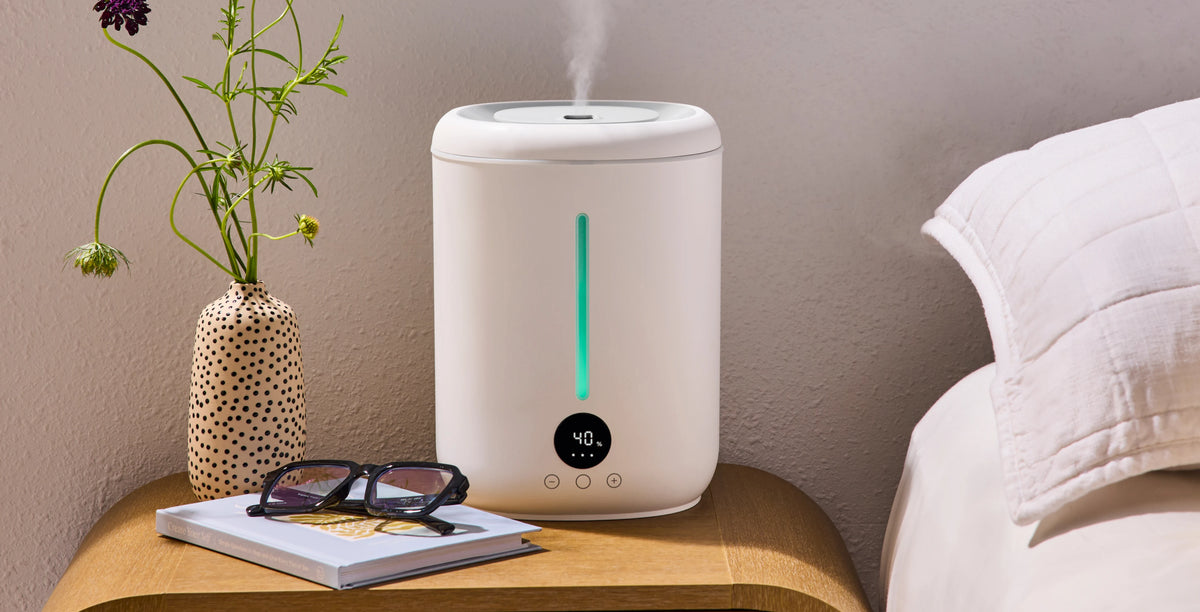
Dust mites thrive above 50% relative humidity. Keeping your bedroom humidity in the 40 to 50% range suppresses mite reproduction. A dehumidifier is more reliable than air conditioning for precise humidity control, and you may consider sleeping with a humidifier to balance out dry air.
Ventilate your room
Open windows when outdoor AQI is below 50 (the "Good" category on AirNow.gov) and when it helps balance CO2 levels. Close them when outdoor particulate levels are elevated. Checking the local air quality index takes 30 seconds and is one of the most practical habits for managing bedroom air quality overnight.
Use an air purifier
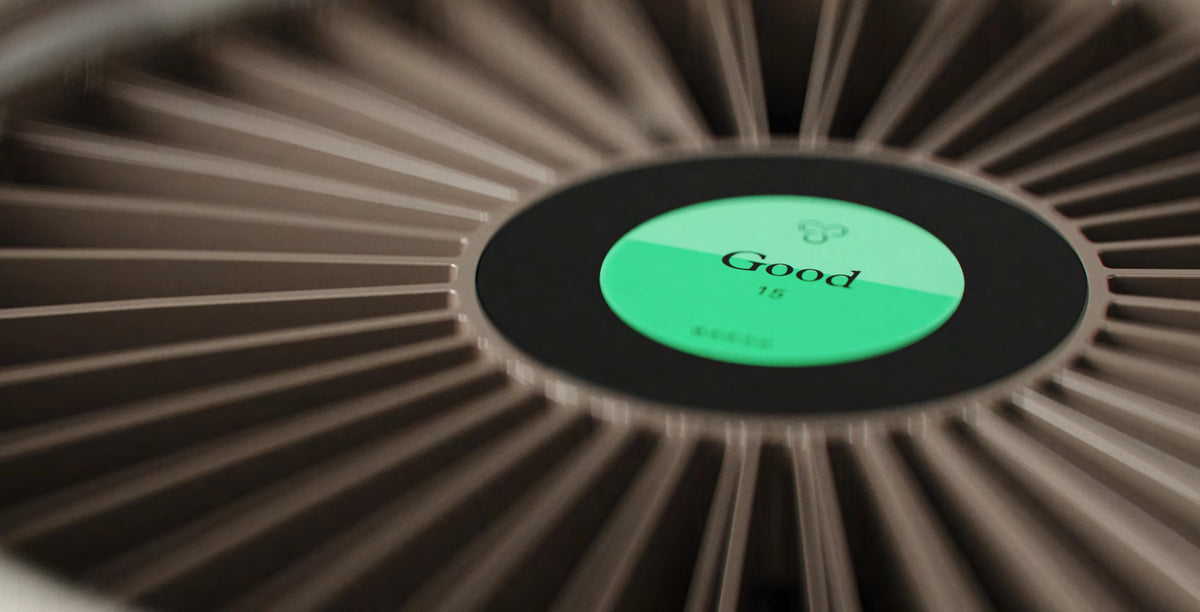
Molekule's Air Mini+ is sized for bedrooms up to 250 square feet. Its PECO-HEPA Tri-Power filter destroys allergens, mold spores, and VOCs rather than simply trapping them, which addresses particles that standard HEPA filters capture but do not neutralize. The device is FDA-cleared as a Class II medical device and operates quietly enough for sleeping rooms. For larger bedrooms or open-plan spaces, the Air Pro covers up to 1,000 square feet and includes a CO2 sensor that can indicate when nighttime ventilation is needed.
Frequently Asked Questions
Does air quality affect REM sleep specifically?
Yes, PM2.5 and VOCs trigger micro-arousals that pull you out of REM sleep before completing a full cycle.
What air pollutants are worst for sleep?
PM2.5, VOCs, CO2, and allergens are the worst pollutants for sleep, each disrupting sleep through different mechanisms.
Can an air purifier improve my sleep quality?
Yes, air purifiers can reduce PM2.5 levels, and these lower levels correlate with fewer nighttime awakenings and more time in restorative sleep stages.
How do I know if my bedroom air quality is affecting my sleep?
Waking unrestored, morning headaches, or congestion that clears outdoors are the most common signs.
Is it safe to run an air purifier all night?
Yes, you can safely sleep with an air purifier every night to improve your bedroom’s air quality.
Can sleeping with the window open help with air quality?
It depends on outdoor air quality. In high-pollen or high-pollution areas, it can make symptoms worse, not better.


