

You clean regularly, but the surfaces in your apartment seem to be constantly covered in dust. Sound familiar?
No matter how much you clean, dust will keep coming back if you don’t fix the air quality in your apartment.
Apartments accumulate dust faster than most people expect because of shared HVAC systems, limited air exchange, and soft furnishings that trap and release particles continuously. We’re going to explain how to reduce the amount of dust in your apartment, so you can clean less and breathe easier.
Why Apartments Get Dustier Than Houses
Your apartment unit is connected to a shared HVAC system that circulates air and particles from neighboring units into your own. So it’s not just the dust that your unit produces that you have to deal with, but the dust from other units being shared through your building's air supply.
Modern apartments have sealed windows and reduced natural ventilation which limit the air exchange. This is good because it helps stabilize indoor temperatures, lowers heating and cooling costs, and also keeps out outdoor pollutants, allergens, and noise. However, dust continues to recirculate.
Plus, when you consider how many more people are walking in and out of the building, there are far more opportunities for outdoor particulates to enter the shared HVAC system compared to a residential home.
How to Keep Dust Out of Your Apartment
Dust is a mixture of dead skin cells, textile fibres, PM2.5 and PM10 particles tracked in from outside, pet dander, dust mite debris, and VOCs off-gassing from building materials and furnishings. Most of these particles are so fine that they remain airborne for hours before settling.
If you dust off tables, chairs, and shelves, you’ve only solved part of the problem. The airborne dust particles have yet to settle, which is why dust continues to come back day after day. These 10 steps will keep dust out of your apartment, helping you breathe easier and clean less.
1. Invest in an Air Purifier That Destroys Dust, Not Just Captures It
Standard HEPA air air purifiers capture particles that are already inside the filter, where they accumulate over time. A loaded HEPA filter can harbor the mold spores and bacteria it has trapped, potentially releasing them back into the air as the filter degrades.
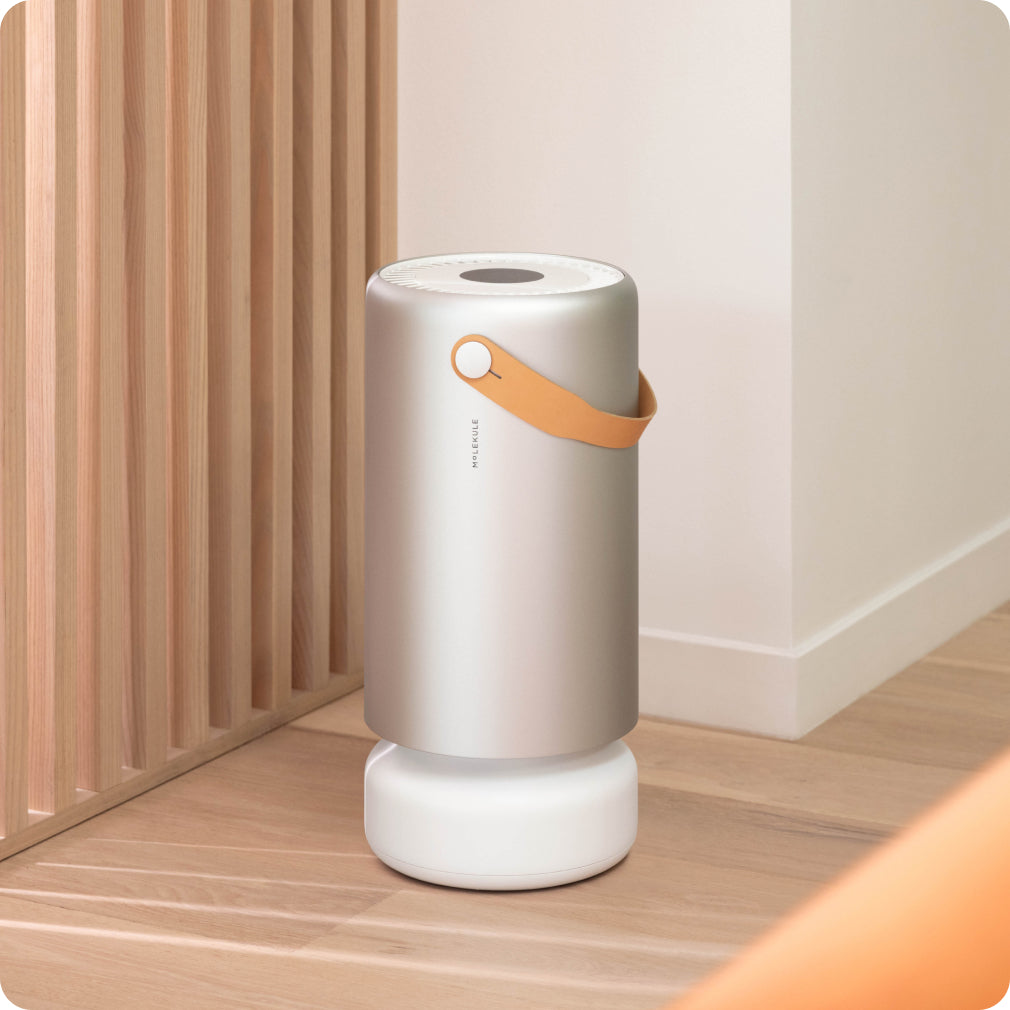
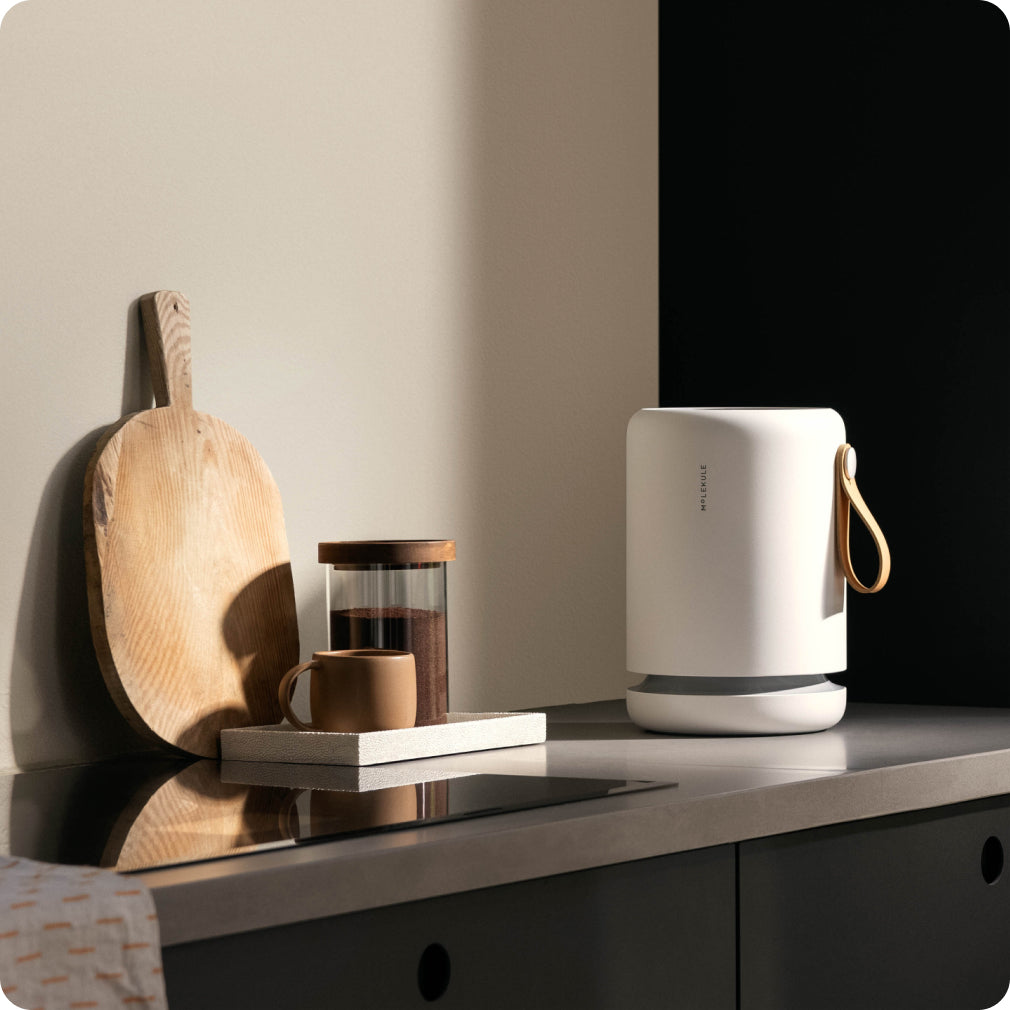
Molekule air purifiers use patented PECO (Photo Electrochemical Oxidation) technology, which destroys pollutants at the molecular level. This includes the biological components of dust like mold, bacteria, and dander, rather than just holding them in a filter.
The Air Mini+ and Air Pro are FDA-cleared Class II medical devices, a designation that is rare among consumer air purifiers and reflects the standard of independent testing behind the technology.
Position your purifier near a window, primary entryway, or the main return air vent, wherever outdoor air or shared building air enters the space first. This will increase the likelihood that your air purifier intercepts dust particles before they settle.
2. Vacuum Weekly with a HEPA Filter Vacuum Before You Wipe Surfaces
Standard vacuums without HEPA filtration recirculate fine particles through their exhaust. A HEPA filter vacuum captures particles down to 0.3 microns, the size range that includes dust mite allergens and fine PM2.5 particles.
Vacuum before you wipe any surfaces. Vacuuming disturbs and dislodges dust, which falls to the floor. If you wipe first, you're cleaning surfaces that will be recoated by what the vacuum kicks up. Work top-to-bottom, floor last.
3. Reduce Clutter on Every Horizontal Surface
Every open surface in your apartment is a dust trap. Bookshelves, countertops, decorative objects, and exposed textiles all accumulate particles and extend the time it takes to clean thoroughly. The more horizontal surfaces you have, the more frequently you have to clean them.
This doesn’t mean you need to remove all your decorations, but move objects that you don’t regularly use into closed storage. By minimizing the amount of exposed surfaces, you’ll reduce your weekly cleaning time and the total amount of dust in the apartment.
4. Change Your HVAC or AC Filter Every 90 Days, or Monthly If You Have Pets
HVAC filters clean the air circulating through heating and cooling systems by trapping dust, pollen, pet dander, mold spores, and fibers.
But once it’s full, it stops doing all of these things. The air will begin to recirculate, not filtrate.
Every time the system runs with a dirty air filter, dust particles bypass the filter and spread throughout the apartment. For most apartments, you should be fine to replace the air filter every 90 days, or once per season. If you have pets, we recommend you replace it every 30-60 days.
HVAC filters are designed to capture particles, not destroy them. Biological material such as mold spores, bacteria, and dander accumulate in the filter and remain viable. HVAC filters and air purifiers are not interchangeable, nor do they solve the same problem. If you truly want to reduce the amount of dust in your apartment, you should use both an air filter and an air purifier.
5. Wash All Bedding in Hot Water Every Week
Your bedding carries the highest dust mite load of any surface in the apartment, simply because of its surface area and the amount of time you spend in it. Dust mites feed on shed skin cells and thrive in the warm, humid environment of a mattress and pillow. According to the American Lung Association, washing bedding in water at or above 120°F kills dust mites.
Wash sheets and pillowcases weekly on hot. Wash duvet covers and blankets at least twice a month. Mattress encasements provide an additional barrier that reduces the mite load between washes.
Washing your bedding will reduce the amount of dust and help your home smell fresher.
6. Wipe Surfaces with a Damp Microfiber Cloth
A feather duster displaces particles into the air where they stay suspended for up to 30 minutes before resettling. A damp microfiber cloth traps particles and removes them from the surface entirely.
Use a slightly damp microfiber cloth on hard surfaces: shelves, countertops, skirting boards, window sills. Use a dry microfiber cloth on electronics and screens where moisture would cause damage. Rinse the cloth between rooms to avoid redistributing what you've collected.
7. Leave Shoes at the Door and Use Doormats at Every Entrance
Outdoor PM2.5, pollen, pesticide residue, and general urban grime enter apartments almost entirely via shoes and the slipstream from open doors. Outdoor pollutants that are tracked indoors on footwear account for a significant share of indoor particulate contamination.
Place a coarse-bristle mat outside your door to wipe your shoes off before you step inside. Then, place a second mat just inside the door to wipe off the rest. Remove your shoes immediately after to eliminate the problem at the source.
8. Groom Pets in the Bathroom or Outside the Apartment
Pet dander is finer and lighter than most household dust. It stays airborne significantly longer than larger particles and penetrates deeply into soft furnishings, where it is difficult to remove even with regular vacuuming.
Groom your pet in a tiled bathroom where surfaces are easy to wipe down, or outside the apartment to contain the dander release before it spreads to upholstery and carpet. After you’ve finished grooming, clean the space thoroughly if it’s indoors.
9. Remove Area Rugs Where You Can, or Vacuum Them Weekly
Area rugs hold considerably more dust per square foot than hard floors. Rug fibers trap particles that vacuuming only partially removes, and dust mites in particular like to embed deeply into these fibers. Hard floors are much easier to clean and store far less dust.
If you must keep all of your rugs, vacuum them weekly with a HEPA vacuum once per week, at minimum. Shake or beat smaller rugs outside monthly. Wash washable rugs monthly in hot water. If the rug is large and non-washable, vacuum it twice per week and deep-clean it once per month.
10. Clean Your Air Vents Every Three Months
Dusty air vents push accumulated particles back into the apartment every time the HVAC system cycles on. You can follow every other step on this list and undo most of the benefit if the vents are coated in dust and blow it across every surface.
Every three months, remove vent covers, wash them with warm soapy water, dry completely, and wipe the duct opening as far as you can reach. It takes ten minutes per vent and has an outsized effect on background dust levels.
Relative Humidity and Dust Mites
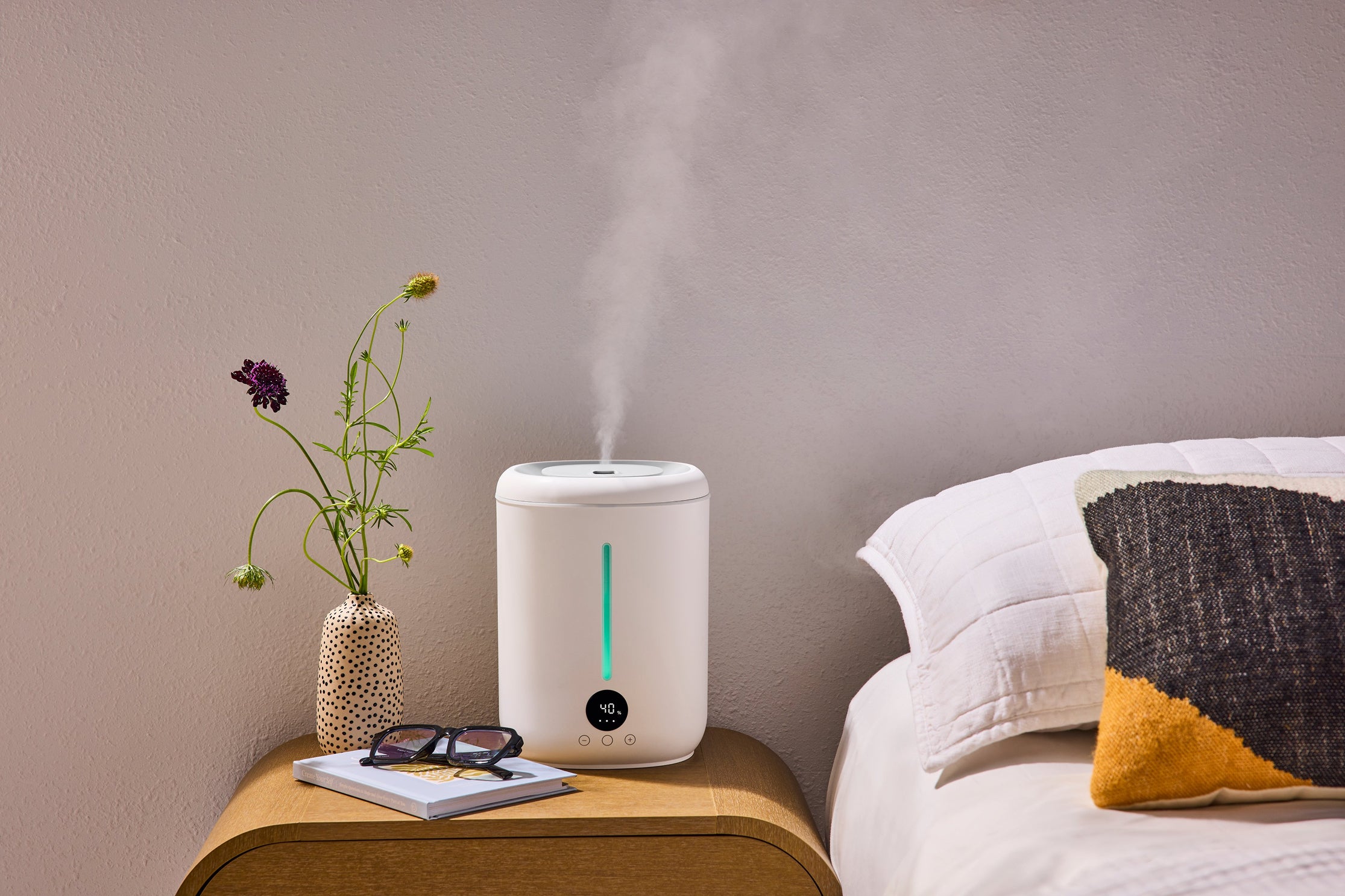
Dust mites thrive in humid apartments. According to the EPA, dust mites reproduce rapidly above 50% relative humidity. Running a humidifier without monitoring the output can actively worsen a dust mite problem, even while it relieves dry air discomfort.
Aim to keep your indoor humidity between 40–50% to suppress dust mite reproduction without creating the dry conditions that irritate airways. A basic digital hygrometer is available for around $10 at most home improvement stores, and it’s the only reliable way to confirm what your indoor humidity actually is.
Not sure if you need a humidifier or a dehumidifier for your home?
Excess moisture in the air, caused by your apartment’s relative humidity, encourages mold growth and bacterial proliferation. PECO air purifiers destroy these particles, cleaning your air while also removing dust.
A Weekly Cleaning Routine That Prevents Dust Buildup
Midweek: Damp microfiber wipe of all horizontal surfaces, including shelves, countertops, sills.
Weekend: HEPA vacuum all floors and upholstered furniture; strip and wash bedding on hot.
Monthly: Clean all air vents; check HVAC filter and replace if needed; wash smaller rugs.
Every 6 months: Deep clean accessible ductwork; replace your air purifier filter on schedule to maintain PECO performance.
Frequently Asked Questions
How do I keep dust out of my apartment?
The highest-impact steps are using a PECO air purifier to destroy airborne particles, vacuuming weekly with a HEPA vacuum before wiping surfaces, washing bedding in hot water weekly, and leaving shoes at the door.
Why is my apartment so dusty even after cleaning?
Shared HVAC systems recirculate dust from neighboring units, and modern sealed buildings limit the natural air exchange that would flush particles out. Cleaning removes settled dust but doesn't address what's continuously entering through the building's air supply.
Do air purifiers help with dust in apartments?
Yes, particularly purifiers that destroy particles rather than just capturing them. FDA-cleared air purifiers using PECO technology destroy the biological components of dust, including mold and dander, at the molecular level.
How often should I clean to reduce dust in an apartment?
Wipe horizontal surfaces midweek with a damp microfiber cloth. Vacuum and wash bedding weekly. Clean air vents and check HVAC filters monthly. Following this cadence prevents the buildup that makes occasional deep cleans necessary.