
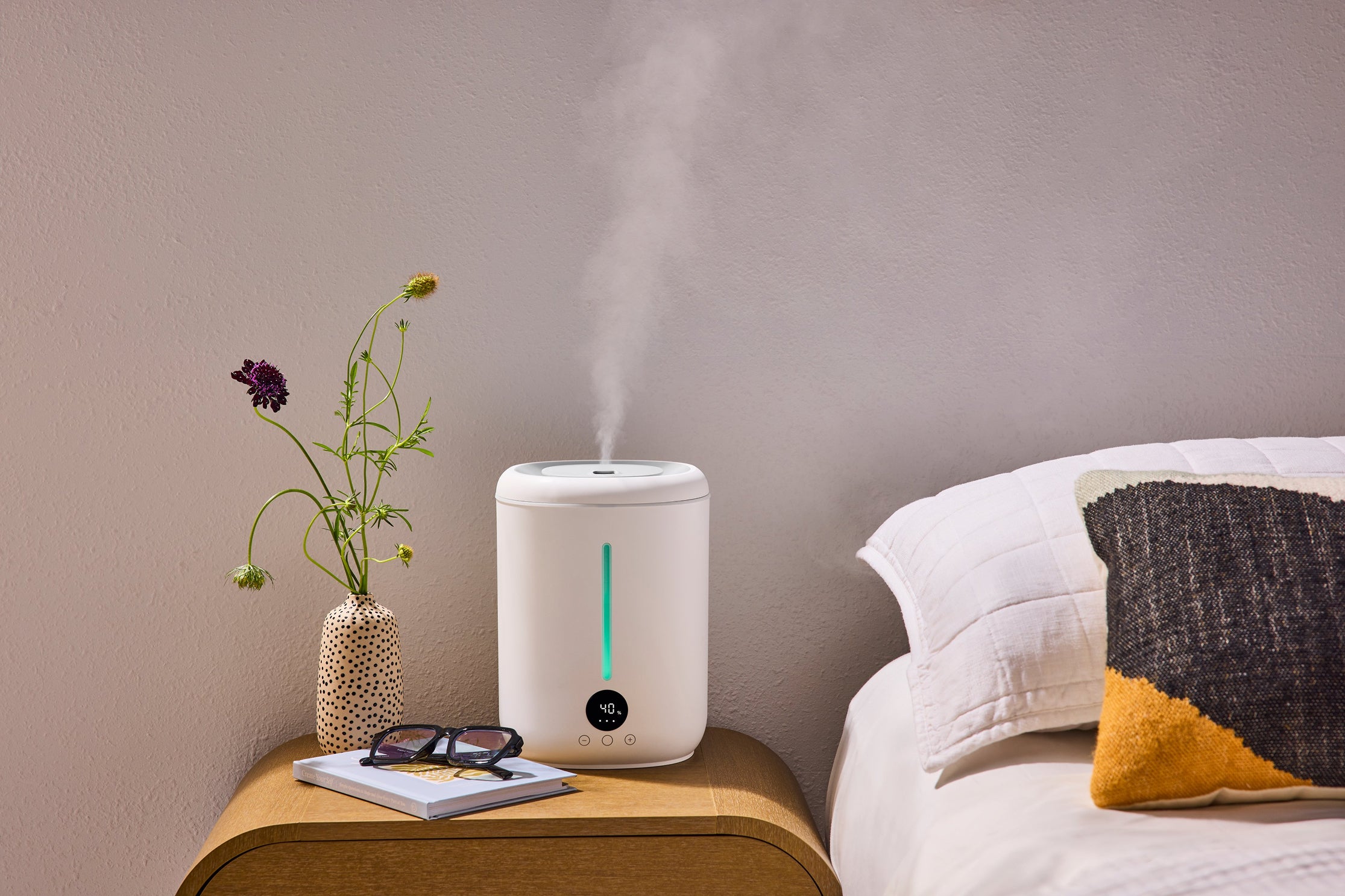


Every summer, a wall of Saharan dust travels thousands of miles across the Atlantic and lands on the doorstep of Florida, the Gulf Coast, and the Caribbean. Most people only notice it when the sky turns hazy or their allergies flare up. But by the time you can see it, the dust is already in your air. Knowing how to track a plume before it arrives gives you time to prepare your home, limit outdoor exposure, and keep your indoor air clean.
Using a high quality air purifier is one of the most effective tools for reducing your indoor particle load. Here is everything you need to know about how to read a Saharan dust forecast.
Key Takeaways
-
NASA estimates that around 182 million tons of Saharan dust crosses the Atlantic Ocean every year, making it one of the largest aerosol transport events on Earth.
-
A plume typically takes five to seven days to travel from West Africa to the Gulf Coast and Florida, giving you a reliable advance warning window.
-
NOAA, NASA, and AirNow are the most reliable free tools for tracking active plumes and their predicted paths.
-
During active dust events, indoor PM2.5 levels can reach 50 to 70 percent of outdoor concentrations even in closed buildings.
-
Saharan dust carries more than just mineral particles. Research has found bacteria, fungal spores, and heavy metals in dust samples collected during events in Texas.
-
People with asthma, COPD, and allergies face the highest risk, but dust events affect everyone's air quality.
Here is a summary table for the Saharan Dust Forecast article:
Saharan Dust Forecast: At a Glance
|
What It Is |
Where to Find It |
What It Means |
What to Do |
|
|
AOD below 0.4 |
Low aerosol optical depth — minimal dust suspended in the atmosphere |
NASA Worldview, CAMS |
Dust levels are low. No significant plume overhead. |
No action needed. Monitor as usual during peak season. |
|
AOD 0.4 to 0.8 |
Moderate dust concentration in the atmosphere |
NASA Worldview, CAMS |
A plume is present but not at peak intensity. AQI may begin to rise in affected areas. |
Check AirNow for your local PM readings. Sensitive groups should start limiting outdoor time. |
|
AOD above 0.8 |
Dense plume. Significant dust concentration overhead. |
NASA Worldview, CAMS |
High outdoor PM levels likely. Indoor air quality will also be affected. |
Close windows, set HVAC to recirculate, run air purifiers. Avoid outdoor exercise. |
|
AQI 0 to 50 (Good) |
PM2.5 and PM10 within safe limits |
AirNow (airnow.gov) |
Air quality is safe for everyone. |
No action needed. |
|
AQI 51 to 100 (Moderate) |
PM levels slightly elevated |
AirNow (airnow.gov) |
Acceptable for most. Sensitive groups may notice effects. |
Sensitive groups should reduce prolonged outdoor activity. |
|
AQI 101 to 150 (Unhealthy for Sensitive Groups) |
PM levels elevated. Common during active SAL events in Florida and Gulf Coast. |
AirNow (airnow.gov) |
People with asthma, COPD, allergies, heart disease, older adults, and children should limit outdoor exposure. |
Stay indoors, close windows, run air purifiers, have rescue medications ready. |
|
AQI 151 and above (Unhealthy) |
Significant dust event. Outdoor PM2.5 may exceed EPA 24-hour standard of 35 µg/m³. |
AirNow (airnow.gov) |
Everyone may experience symptoms. Indoor PM can reach 25 to 35 µg/m³ even in closed homes. |
Avoid all outdoor activity. N95 mask if you must go out. Run air purifiers continuously in bedroom and main living areas. |
|
Plume track forecast |
Predicted path and arrival timing of the SAL plume |
NOAA AOML, CAMS (5-day forecast) |
Shows when the leading edge and peak concentration are likely to reach your area. |
Use the 3 to 5 day forecast window to prepare: stock medications, check HVAC filters, and set air purifiers to run before the plume arrives. |
|
Peak concentration window |
The densest part of the plume, typically 1 to 2 days after the leading edge |
NOAA AOML satellite imagery |
Outdoor and indoor PM readings are highest. This is the window of greatest health risk. |
Maximum precautions. Keep purifiers running continuously. Do not open windows even briefly. |
What You Are Actually Tracking
When you look up a Saharan dust forecast, you are tracking a mass of warm, dry air called the Saharan Air Layer that is loaded with fine mineral particles lifted from the desert floor. According to NASA an average of 182 million tons of this dust crosses the Atlantic every year, carried westward by trade winds at altitudes of roughly 5,000 to 15,000 feet.
Research on Saharan dust events in Texas found that aerosols during African dust episodes contained bacteria and fungi capable of affecting human health, alongside elevated levels of heavy metals.
Understanding this is important because when you are tracking a dust forecast, you are not just monitoring a nuisance haze. You are tracking a complex aerosol event with real health implications for anyone in its path.
Where to Find a Saharan Dust Forecast
Several reliable, free tools track SAL plumes in real time and provide multi-day forecast models.
NOAA's Saharan Air Layer page at the Atlantic Oceanographic and Meteorological Laboratory is the most authoritative source for SAL monitoring. NOAA's AOML publishes satellite imagery showing current plume locations, dust concentration, and movement using data from GOES-19, NOAA-20, and the NOAA/NASA Suomi-NPP satellites. This is updated regularly during peak season and is the same data that feeds into hurricane forecast models.
NASA's Worldview and FIRMS tools provide near real-time satellite imagery of aerosol optical depth, which is a measure of how much dust is suspended in the atmosphere. You can zoom into specific regions and track the visual movement of a plume from its formation over Africa through its journey across the Atlantic.
AirNow at airnow.gov tracks real-time air quality index readings for locations across the US, including PM2.5 and PM10 levels. During an active SAL event, Saharan dust air quality readings on AirNow will rise noticeably in affected areas. Setting up AirNow alerts for your zip code gives you automatic notifications when PM levels cross thresholds.
The Copernicus Atmosphere Monitoring Service (CAMS) provides five-day dust forecasts covering the Atlantic and Americas. It is a European service but freely accessible and widely used by meteorologists tracking SAL events.
Local weather services in Florida, Texas, and the Gulf Coast states often publish SAL updates during peak season, particularly from late June through early August when activity is highest.
How to Read a Dust Forecast
Dust forecasts typically show two things: current aerosol optical depth (AOD), which tells you how thick the dust layer is overhead right now, and modeled forecast tracks that predict where the plume will move over the next three to five days.
AOD values above 0.4 generally indicate meaningful dust concentration. Values above 0.8 suggest a dense plume with significant air quality implications.
The track forecast shows the predicted movement of the plume's leading edge. Because the SAL typically travels at trade wind speeds, the timing is reasonably predictable once a plume is well-established over the Atlantic.
Plume arrival timing: A typical SAL plume leaves the African coast and passes near the Canary Islands within two to three days. It reaches the Caribbean basin around days five to seven, and can continue to Florida and the Gulf Coast by days seven to ten depending on the track. This transit window is your preparation time.
Peak concentration timing: The densest part of a plume usually arrives one to two days after the leading edge. AQI readings tend to peak during this window, which is when outdoor exposure risk is highest and when running air purifiers indoors matters most.
What Saharan Dust Does to Your Indoor Air
One of the most important things to understand about tracking a dust forecast is that it is not just about outdoor air. During a significant SAL event, fine dust particles infiltrate homes through HVAC systems, door gaps, window seals, and any active ventilation pathway.
Research on indoor and outdoor PM2.5 relationships found that indoor PM2.5 concentrations track outdoor concentrations at roughly 0.5 to 0.7 times the outdoor level during pollution events. That means if outdoor PM2.5 reaches 50 micrograms per cubic meter during a dust event, which can happen during significant SAL episodes, indoor levels in a typical home can reach 25 to 35 micrograms per cubic meter. The EPA's 24-hour standard for PM2.5 is 35 micrograms per cubic meter. In other words, even being inside during a heavy dust event may not keep you below safe exposure thresholds without active filtration.
This is why Saharan dust indoors is a real concern that goes beyond closing your windows. The EPA confirms that indoor PM levels are directly influenced by outdoor concentrations and the type of filtration system in use. A home with no air purifier and an aging HVAC filter is meaningfully more exposed than one with active purification running.
How Air Purifiers Help During Dust Events
Standard HVAC filters help with larger particles but are less effective at capturing fine PM2.5 that poses the greatest health risk. Air purifiers for dust are built specifically for this.
Molekule combines HEPA filtration, which captures fine mineral dust particles, with PECO technology, which breaks down the bacteria and organic compounds Saharan dust carries at the molecular level.
Your bedroom is the highest priority placement. You spend seven to eight hours asleep breathing whatever is in that room, and sleep is when your body does most of its repair. Air purifiers for the bedroom make the most difference during dust season for exactly this reason. For anyone whose allergy or asthma symptoms flare during SAL events, air purifiers for allergies address both the fine particles and the biological material that dust carries.
Health Impacts of Saharan Dust Events
Research linking Saharan dust events to hospital admissions found that PM10 and fine particles from Saharan dust increased the risk of emergency department visits for children with respiratory conditions on dust event days. A separate systematic review on dust storm health impacts found that dust events drive short-term increases in both respiratory and cardiovascular emergency admissions.
The health effects are not limited to the respiratory system. Saharan dust health effects extend across multiple body systems:
-
Respiratory: Increased asthma attacks, COPD flare-ups, and emergency department visits for children and adults with existing lung conditions
-
Cardiovascular: Increased hospital admission rates for cardiac events on dust storm days, particularly relevant for Florida's large older adult population
-
Allergic: Heightened Saharan dust allergies and allergy-triggered asthma episodes driven by the fungal spores and biological material the dust carries
-
General population: Even healthy adults and children are affected by elevated particle concentrations during prolonged or intense events, experiencing eye irritation, scratchy throat, and fatigue
Practical Steps When a Plume Is Forecast
Check forecasts three to five days ahead. NOAA's SAL page and CAMS give you enough lead time to prepare before a plume arrives.
Set up AirNow alerts. Email or app alerts from AirNow notify you automatically when PM2.5 or PM10 levels in your area rise above a threshold you set.
Close windows and set HVAC to recirculate before the plume's leading edge arrives. Once outdoor levels are elevated, the recirculation setting prevents your system from drawing in more contaminated outside air.
Run air purifiers in main living areas and the bedroom throughout the event. Start before outdoor levels peak, not after.
Limit outdoor activity on high AQI days. The American Lung Association recommends avoiding outdoor exercise during dust events. If you must go outside, a well-fitted N95 or KN95 mask provides meaningful protection.
Replace or upgrade your HVAC filter going into dust season. Higher-rated filters capture more of the fine particles that get past standard filters.
Frequently Asked Questions
Where can I check a Saharan dust forecast?
NOAA's AOML Saharan Air Layer page and AirNow are the most reliable free tools. NOAA tracks plume positions via satellite and AirNow shows real-time PM2.5 and PM10 readings for your location.
How far in advance can a dust forecast predict a plume?
Most forecast models reliably predict plume tracks three to five days in advance. Beyond five days, track predictions become less certain, though general seasonal activity trends can be anticipated earlier.
Does closing windows protect me from Saharan dust?
Partially. Closing windows and setting HVAC to recirculate significantly reduces dust infiltration, but fine particles can still enter through gaps and building envelopes. Active air purification provides the most reliable indoor protection.
How long does a Saharan dust event typically last?
A single plume event typically affects a given location for three to seven days. During peak season from late June to early August, new plumes can arrive every three to five days, creating extended periods of elevated dust levels.
Are air purifiers effective against Saharan dust?
Yes. Air purifiers that address fine particulate matter are effective at reducing indoor PM2.5 levels during dust events. Molekule combines HEPA filtration, which captures fine mineral dust particles, with PECO technology, which breaks down organic pollutants and biological material at the molecular level rather than just trapping them.


