

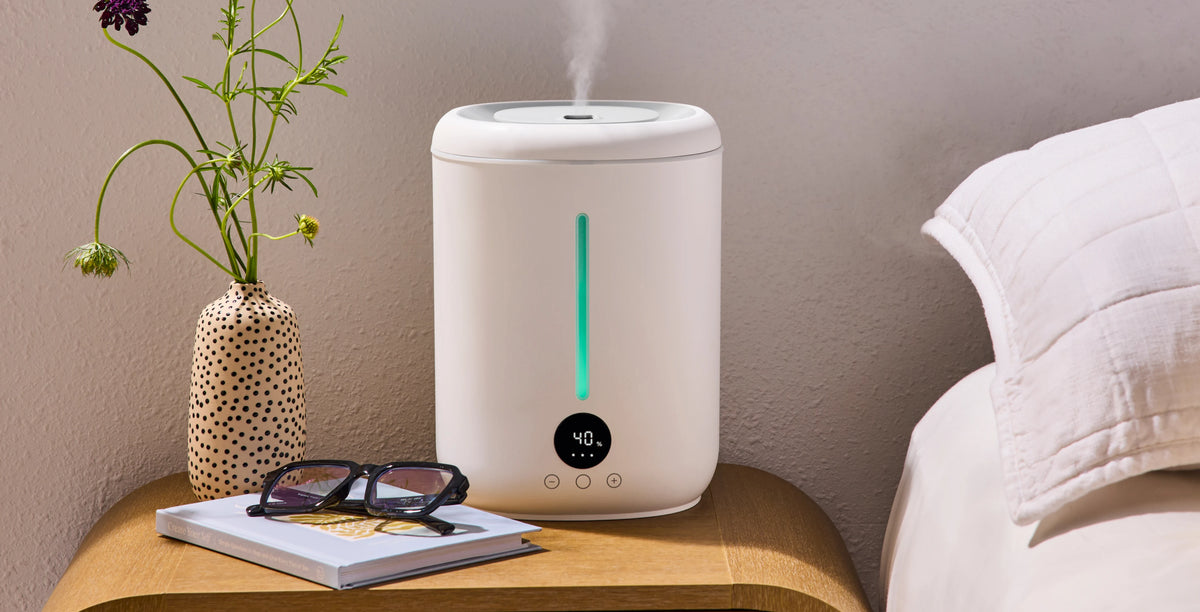


You may think your home’s indoor air quality is totally fine. Because what you can’t see, doesn’t exist, right?
Wrong.
Poor indoor air quality is common in US households and caused by pollutants such as PM2.5, VOCs, mold spores, and combustion byproducts.
And though it’s often imperceptible to the human eye, poor indoor air quality is associated with increased risk of cardiovascular disease, chronic respiratory illness, and premature death. The EPA estimates Americans spend approximately 90% of their time indoors, where certain pollutant concentrations can run 2 to 5 times higher than outdoor levels.
Most life-expectancy research focuses on ambient outdoor air, specifically your proximity to highly polluted areas such as manufacturing facilities and those prone to natural phenomena like red tide and wildfires.
But 90% of your life is spent indoors: sleeping, cooking, eating, socializing, and breathing. So indoor air quality is just as important to your longevity as outdoor air quality.
The Air Quality Life Index estimates that sustained exposure to air pollution above WHO guidelines reduces life expectancy by approximately 2.3 years on average.
And unlike your genetic predisposition or age, indoor air quality is something you can fix this week. We’ll show you how.
The Most Common Indoor Air Pollutants
Five categories of pollutants account for most of the indoor air quality risk linked to long-term health decline. Each has a distinct source, a distinct mechanism of harm, and a detection problem: most are invisible, odorless, or both.
1. PM2.5
PM2.5 refers to fine particles measuring 2.5 micrometers or smaller. They come from cooking smoke, candles, tobacco combustion, and infiltration from outdoor traffic. Because of their size, they bypass the airways and penetrate deep into lung tissue, where they can cross into the bloodstream. Research published in Environmental Health Perspectives links long-term PM2.5 exposure to cardiovascular disease, atherosclerosis, and pulmonary inflammation, even at concentrations below outdoor regulatory thresholds.
2. Volatile Organic Compounds (VOCs)
VOCs are gases released by paints, adhesives, flooring, furniture, and cleaning products. Concentrations indoors are consistently 2 to 5 times higher than outdoors, according to the EPA's indoor air quality documentation.
A newly renovated room or even a new piece of furniture can spike VOC levels by an order of magnitude for days or weeks after work is finished. Prolonged low-level exposure is associated with liver, kidney, and central nervous system damage, even when no odor is detectable.
3. Radon
Radon is a naturally occurring radioactive gas that seeps through foundation cracks and accumulates in basements and lower floors as uranium breaks down in bedrock, soil, and water. The EPA identifies radon as the second leading cause of lung cancer in the United States, responsible for approximately 21,000 deaths per year.
It is colorless and odorless. Most homes have never been tested. A short-term test kit, available through local health departments, is the only way to detect it.
4. Mold
Mold spores thrive when indoor humidity exceeds 60%. Mold obviously spikes during a flood, pipe leak, or periods of poor ventilation, but it’s most prevalent in summer and early fall.
The CDC links mold exposure to asthma exacerbations, allergic rhinitis, and persistent immune activation that may contribute to systemic inflammation.
Spores circulate through HVAC systems and settle into bedding and carpets, making exposure continuous rather than episodic. Bathrooms, basements, and areas around windows are the highest-risk mold-growth zones in most homes. Inspect your home for mold regularly.
5. Combustion Byproducts from Gas Appliances
Gas stoves, ovens, and furnaces release nitrogen dioxide (NO2) and fine particles during operation. Homes without proper venting accumulate these byproducts throughout the day. Long-term exposure correlates with increased respiratory symptoms and reduced lung function in children and adults.
How Indoor Air Pollutants Affect Your Health Over Time
Long-term exposure to indoor pollutants doesn't cause a single dramatic health event. It accumulates quietly, stressing organs and disrupting cellular function over years or decades.
Inflammation and cardiovascular disease
PM2.5 particles are small enough to cross the lung barrier and enter the bloodstream directly. Once there, they trigger systemic inflammation that damages blood vessel walls and accelerates atherosclerosis. Research links long-term PM2.5 exposure to increased risk of myocardial infarction and stroke, with the risk scaling with concentration and duration of exposure.
Imagine a 45-year-old homeowner in a high-traffic urban area, like Orlando, Chicago, or Los Angeles, and they’ve been recently diagnosed with early hypertension. Poor home ventilation means indoor PM2.5 levels stay elevated even when outdoor air improves. If they don’t open a window to circulate fresh air or use an air purifier to destroy the airborne particles, the PM2.5 will continue to negatively impact their health for days or weeks on end.
This daily, low-grade inflammatory burden causes unnecessary cardiovascular strain which can be easily remedied with a few cracked windows. And of course, long-term cardiovascular strain has been linked to decreased longevity.
Lung damage and chronic respiratory decline
CDC data confirms that radon gas breaks down into radioactive particles that humans inhale deep into their lungs. As these particles decay further, they release bursts of energy that damage your lung cells' DNA, which can eventually lead to lung cancer.
Again, radon is the second leading cause of lung cancer in the United States. To reduce your exposure, regularly test your indoor space’s radon levels with a kit, or hire a professional to come inspect your home. If high levels are detected, the only way to remove them is to have a professional install an Active Sub-Slab Depressurization (ASD) system.
On another note, mold spores activate chronic immune responses in the airways, which accelerate loss of lung function, particularly in people with pre-existing asthma or COPD.
Immune activation and allergic amplification
Repeated mold spore exposure keeps the immune system in a low-grade activated state. You don’t want your immune system to be activated constantly.
Over time, this amplifies existing allergic responses and may increase your sensitivity to other allergens. This can result in near constant airway inflammation, which reduces respiratory capacity.
Neurological and metabolic effects
Long-term VOC inhalation is associated with damage to the liver, kidneys, and central nervous system. And while you may think that VOCs aren’t present in your house, the reality is that they’re almost everywhere.
They’re found on building materials, furnishings, and cleaning products, two of which exist in nearly every indoor space.
Pre-existing disease and immune status
If you have asthma, COPD, or cardiovascular disease, indoor pollutants put you at a much greater risk than a healthy individual.
PM2.5 and combustion byproducts cause additional airway inflammation beyond their day-to-day inflammation caused by their pre-existing conditions.
Immunocompromised individuals face an added risk from mold spores and biological contaminants that a healthy immune system would normally suppress. Thus, people with chronic lung or heart conditions face disproportionate harm from indoor air quality degradation.
Where and how you live
Citizens of Arizona are exposed to an entirely different set of pollutants than Floridians. And while some US states have much worse air quality than others, no state is perfect. These are the highest home-based risk factors based on where you live and how you live:
-
Older homes with poor insulation, single-pane windows, and aging HVAC systems exchange indoor air far less frequently than newer builds. Lower air exchange rates let pollutants accumulate, compounding exposure over years.
-
Homes near highways or industrial sites draw in nitrogen dioxide (NO2), fine particles, and combustion byproducts through gaps in the building envelope. This outdoor infiltration adds to what your indoor sources already generate.
-
If you live in a region with uranium-rich soil (such as granite or shale) and your home has unventilated spaces that are in direct contact with the ground, you’re most at-risk for radon exposure.
-
Living near desert areas exposes your home to dust and other inflammatory particles, particularly when local winds pick up.
-
Secondhand smoke in the home compounds every other pollutant risk. Smoking status also elevates baseline lung sensitivity, making the same PM2.5 concentration more damaging than if there was no smoke in the home.
Consider this example: a 58-year-old with controlled asthma living in a 1960s home near a busy road faces meaningfully higher risk than a 35-year-old with no respiratory history in a newer, well-ventilated home.
Audit Your Home: A Room-by-Room Checklist
1. Kitchen: combustion and cooking VOCs
Gas stoves release nitrogen dioxide (NO2) and fine combustion byproducts every time you cook.
Ask yourself: do cooking odors linger for more than 30 minutes after you finish?
That's a sign of poor ventilation. Check whether your range hood vents to the outside (not just recirculates), and whether you use it every time you cook. If the answer to either is no, this is a high concern area. Open a window, turn on fans, and use an air purifier while you cook to lower your day-to-day risk.
Bedroom: sleep environment and off-gassing
You spend roughly eight hours in this room every night, breathing whatever is in the air. New furniture and mattresses off-gas volatile organic compounds (VOCs) for months after purchase. Dust accumulates in bedding and carpets, concentrating particulate matter (PM2.5) and allergens.
Ask yourself: is your furniture less than two years old? Do you vacuum and wash bedding weekly?
If so, this is a moderate-to-high concern area.
Basement: radon and mold risk zones
The EPA recommends testing every home for radon, regardless of age or construction. Check for visible mold on pipes, walls, or the foundation. Cracks in the foundation are a radon entry point. Stored solvents and chemicals add VOC load.
Are any of these present? If so, this is a high concern. Test your home for radon immediately.
Bathroom: mold and moisture control
Run your exhaust fan and check whether it actually moves air (hold a tissue near the vent). Mold and mildew grow where moisture stays above 60% relative humidity, per EPA guidance on mold and moisture. Volatile cleaning products and air fresheners add to the chemical load. No working exhaust fan is a high concern.
Living areas and air exchange efficiency
Traffic through living areas pulls outdoor particulates inside, and furniture finishes release VOCs. ASHRAE ventilation standards recommend 0.35 air changes per hour in residential spaces as a minimum. If windows stay closed year-round and you have no mechanical ventilation, air exchange is likely inadequate.
Rate this moderate concern unless secondhand smoke or heavy chemical use is present, which elevates it to high concern. You can absorb cigarette odors fairly quickly, reducing the exposure risk.
Where to Start
-
Source Control: Eliminate indoor smoking, choose low-VOC furnishings, and always use an outdoor-vented range hood while cooking to cut NO2 and fine particles by up to 60%.
-
Ventilation & Air Exchange: Open windows during low-pollution periods and run exhaust fans consistently. Aim for the ASHRAE standard of at least 0.35 air changes per hour.
-
HVAC Filtration: Upgrade to a MERV 13 (or higher) filter and run the system continuously to constantly trap fine particles and mold. Replace filters regularly to prevent airflow restriction.
-
Moisture & Mold Control: Use dehumidifiers and exhaust fans to keep indoor humidity between 30% and 50% (monitored via a cheap hygrometer) to stop mold spores from germinating.
-
Radon Mitigation: Test your home using state-provided kits; if levels exceed 4 pCi/L, install a sub-slab depressurization system to lower lung cancer risks.
-
HEPA Air Purification: Use HEPA purifiers as a final line of defense to capture 99.97% of microscopic particles (down to 0.3 microns), mitigating cardiovascular and respiratory risks.
FAQs
Is indoor air quality worse than outdoor?
Yes. Indoor air can be 2 to 5 times more polluted than outdoor air due to stagnant air, building materials, cleaners, and cooking.
How to detox the air in your home?
Use outdoor-vented exhaust fans, open windows for ventilation, upgrade to MERV 13 or HEPA filters, and minimize synthetic fragrances and smoking.
Can the air in your house make you tired?
Yes. Elevated carbon dioxide ($CO_2$) from poor ventilation, mold spores, and chemical fumes (VOCs) can cause fatigue, headaches, and lethargy.
Can poor air quality cause dizziness?
Yes. High levels of carbon monoxide, volatile organic compounds (VOCs), or severe mold exposure can directly cause dizziness and lightheadedness.


