

Last updated by the Molekule Insights Team on May 12, 2026.
Air purifiers have a positive impact on our lives, so some may ask if that impact extends to sleep. Air pollution does not stop when we sleep, so the simple answer is yes, if you want the full benefits of your air purifier it should be running in your bedroom when you sleep.
Can you sleep with an air purifier on?
Yes, you can sleep with an air purifier on, and overnight is arguably the best time to run one. You spend roughly a third of your life asleep. That’s six to eight hours of continuous breathing in a single enclosed space.
Indoor air doesn't stay clean on its own. Even in a room with closed doors and windows, pollutants from outside seep in through gaps and cracks, while allergens like dust mites and mold spores circulate continuously. Running an air purifier while you sleep means those hours are spent breathing filtered air rather than accumulating overnight exposure to whatever settles in your bedroom.
Is it safe to run an air purifier all night?
Yes, it is safe to run an air purifier all night in your bedroom; they’re made for continuous 24/7 operation. Most include sleep or night modes that reduce fan speed and dim or disable display lights, automatic shut-off mechanisms if the unit overheats, and energy-efficient motors that draw roughly the same wattage as a standard light bulb. As long as the device is properly maintained and used in the room size it's rated for, leaving it on all night poses no safety concern.
How quickly does bedroom air get dirty again?
Faster than most people assume. Unfortunately, no home is perfectly sealed from pollutants. Outdoor air infiltrates continuously through gaps around windows, under doors, and through small cracks in walls. Inside the bedroom, dust mites in bedding release particles throughout the night. Pet dander lingers airborne for hours. Off-gassing from furniture and flooring adds a low-level chemical load that builds in an enclosed space.
The result is that even in a closed bedroom, air quality deteriorates steadily once a purifier is switched off. Running one for an hour before bed and then turning it off means you spend most of the night breathing air that's returned close to its starting quality. Continuous overnight operation is the only way to maintain consistently clean air for the full duration of sleep.
Will an air purifier help me sleep better?
An air purifier can help you sleep better if allergens or airborne irritants are disrupting your sleep. However, they are not a cure for insomnia or other, non-allergen or airborne-related sleep conditions.
Reducing the concentration of triggers like dust mites, pet dander, and mold spores in the bedroom can ease nighttime congestion, reduce coughing, and lessen the airway irritation that fragments sleep. The consistent fan noise from most quiet air purifiers also functions as white noise, masking irregular sounds that might otherwise wake you. For people with allergies or asthma, the effect on sleep quality tends to be more noticeable; for otherwise healthy sleepers in clean environments, the difference will be subtler.
Benefits of Sleeping with an Air Purifier
Fewer allergy and asthma symptoms overnight
Allergens don't stop circulating when you go to sleep. Pet dander lingers in the room for hours after your pet has left. Pollen tracked in during the day resettles as air movement slows. For people with allergies or asthma, this overnight exposure is often what drives morning symptoms: congestion, sneezing, a tight chest, or itchy eyes on waking. An air purifier running continuously reduces the concentration of these particles in the air before they reach your airways while you sleep.
Removing contaminants
Almost everyone who gets an air purifier does so in order to remove contaminants from the air. There is a whole lot of research on the impact of air pollution in the home, and experts agree that taking steps to minimize indoor pollution is a good idea. Air pollution, indoors or outdoors, can cause heart and lung problems, diabetes, Alzheimer’s and other health problems. It can also cause sleep apnea and other problems that may disrupt a good night’s rest.
In addition, since most of us sleep around eight hours a night, we all take a significant portion of our breaths while we sleep. Running your purifier while you sleep is a great way to spend many hours each night breathing air that was cleaned with your purifier. Overall, removing contaminants from the air will not have a negative impact on sleep.
Easier breathing during sleep
Your respiratory tract is most vulnerable during sleep. You can't clear irritants by adjusting your environment, changing your breathing pattern, or removing yourself from the room. An air purifier reduces the load on your respiratory system by destroying irritants such as dust, mold spores, smoke particles, and VOCs. For people prone to dry or irritated airways, this can reduce nighttime mouth breathing and the congestion that comes from inflamed nasal passages.
Reduced exposure to airborne viruses and bacteria
A HEPA filter captures virus-carrying particles as small as 0.3 microns, reducing their concentration in the air. Eight hours of continuous operation represents a significant reduction in overnight exposure, particularly relevant in shared bedrooms or households with young children or immunocompromised individuals. Note that no air purifier can fully prevent transmission of a virus.
Lower VOC and odor levels while you sleep
Volatile organic compounds (VOCs) off-gas from furniture, flooring, paint, cleaning products, and personal care items. The effect is more prominent in enclosed, less-ventilated spaces.
An air purifier with an activated carbon layer adsorbs these chemicals from the air, reducing the concentration of compounds like formaldehyde, benzene, and other household off-gassing chemicals you'd otherwise breathe for hours. This is especially relevant in newer homes or recently renovated bedrooms.
White noise that supports uninterrupted sleep
The consistent fan noise produced by most air purifiers falls into the category of broadband sound, which is similar to white or pink noise. These audible frequencies are a critical part of good sleep hygiene that can help people sleep better by blocking out distracting noises that make it difficult to fall asleep and stay asleep.
Unlike irregular sounds (traffic, a neighbor's door, a pet moving around), the steady hum of an air purifier gives the brain a stable audio baseline. Many people who initially run an air purifier for air quality find the sound effect on their sleep to be an unexpected secondary benefit.
Air circulation
There are some myths thought to originate in Korea and other countries in the same region of the world that it could be fatal or at least bad to sleep with a fan on. Fortunately, there is no actual evidence of anyone dying because they fell asleep with the fan on.
However, there are a few things to consider about the movement of air during sleep. Moving air with a fan can cause moisture to evaporate faster, and moisture takes heat with it when it evaporates. This can be a great feature when it is hot and humid because faster moving air can keep you cool. But a fan blowing directly on you can dry out the tissues in your nose and mouth which can cause irritation or worsen allergies. Also, being too cold while sleeping can cause muscle spasm or soreness.
Another issue with moving air with a fan is that any dust or other irritants nearby may be stirred up into the air. This is generally not an issue with a decent air purifier because the air is moving directly into the filter.
Where should I put an air purifier in the bedroom?
Place it close to where you sleep, but pointing away from your face. At this distance, it will be near enough that it cleans the air you're breathing. A nightstand or floor position a few feet from the bed works well. Keep it away from walls and corners, which restrict airflow, and avoid putting it directly next to a humidifier.
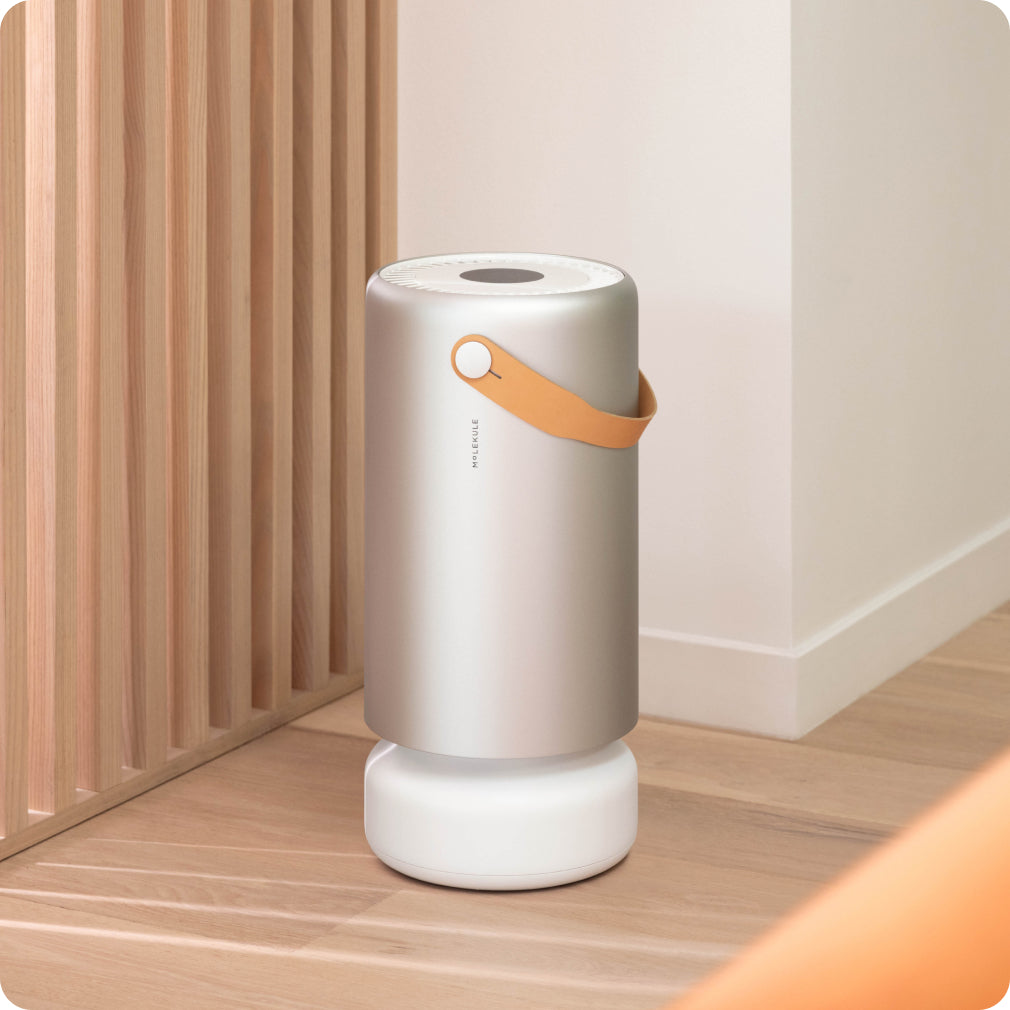
All Molekule purifiers have variable speed settings. Running at a lower speed overnight reduces sound while still turning over the air in the room. If you find the white noise helpful for sleep, the higher speeds work for that too.
Does running an air purifier all night cost a lot of electricity?
No. At lower speeds, most air purifiers draw between 20–50 watts, which is comparable to a dim light bulb. Even at full speed, most units stay under 100 watts. Running a 50-watt purifier for eight hours overnight uses around 400 watt-hours, which works out to roughly $0.05–$0.08 at average US electricity rates, or under $25 a year.
Purifiers with automatic sensor modes cost less to run than fixed-speed units, because they adjust fan speed based on real-time air quality rather than running at a set level all night.
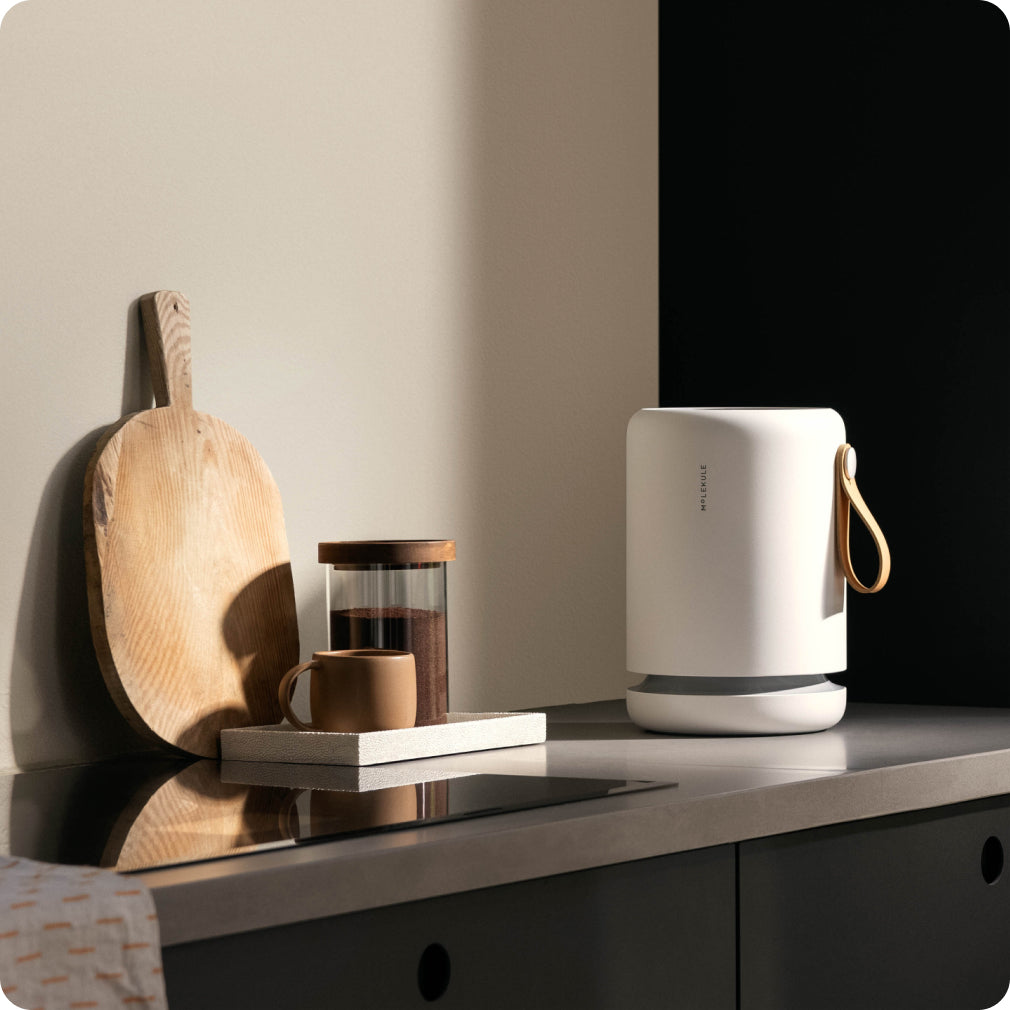
Molekule's Air Mini+ and Air Pro both operate this way via Auto-Protect mode, running quieter and drawing less power when bedroom air quality is stable, and ramping up only when needed.
Does an air purifier dry out the air?
No, air purifiers don’t dry out the air because they do not remove moisture from the air. It moves air through a filter; it doesn't heat it, cool it, or dehumidify it.
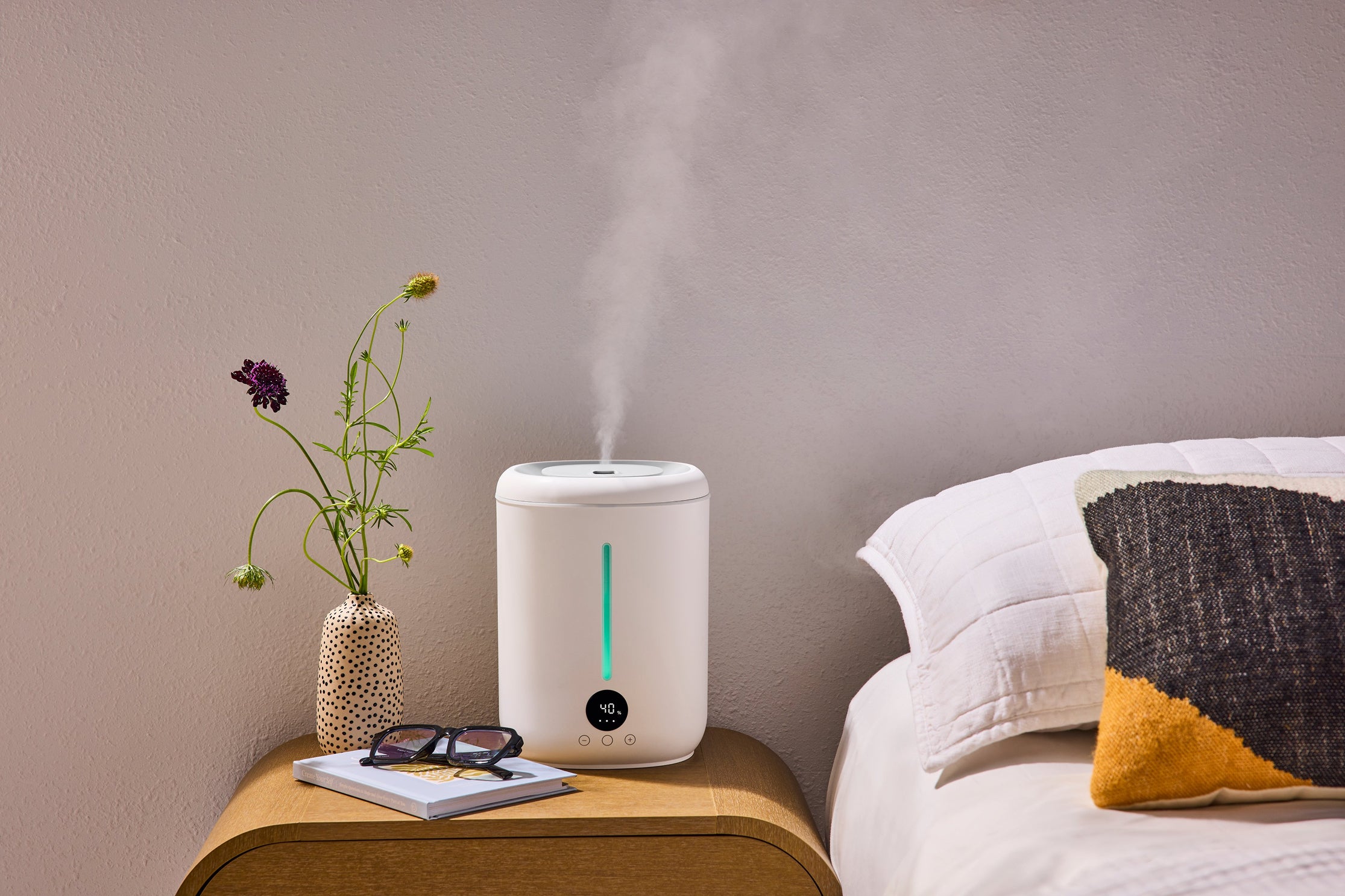
If your home feels dry when running an air purifier, the cause is usually the season, your heating system, or the unit blowing directly on you rather than the purifier itself. If dry air is genuinely a problem, you should consider getting a humidifier instead of an air purifier. Both can run in the same room as long as they're not placed directly next to each other.
Tip: Avoid pointing the airflow directly at your face while you sleep. This can dry out nasal passages and cause irritation, particularly if your home’s air is already fairly dry.